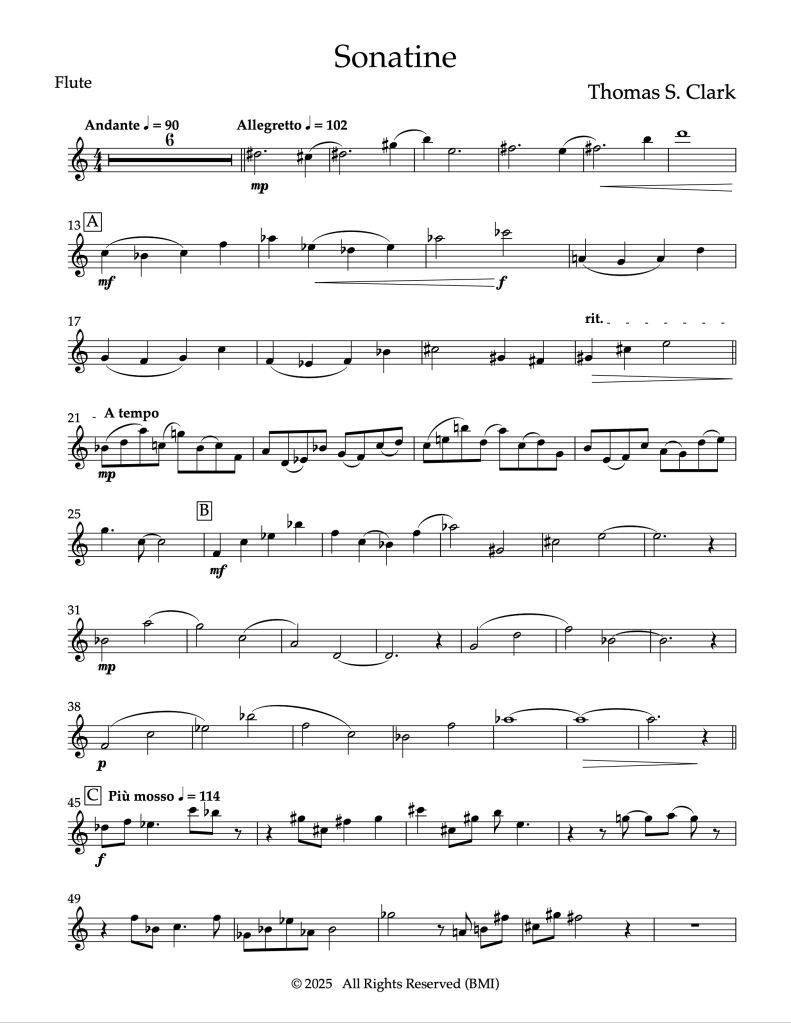
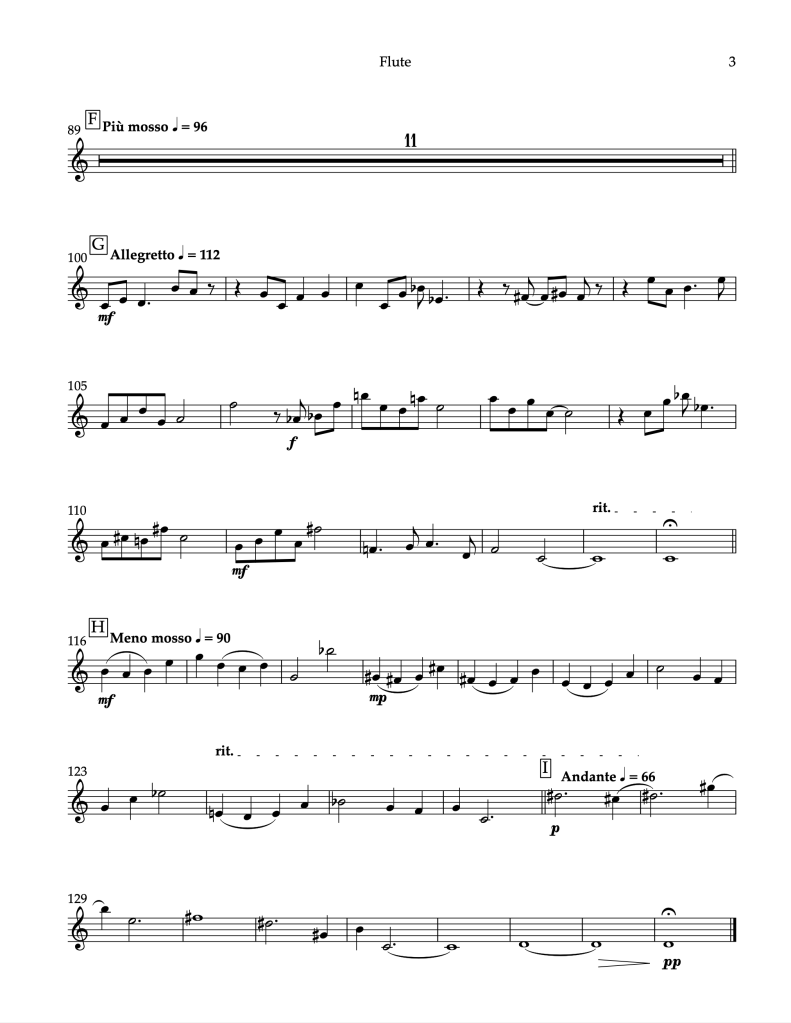
2025 . . . flute and piano . . . 6 minutes
Having begun composing in 1963, I started formal composition study in 1968 at the University of Michigan in Ann Arbor. American composer Eugene Kurtz, based in Paris but filling in that semester at Michigan, was assigned to teach the new freshman. A proponent of modern French music, his compositional models included Debussy and Ravel. He assigned me to immerse myself in deep study of their music, in particular Ravel’s Sonatine (1905). Fifty years later in my career as a more experimental composer, my compositional style began to adopt a gentler Impressionistic approach and a lush, bright harmonic language reminiscent of Debussy and Ravel.
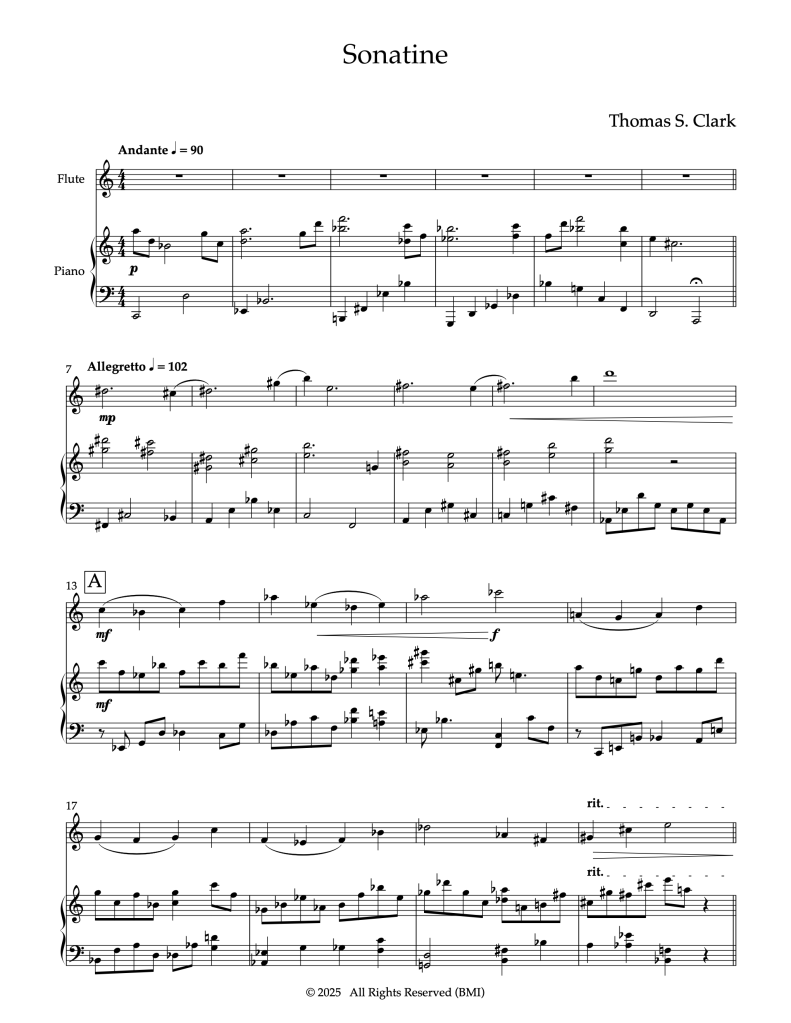
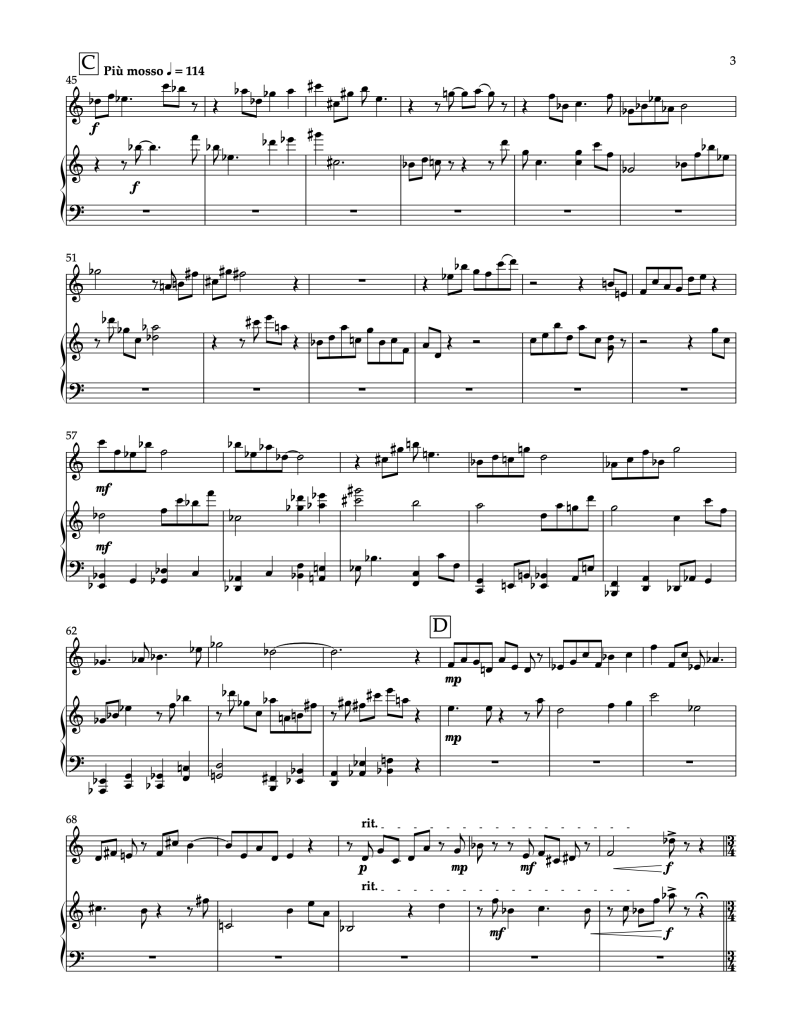
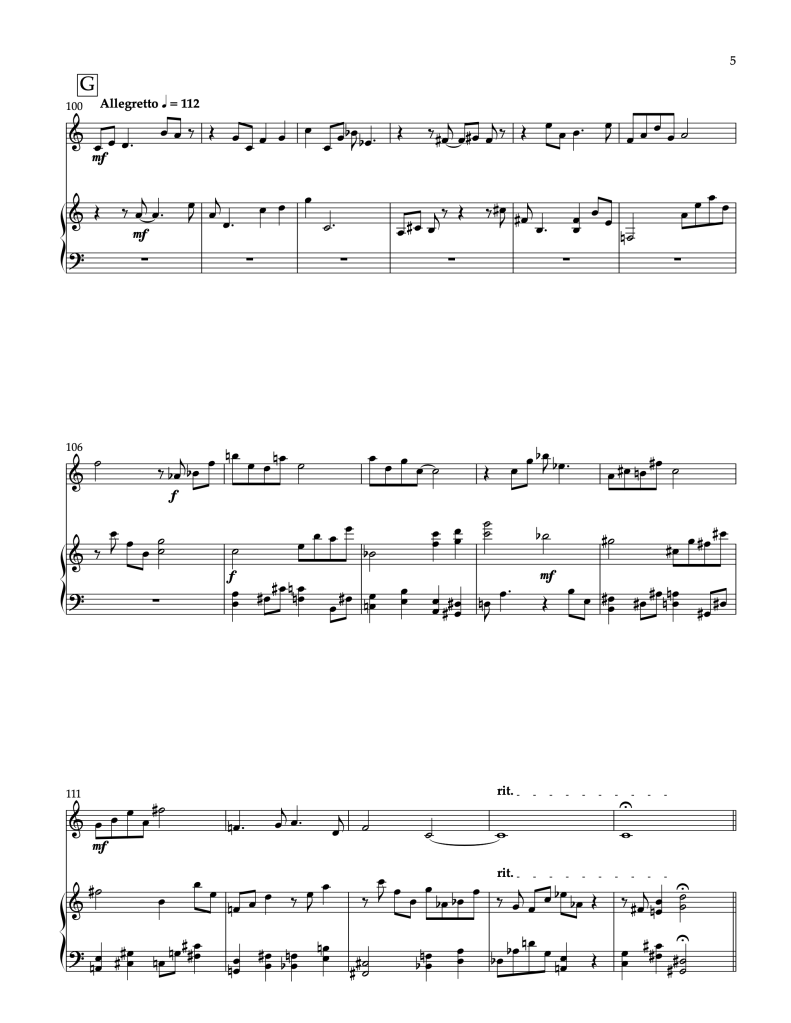
Sonatine is spun from a single harmonic progression, seven chords each stacking a Perfect Fifth interval high above another.

This material (what Schoenberg would call a Grundgestalt) generates melodic lines and many arpeggiation patterns, in successive variations of changing register, intensity, and rhythmic pace.




 Thomas Clark - composer / digital artist
Leave a comment