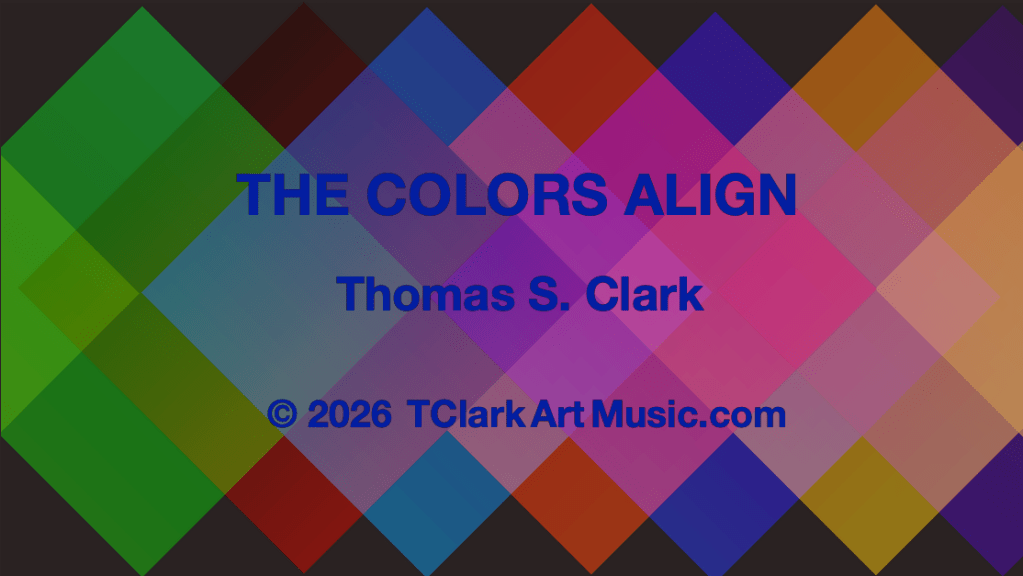
• The Colors Cluster

    2026 . . . multimedia digital images, synthesized music . . . 7 minutes

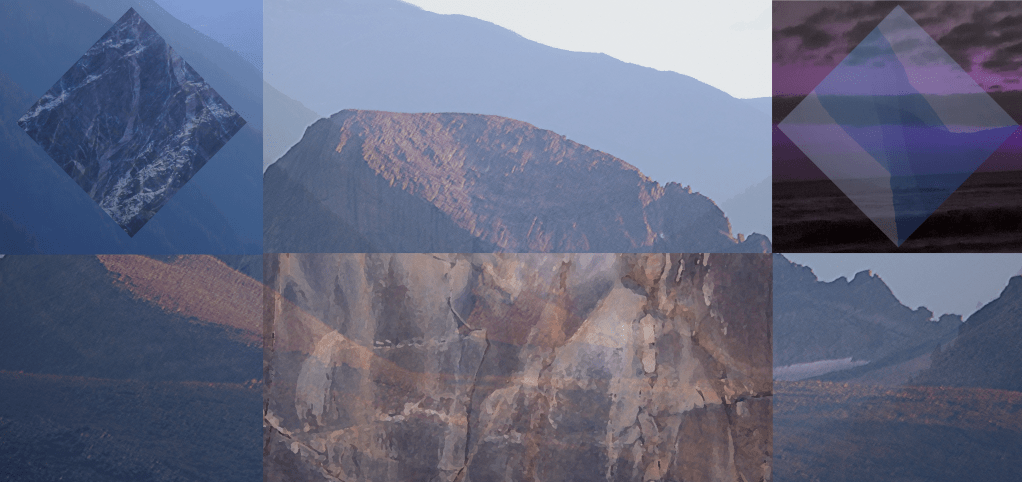
    The images are geometric swatches of color, clustering together like quilts. The combinations morph kaleidoscopically into one another.

    Sounds are tone clusters (adjacent steps of a common pitch scale sounding simultaneously instead of successively). The clusters contrast in timbre (sound color) and in harmonic complexity, ranging from complex dissonance (metaphorically red on the spectrum) to simpler, purer sounds (blue end of spectrum). Tone clusters accumulate and dissipate in large tides and smaller waves.

    Listen to audio:

  • METAMORPHS

    2025 . . . video art . . . 7 minutes

    Video art, quilting together geometric slices of colorful abstract images, kaleidoscopically morphing them into each other over a continuously evolving soundscape adapted and synthesized from the composition, RAINBOW RISING.

  • Cassiopeia

    2025 . . . piano and electronic music . . . 6:45

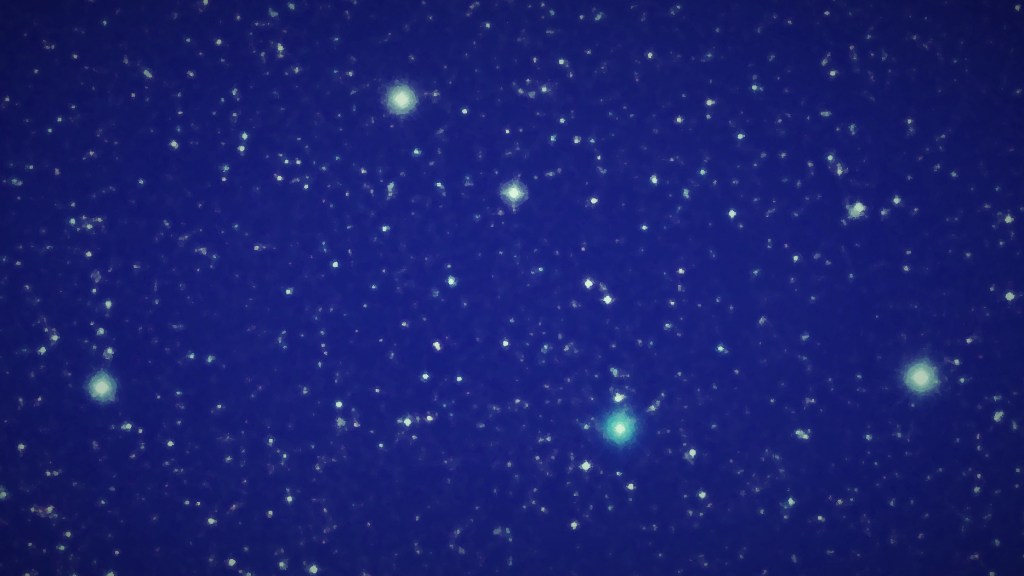
    The constellation Cassiopeia in the northern sky is named after the vain queen Cassiopeia, mother of Andromeda in Greek mythology. One of 48 constellations listed by the ancient astronomer Ptolemy, its distinctive ‘W‘ shape is formed by five bright stars. Cassiopeia contains some of the most luminous stars known, including three hypergiants. Its brightest star, Cassiopeia A (“Schedar”), is a supernova remnant and bright radio source.

    The music arose from tracing a map of its brightest points of light. The coordinates of these points on a two-dimensional graph were converted into time and pitch patterns articulating a grand sonority. The graph can be rotated, kaleidoscopically transforming the pattern into similar sonorities.

    The same treatment applied to Cassiopeia’s constellation neighbors Perseus and Cepheus builds a denser field of sounds, metaphorically echoing the brilliant star-studded dark sky as seen through a powerful telescope.

    View the music video on the YouTube podcast:

    SONUS – Meditation Music

  • The Final Angel

    2025 . . . synthesized sound montage . . . 7 minutes

    Electronic sounds from previous ANGELS pieces (The Fourth Angel, Angels of Bright Splendor) make layered counterpoint for a dark, unearthly montage. Music from another piece, String Theory, originally imagining spinning subatomic energy, provides an ironically human voice, both frantic, engulfed in the threatening sound environment, and soaring hopefully above it.

    Global warming is already devastating the earth and all life on it. The Bible’s Revelation 16 tells of seven frightening angels:

    The fourth angel poured his bowl on the sun, and it was allowed to scorch people with fire; they were scorched by the fierce heat.”

    The other six angels and their bowls wrought plagues of painful sores, bloody seas, bloody rivers, darkness.

    Finally, the seventh angel poured out his bowl into the air, and a loud voice of doom came out of heaven, saying, ‘IT IS DONE!’ There were noises and thunderings and lightnings; a great earthquake. Every island fled away, and the mountains were not found.”

    The Final Angel

    Watch a YouTube video with abstract images:

  • Animated Landscapes 2

    Olympic Shores

    1975 . . . wind ensemble . . . 9 minutes

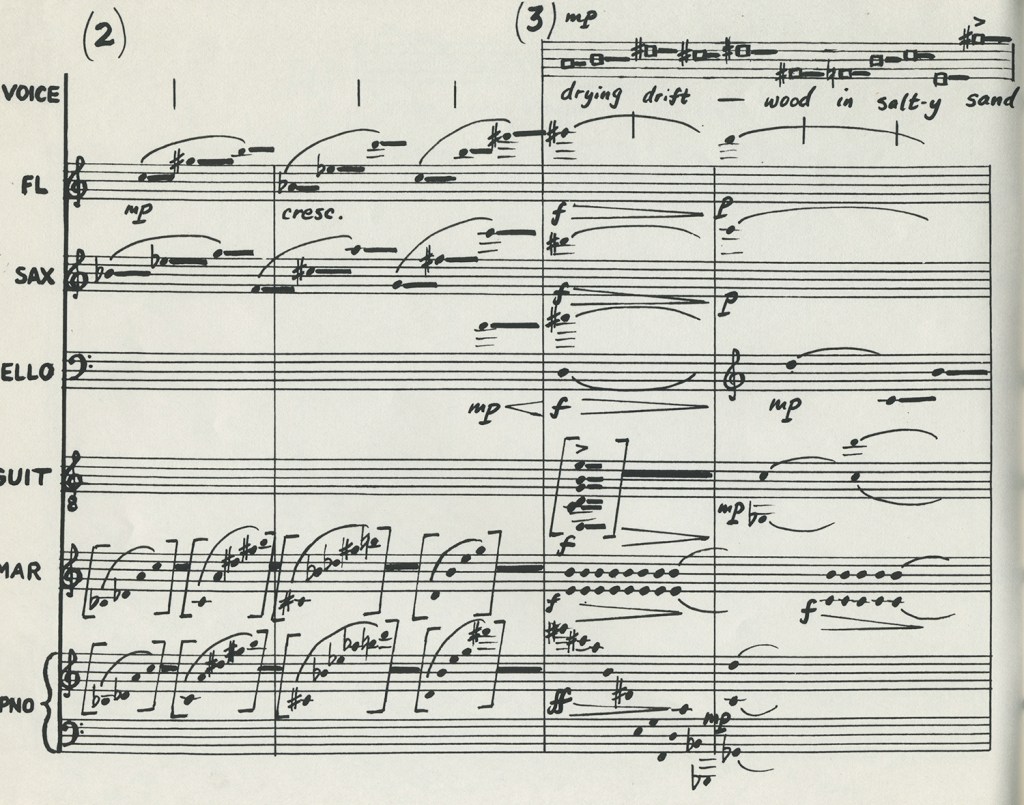
    The next in the series begun with the 1971 original, Nocturne for orchestra, Olympic Shores was scored for wind ensemble. A large 1974 work for double choir, brass, and tape, Shores of Infinity, preceded it. While the same textural approach to a large instrumental ensemble continued, the title reflected my Pacific Lutheran University experience in Washington state the previous year.

    Olympic Shores

    Clark 1975 (TC-31)

    NTSU (now UNT) Symphony Band

    A chamber music piece titled Shores (TC-44) followed in 1978, which opened a new stream of writing for me with its completely non-metric time notation, bright arpeggiated pitch constellations, and oscillations animating the harmony and the texture.

    Though it was performed in 1978 in Denton by the NTSU New Music Performance Lab, I’ve not been able to salvage an old recording.

  • Animated Landscapes

    Nocturne

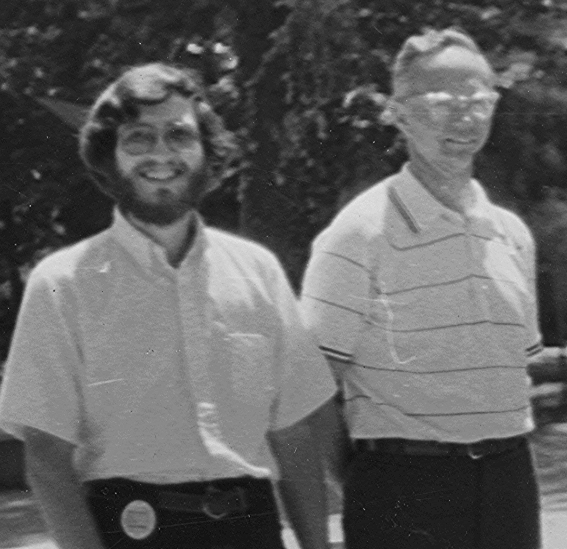
    1976 Interlochen with Prof. Bassett

    The idea of animating an otherwise static sound mass, devoid of progressive harmony, was a quintessential feature of what I came to think of as the Midwestern Style of 1960s and 1970s large ensemble music. Successful models included prize winning pieces such as (my teacher) Leslie Bassett’s Variations for Orchestra (1966), Donald Erb’s The Seventh Trumpet (1969), and Joseph Schwantner’s …and the mountains rising nowhere (1977) and Aftertones of Infinity (1979).

    As a graduate student at the University of Michigan in 1973, I composed my second orchestra piece. The title, Animated Landscapes, was inspired by John Cage’s famous Imaginary Landscapes No. 4, which we performed as I was an ensemble member of Contemporary Directions.

    Animated Landscapes

    Nocturne for orchestra

    1971 (TC-25)

    U.Mich. Symphony Orchestra

  • LIGHTFORMS 6: Vespers

    2025 . . . multimedia sound, image, text (12:00)

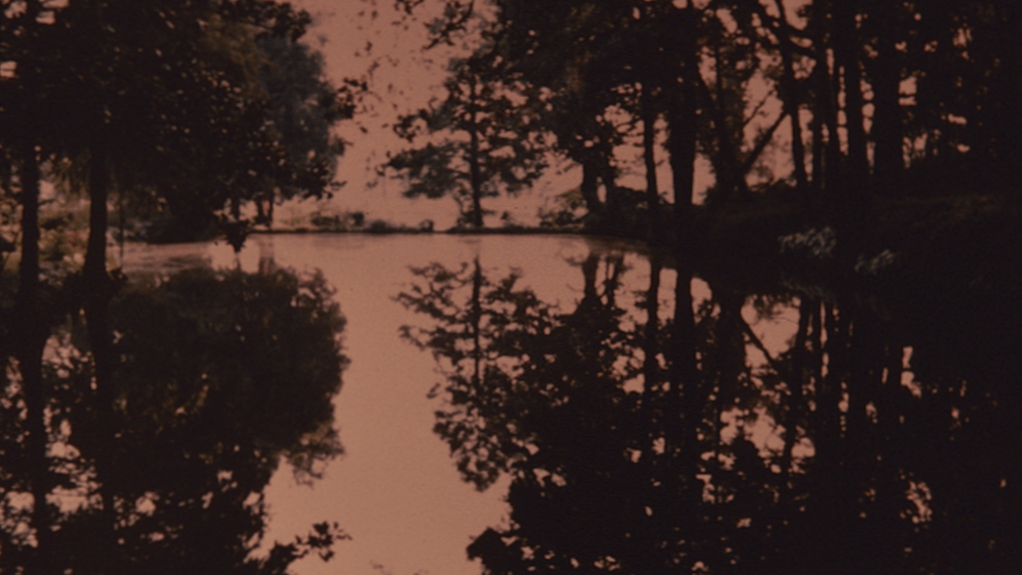
    Musical impressions of dusk, with text and images by the composer. Quoting one mellifluous phrase (boldface below) from Robert Frost’s “Waiting Afield at Dusk” (1913), the VESPERS text is like a Haiku:

    Streams of crimson streak the sky

    above tree silhouettes.

    Dusk settles “in the antiphony of afterglow.

    A new night consumes the shadows.

    View video here – YouTube podcast

    Listen here (audio only)

  • Montage

    2025 . . . multimedia, computer music and digital images (6:45)

    Original music and visual images are assembled in a manner inspired by quilts, layers of fabric in small swatches pieced together. The Amish of Lancaster County Pennsylvania were known especially for quilts of contrasting colors of repeating geometric shapes.

    In MONTAGE, layering is applied to both synthesized musical textures and to digitally enhanced images from my Nikon Z50 (NIKKOR 16-50 lens). Three musical textures — flutters, swelling chords, and an ancient-style canon — are quilted onto an unchanging broad harmonic background. They overlay each other in four different combinations.

    Video here – YouTube podcast

    Listen here (audio only) –

  • LIGHTFORMS 6: Vespers

    2025 . . . musical impressions of dusk (12:00)

    The video version of VESPERS reveals a Haiku-like text, quoting one melliflous phrase from Robert Frost’s “Waiting Afield at Dusk” (1913).

    Streams of crimson
    streak the sky
    above tree silhouettes.
    Dusk settles
    “in the antiphony of afterglow.”
    A new night
    consumes the shadows.

    View the video on YouTube in

    LIGHTFORMS – Radiant Music podcast

  • DARK ENERGY

    2025 . . . computer music (7:00)

    Measuring supernovae, cosmologist Vera Rubin hypothesized that 80% of what’s out there in the universe is invisible or otherwise undetectable, mysterious matter and energy of undiscovered nature. Imagined in sound and color, dark-energy music is amorphous in form and time flow. Canonic lines float and interweave, building an evolving fabric of complex, ethereal sonorities.