Author: thomasclarkumich

  • Mapping the Cosmos

    2021 . . . Etudes for Piano . . . Total duration: 10 minutes . . . COMPLETE SCORE

    Mapping the Music Universe produced several small etudes to illustrate the compositional potential of musical patterns explained in the ebook. The inspiration to collect them into a series came from many years of fascination with Bartók’s wonderful Mikrokosmos series of 153 piano pieces in modern styles. Some of the Mapping etudes were originally sketched for piano, others adapted from more complex textures. They range in difficulty for the pianist from the simpler 1. Pisces to the more challenging 6. Scorpius.

    The first seven are simpler, with each etude titled with an astronomical entity named for a mythological character.

    Though the whole set is 10 minutes in length, the pianist wishing to perform some of them is welcome to select a suite of three or four. Each etude is titled with an astronical entity named for a mythological character:

    1. Pisces – The Fish; 12th constellation of the Zodiac

    2. Cygnus – The Swan; a northern constellation

    3. Milky Way – Way of the White Cow in Irish myth; the galaxy containing our Solar System

    4. Pleiades – Seven Daughters of sea-nymph Pleione; an open star cluster

    5. Laniakea – Immense Heaven in Hawaiian; supercluster of galaxies that includes the Milky Way

    6. Scorpius – The Scorpion; 8th constellation of the Zodiac

    7. Andromeda – Cassiopeia’s daughter, saved from the sea monster Cetus by Perseus; a spiral nebula and nearest large galaxy to the Milky Way

    Experience all seven in synthesized-sound color video on YouTube or audio only:

    BOOK II

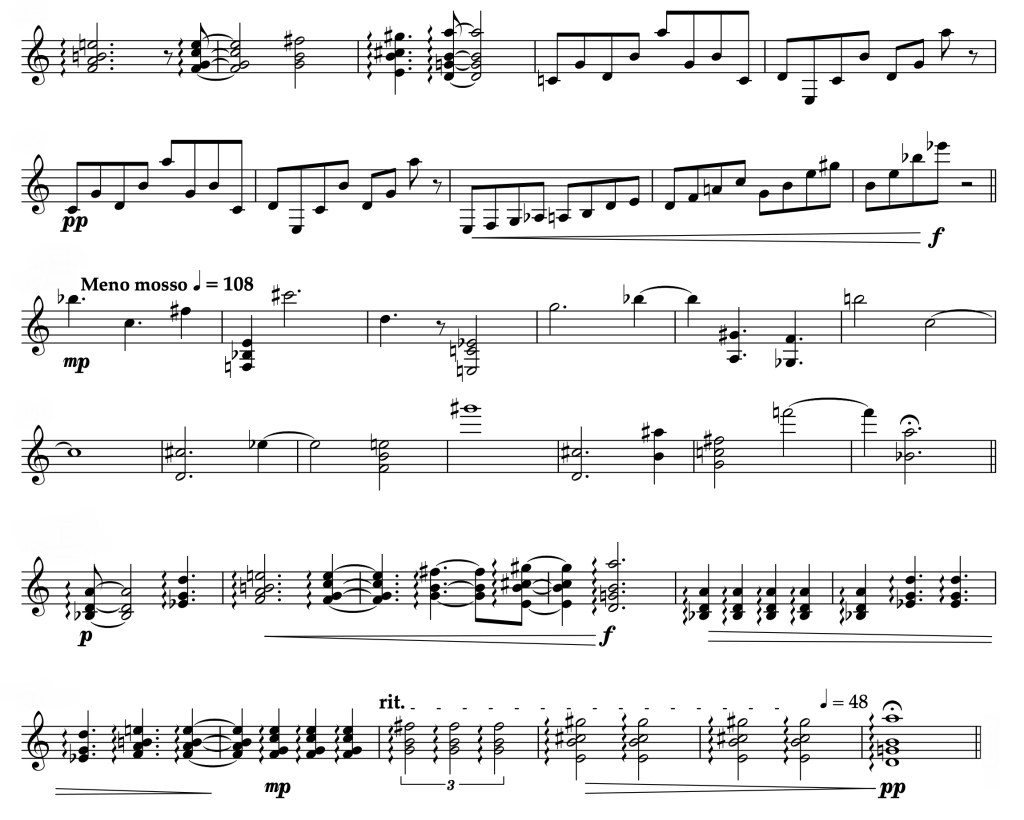
    The last five Mapping the Cosmos etudes are each suitable as short stand-alone recital pieces or as a set. Beyond Mikrokosmos, they pay homage to Debussy’s revered books of Preludes. These pieces embrace the Impressionist approach to texture and form, while evolving beyond Debussy’s tonal language. Stonehenge and Lunar Litany both draw material from the 1975 four-movement piano work Geography of the Chronosphere.

    8. Moonlight – an arpeggio homage to Beethoven’s famous Sonata

    9. Deep Sky – profound mysteries glimpsed by telescopes

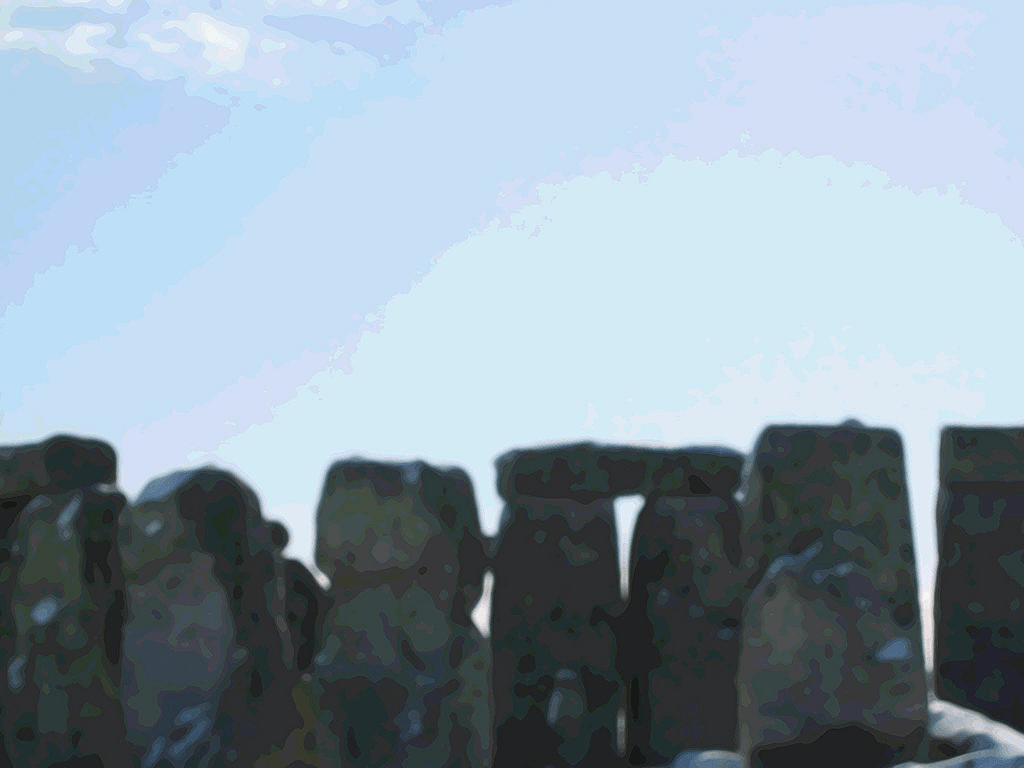
    10. Stonehenge – ancient site of human worship in the cosmos

    11. Lunar Litany – moon cycles governing human activity

    12. Star Map – celebrating early star catalog project Carte du Ciel

  • Sinfonia

    2021 . . . chamber orchestra (Flute, Oboe, Clarinet, Bassoon, 2 Horns, C Trumpet, Trombone, Timpani, Percussion, Strings)

    Duration: 21 minutes in three movements – I. 8 min.; II. 8 min.; III. 5 min.

    Mozart’s Jupiter Symphony is one of his greatest masterpieces. His No. 40 in G Minor and No. 38 “Prague” are also magnificent. It makes one wonder if he had lived longer, what other stunning music would have poured forth. Back to No. 41 Jupiter, the first theme is a curving melody of such rhythmic vitality and fascinating turning shape that I used it as an example of both in my ebook, Mapping the Music Universe. Mozart makes the theme into a fugato, and I have adopted it in my obsessive study of canons. You can see the shape of its first six notes in the violin opening of Jupiter Rising, then elsewhere it permeates the contrapuntal material of the rest of the piece. The middle movement takes a break from it, setting the main themes from the opening of the G Minor No. 40 as a languid tango tune, followed by a trio in slow waltz meter that reverts briefly back to the bright Jupiter tune. The final movement actually extends our signature Jupiter theme into a 12-tone row, generating a more expansive tonality in its animated landscape.

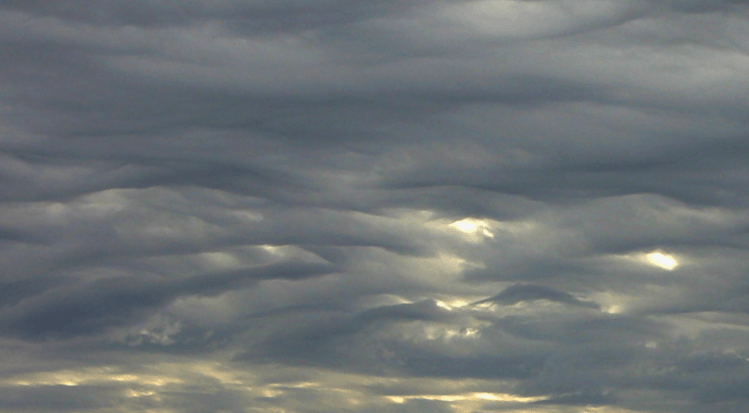
    I. Jupiter Rising depicts the mysterious splendor of moonrise, large and deeply-hued in the eastern evening sky. This movement creates a sonic metaphor for that visual phenomenon, but portraying instead the rising of Jupiter, the largest object in the solar system other than the sun itself. It only looks much, much smaller to us than the moon because it is so much farther away. My favorite Mozart symphony is Symphony No. 41 in C Major, K.551. His longest and last symphony, it is nicknamed “Jupiter” — fitting that his lengthiest and greatest symphony is named for the largest planet, a great gas giant. A vivid musical motive begins and generates the majestic final movement. I use it as the musical subject of this movement, relentlessly canonic in deployment. At some moments, as many as 8 contrapuntal soundings overlap each other in a gentle, cloud-like texture.

    II. Tango is set in an actual key, appropriate for this venerated dance form though uncharacteristic for my writing. The harmonies flow like dancers, the musicians feeling their way through the tonalities while never seeing an actual key signature.

    III. Blue Ridge refers to the beautiful hazy curves on the horizon as one gazes out from the top of the Blue Ridge Parkway, an hour west of my former home in the Piedmont in North Carolina. I also remember a similarly mystic vista looking south from Monterrey, Mexico toward the foothills of the Sierra Madre Oriental mountains. The musical fabric is what I have called an “animated landscape,” not a still postcard but a soaring flight over and through the soundscape.

  • Nature images

    Gallery of digital art images of flora and fauna
    The Dallas Arboretum has a fern garden that takes me back to the woods of Michigan, especially around Interlochen.
  • Fire images

    Gallery of digital art images of sun, moon, flames
    Solar radiation over the Pacific from Coronado Island

  • A New Geography

    four sketches for marimba – for Kari Klier

    2021 . . . . duration: 6:30

    Excerpts from II and IV:

    The title echoes my 1975 piece for piano fancifully titled Geography of the Chronosphere.

    The world is changing, rapidly evolving geopolitically and, from climate change, physically. The tone of the music contemplates these complex changes. To figure out where we’re going as a civilization, we need to rebuild and re-understand our changing “map.” 

    To request performance materials and permission, email the composer, tc24@txstate.edu.

  • Looking for the Rainbow

    2021 . . . . cello quartet or cello choir . . . . duration: 9 minutes

    Written during the COVID pandemic for Karla Hamelin and her Texas State cello students, Looking for the Rainbow expresses both the uncertainty and hopefulness in our collective struggle to survive the storms of disease and violence.

    A prequel to Rainbow Rising (2016), an earlier canonic piece for cellos, Looking for the Rainbow explores a more complex rhythmic counterpoint of darker sonorities, evoking a restless spirit of searching, anticipating.

    (Canon is an ancient compositional technique, a melodic line that while in progress is closely echoed in one or more other “voices” to weave an entire contrapuntal texture out of matching threads.)

    To request performance materials and permission, email the composer, tc24@txstate.edu.