Category: 12-tone row

  • Canyon Sketches

    2024 . . . synthesized soundscape (14 minutes)

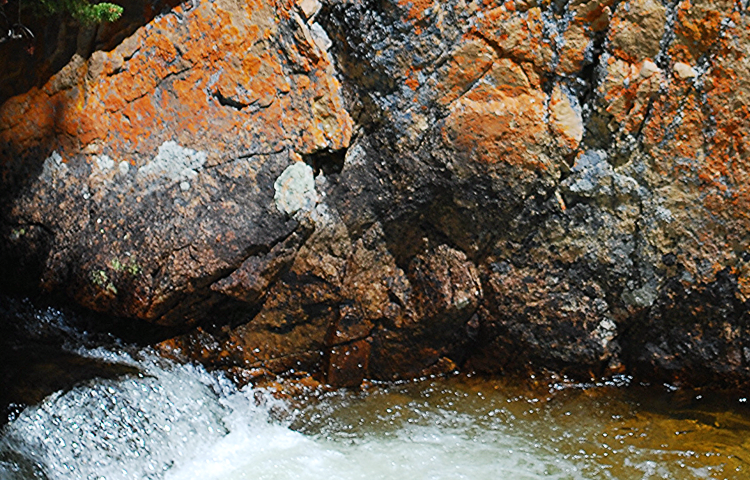
    Three sound sketches explore the timeless qualities of three magnificent canyons: Black Canyon of the Gunnison (Colorado); Glacier Gorge in Rocky Mountain National Park; and Palo Duro Canyon (Texas). Actually, each sketch began fundamentally based not so much on the canyons as on musical techniques.

    2024 . . . chamber orchestra version (12 minutes)

    A complex three-part canon of meandering 12-tone lines musically sketches the colorful streaks of pegmatite dikes in the Black Canyon’s cliff walls of Precambrian gneiss.

    1. Black Canyon

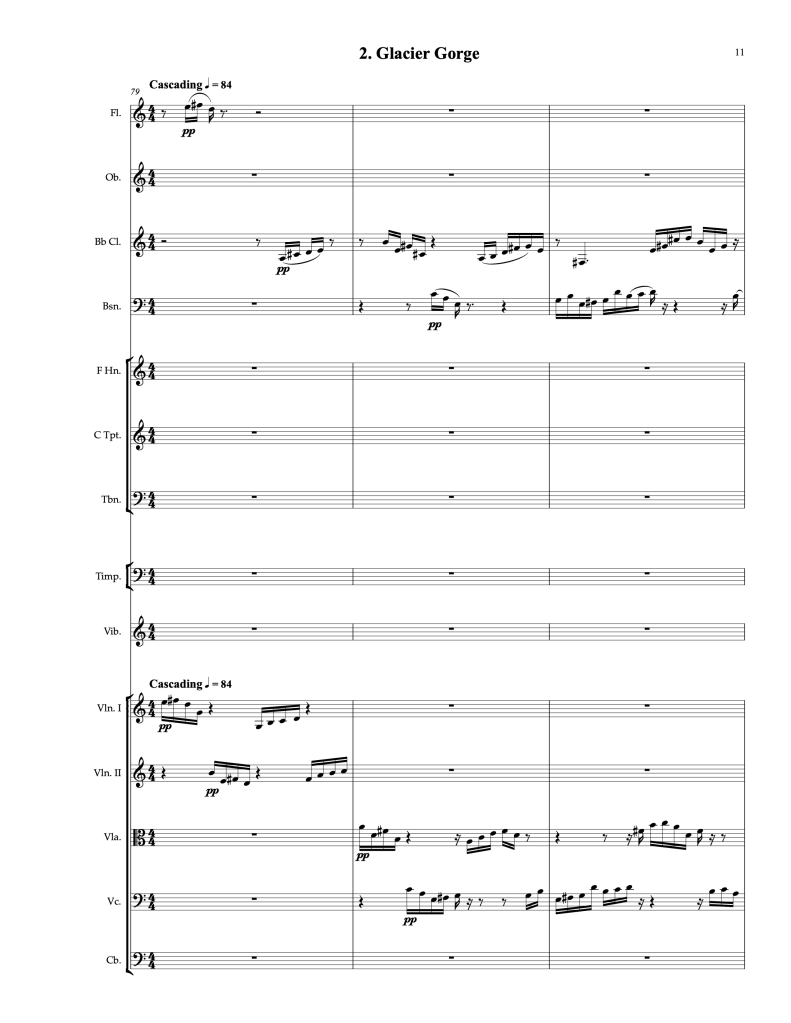
    Downward plunging arpeggios experience relentless musical gravity, sounding out the energetic fall of whitewater over boulders.

    2. Glacier Gorge
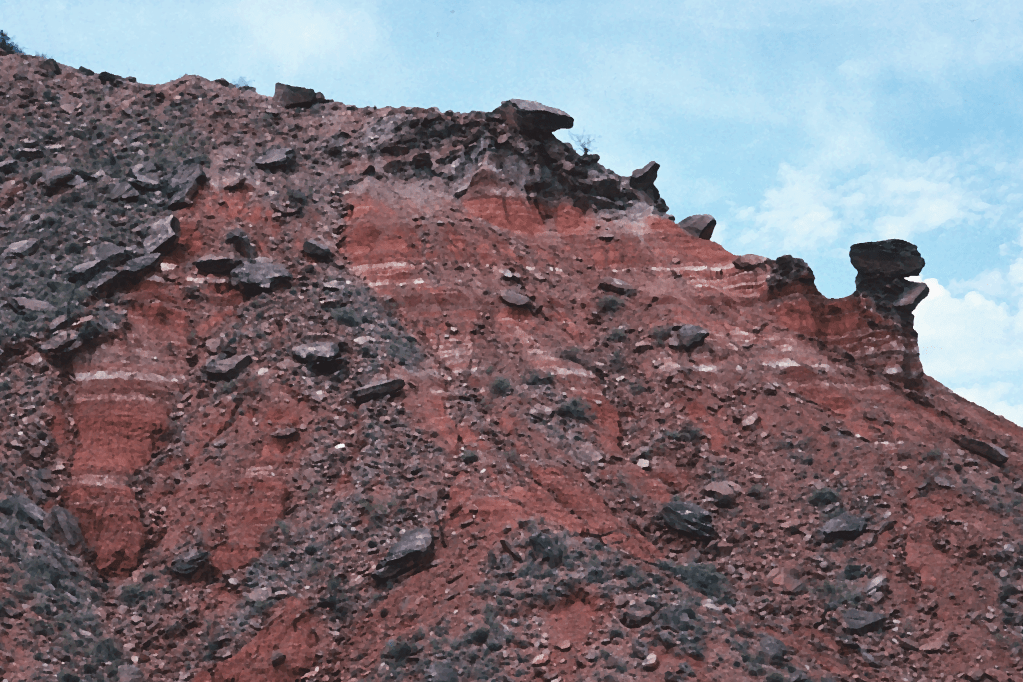
    Gently changing kaleidoscopic sonorities and a slow descending progression of pitch constellations to stillness express the timeless quiet of Palo Duro Canyon.

    3. Palo Duro dusk
    Score excerpts:

    Email the composer to request a PDF of the complete 47-page full score and 14 parts.

    tc24@txstate.edu

  • Canticum Terra

    2023 . . . antiphon for men’s chorus . . . 6:41

    Listening to a stunning recording of ancient choral music, I became re-interested in the rhythmic subtleties of voices executing the unspecified time flow of Gregorian chant. Using a variety of similar but slightly different note values, including the ancient semi-minim, minim, dotted-minim, breve, dotted-breve, and lunga), I composed a new plain chant. Beginning with pitches of a dorian mode, my wordless chant takes chromatic turns, providing tonal color without chords above a motionless deep drone. A high, windblown echo of the chant’s shape appears as prelude and coda to its “singing” deepness.

    The title (“Earth Song”) is inspired by two great 20th-century works: Mahler’s Das Lied von der Erde (1909) and Stravinsky’s Canticum Sacrum ad honorem Sancti Marci Nominis (1955). In this era facing global crises on our blue planet, Canticum Terra is a musical homage to and prayer for Mother Earth.

  • Arbor Sketches

    1967 / edited 2023 . . . piano or harp (6:40)

    In 1967 I was already earnestly composing for piano, trombone (my own instrument), even for orchestra. Living beside the Shiawassee River’s glacial-moraine beginnings in rural Livingston County Michigan, my best pastime was hiking along the creek’s forested banks. I was already going to Ann Arbor for trombone lessons and Youth Symphony rehearsals. In fall 1967, after my 18th birthday, I moved to Ann Arbor and enrolled at the University of Michigan. Though not yet a music major, I began playing bass trombone in the university orchestras. For 8 years, Ann Arbor with beautiful Huron River running through it was my forested Michigan home.

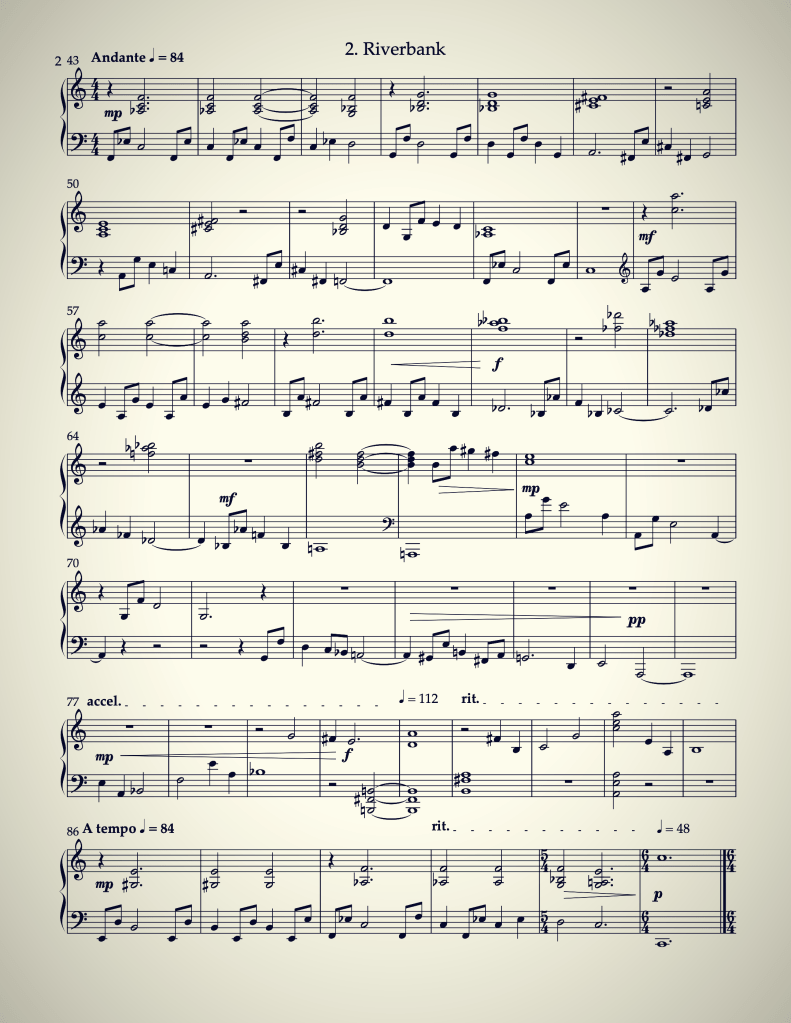
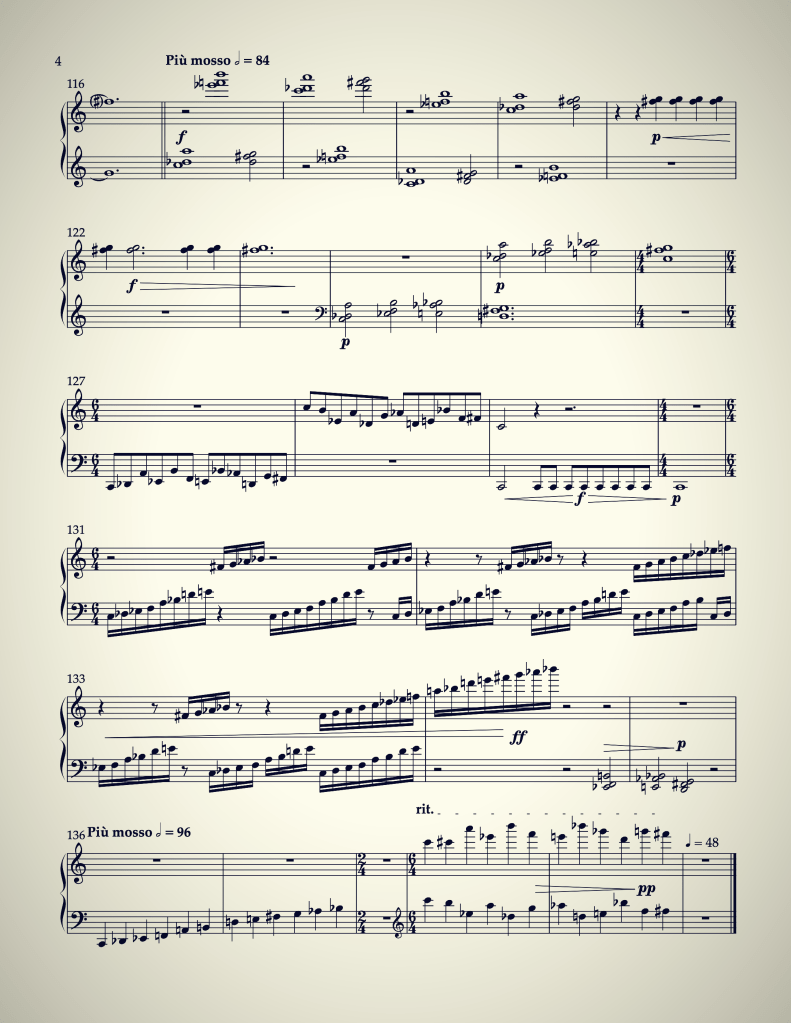
    “Mystic Breeze” and “Light” were my 12th and 18th completed TC compositions. “Riverbank” is from a 1967 sketch of an “interlude” for trombone and piano. They make a nice set of three, revealing that before formal study my compositional explorations were already discovering more exotic harmonies and rhapsodic forms resembling Debussy’s Impressionism and even the post-tonal possibilities of 12-tone rows.

    Looking back 55 years later, it turns out that once I began studying composition at Michigan, my first teacher, American-in-Paris composer Eugene Kurtz, immersed me in studying the music of Ravel and Debussy. The next teacher, George Balch Wilson, plunged me into the newer language of atonality and the radical explorations of the Avant Garde.

    1. Breeze
    2. Riverbank
    3. Light