Category: 2020-

  • Appalachian Autumn

    2024 . . . chamber orchestra (9:40) TC-142

    In 2005 through 2008, I lived in North Carolina only an hour away from the Blue Ridge Parkway. October Saturdays always involved a scenic drive up to and on the Parkway to absorb the glorious fall colors and trickling of secret waterfalls.

    Another in my “Animated Landscapes” Sketchbook for small orchestra, by its title this sound sketch pays homage to Copland’s 1944 masterpiece, Appalachian Spring. My currently developed harmonic sensibilities resemble Copland’s open, bold sonorities. In my composition studies in the 1970s, I was fascinated by Appalachian Spring the ballet as originally scored for only 12 orchestral instruments. This original scoring was a masterpiece of orchestral painting blended with the clear contrapuntal lines of chamber music, highlighting each instrument’s colorful voice.

  • Animated Landscapes

    A Musical Sketchbook

    A collection of eight new scores for chamber orchestra with the same orchestration (4 winds, 3 brass, timpani, percussion, and strings), the musical sketches are Impressionistic soundscapes rather than symphonic narratives in form. The Sketchbook also includes extensive performance, analytic and program notes.

    Read the entire ANIMATED LANDSCAPES Sketchbook

    Each sketch paints vivid harmonic and instrumental colors in simple to complex textures of dynamically evolving tempo and pace. Titles are evocative but not determinant for the development of the musical ideas. My original 1971 orchestral composition titled ANIMATED LANDSCAPES first explored this musical approach in what was then the prevailing Midwestern composers’ large-ensemble moving-sound-mass style of the 1960s and ’70s. My harmonic and contrapuntal craft has matured enormously since then!

    Appearing first in this 50-years-later Animated Landscapes Sketchbook for small orchestra, Appalachian Autumn pays homage to Copland’s 1944 masterpiece, Appalachian Spring. In my composition studies in the 1970s, I was fascinated by Appalachian Spring the ballet as originally scored for only 12 orchestral instruments. This original scoring was a masterpiece of orchestral painting blended with the clear contrapuntal lines of chamber music, highlighting each instrument’s colorful voice. My now developed harmonic sensibilities also resemble Copland’s open, bold sonorities.

    Appalachian Autumn
    Amber Atoms in the Fire Gleaming; Yin Yang (Air); Otter Creek (Water)
    Black Canyon (Earth); Glacier Gorge; Palo Duro (sunset) [Canyon Sketches]
    Looking for the Rainbow
    Massif; Storm; Highland dusk [Highland Sketches]
    Viennese Sketches
    Blue Ridge; Jupiter Rising [Sinfonia]
    Hrad (morning climb to the castle ruins); Ptáci (watching Leoš’s birds); Vody (forest streams and shadows); Bystroušky (mouflons and other mountain wildlife); Podzim (autumn sunset) [Hukvaldy Sketches]
    Separate listening to all 8 pieces found here . . .

    Free score and parts available from the composer: tc24@txstate.edu

  • Looking for the Rainbow

    2024 . . . chamber orchestra . . . 8 minutes (Originally for Karla Hamelin and her Texas State cello students)

    First composed in 2021 during the COVID pandemic, Looking for the Rainbow expresses both the uncertainty and hopefulness in our collective struggle to survive the storms of disease and violence.

    A prequel to Rainbow Rising (2016), an earlier canonic piece for cellos, Looking for the Rainbow explores a more complex rhythmic counterpoint of darker sonorities, evoking a restless spirit of searching, anticipating. (Canon is an ancient compositional technique, a melodic line that while in progress is closely echoed in one or more other “voices” to weave an entire contrapuntal texture out of matching threads.)

  • Canyon Sketches

    2024 . . . synthesized soundscape (14 minutes)

    Three sound sketches explore the timeless qualities of three magnificent canyons: Black Canyon of the Gunnison (Colorado); Glacier Gorge in Rocky Mountain National Park; and Palo Duro Canyon (Texas). Actually, each sketch began fundamentally based not so much on the canyons as on musical techniques.

    2024 . . . chamber orchestra version (12 minutes)

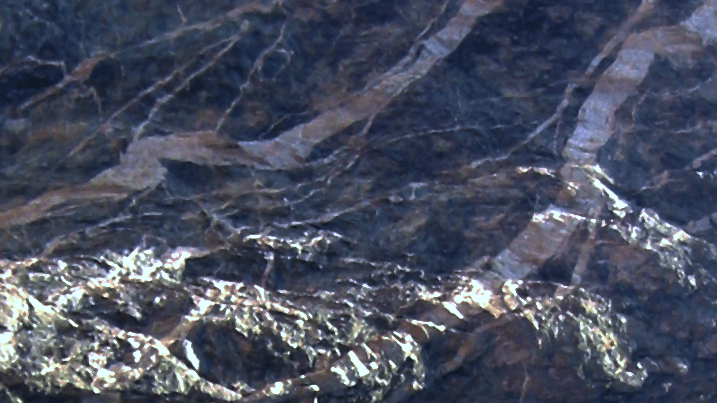
    A complex three-part canon of meandering 12-tone lines musically sketches the colorful streaks of pegmatite dikes in the Black Canyon’s cliff walls of Precambrian gneiss.

    1. Black Canyon

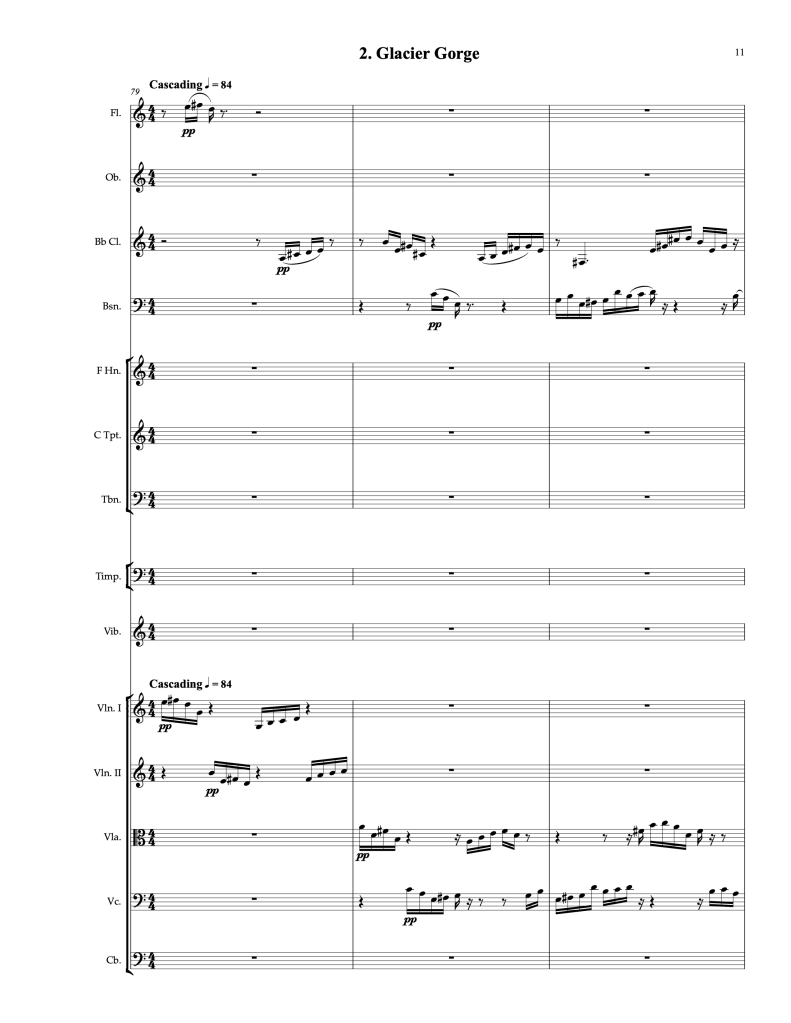
    Downward plunging arpeggios experience relentless musical gravity, sounding out the energetic fall of whitewater over boulders.

    2. Glacier Gorge

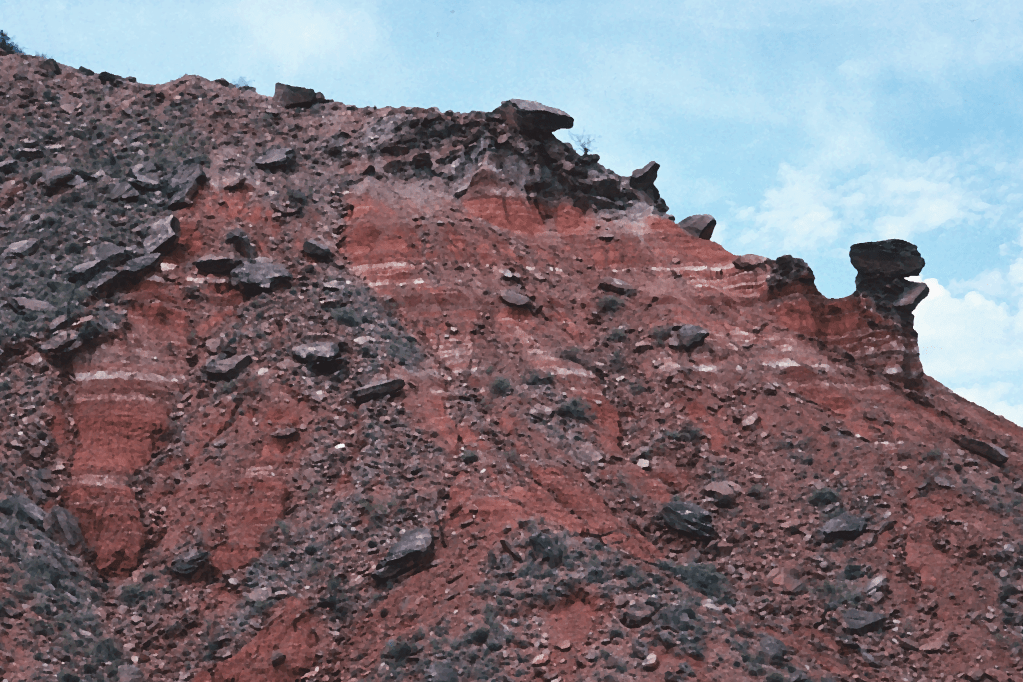
    Gently changing kaleidoscopic sonorities and a slow descending progression of pitch constellations to stillness express the timeless quiet of Palo Duro Canyon.

    3. Palo Duro dusk

    Score excerpts:

    Email the composer to request a PDF of the complete 47-page full score and 14 parts.

    tc24@txstate.edu

  • Black Canyon

    2024 . . . Meditative sound environment.

    Colorado’s Black Canyon of the Gunnison lies between narrow, tall rock cliffs of metamorphic Precambrian gneiss and schist formed 1.7 billion years ago crosscut by lighter-colored streaks of pegmatite. Due to the canyon’s depth and narrow width, its river falls from the Continental Divide in continual shadows.

    This piece takes musical counterpoint from The Book of Canons. An ancient form of Rumpelstiltskin magic, canon spins complex counterpoint out of a single melodic subject that is echoed after some delay by one or more answering lines of identical rhythmic values and melodic shape (possibly transposed).

    The art of canon pervades much of my 21st-century writing, a challenging yet stimulating and gratifying approach to texture weaving with continuous strands of material. The Book of Canons collects excerpts from these works, showing each canon’s subject as well as points and pitch levels of answers, worked out in three voices.

  • Staré BRNO

    2024 . . . wind ensemble (7:10) TC-138

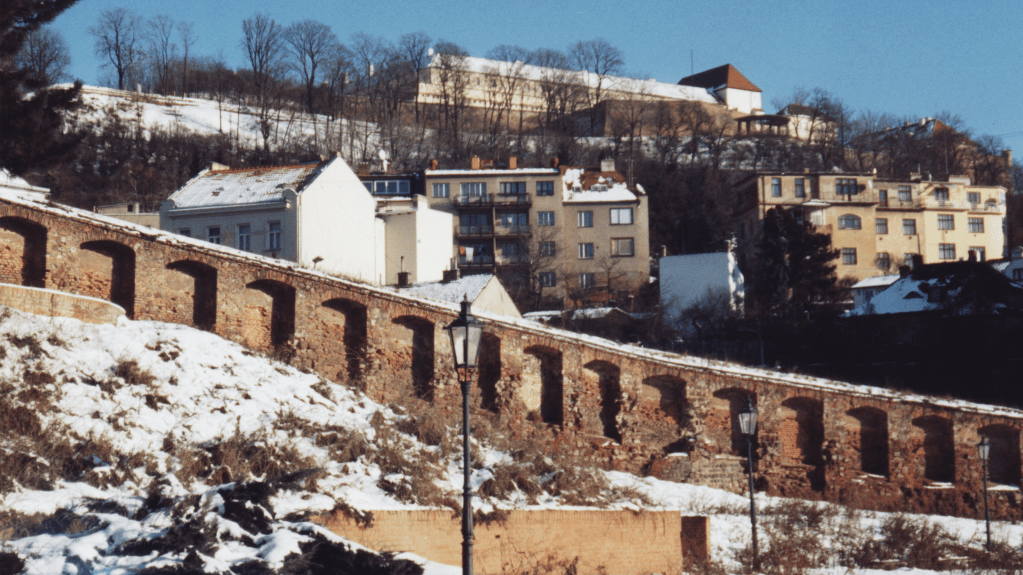
    My first of five visits to the ancient Moravian city of Brno was in 1991, shortly after the Velvet Revolution liberated Czechoslovakia and shortly before it became the Czech Republic. The old (“staré”) center of the city is a cobble-stoned plaza with tram tracks running across, surrounded by Austrian-era buildings. There you could often find a Moravian folk music group performing, fall kiosk vendors serving fermented cider, or a holiday bazaar in the snow. Local lore says the plaza and nearby green market are the center of Brno, the central city of old Czechoslovakia, itself in the center of the European continent. With a medieval castle and twin-spire cathedral, Brno was also the beloved home of Leoš Janáček, the great early modern Moravian composer, whose music provided the themes for the ostinato variation textures of this new soundscape.

  • NEBULAS

    2024 . . . sound sculpture for chamber winds . . . (11:00) TC-139

    Nebulas are where stars and planetary systems are formed from collapsing clouds of gas and dust. One of the most familiar and well studied objects in space, the Orion Nebula is enormous, 24 light-years across with a mass of about 2,000 times that of the Sun.

    The single generating concept of this soundscape is musical: a slow, almost timeless metamorphosis of complex 4-pitch constellations, some bright, some darker “celestial” harmony. Rather different from Debussy’s impressionist Trois Nocturnes (1892-99), the first of which, “Nuages,” depicts earthly clouds as gently undulating, colorful orchestral lines and chords.

  • Canticum Terra

    2023 . . . antiphon for men’s chorus . . . 6:41

    Listening to a stunning recording of ancient choral music, I became re-interested in the rhythmic subtleties of voices executing the unspecified time flow of Gregorian chant. Using a variety of similar but slightly different note values, including the ancient semi-minim, minim, dotted-minim, breve, dotted-breve, and lunga), I composed a new plain chant. Beginning with pitches of a dorian mode, my wordless chant takes chromatic turns, providing tonal color without chords above a motionless deep drone. A high, windblown echo of the chant’s shape appears as prelude and coda to its “singing” deepness.

    The title (“Earth Song”) is inspired by two great 20th-century works: Mahler’s Das Lied von der Erde (1909) and Stravinsky’s Canticum Sacrum ad honorem Sancti Marci Nominis (1955). In this era facing global crises on our blue planet, Canticum Terra is a musical homage to and prayer for Mother Earth.

  • Titan Sea

    2023 . . . sound sculpture . . . 7 minutes

    The largest of Saturn’s moons is also the second largest moon in the Solar System. Its dense atmosphere obscures a unique feature: it is the only place beyond Earth on which clear evidence has been found of stable bodies of surface liquid.

    That may be partly why an experimental extreme-depth earth-ocean submersible vehicle was named for it. The Titan submersible famously imploded in 2023 while headed down to view the shipwreck of the Titanic in the cold North Atlantic.

    Our imaginary musical exploration of the moon Titan, its atmosphere and ocean depths, is completely tranquil, experiencing only gentle waves and currents of dark and brighter sonorities.

  • EFFULGENCE II

    2023 . . . sound sculpture . . . duration 4:40

    EFFULGENCE (the word means “brilliant, shining radiance”) was a 1984 improvisatory composition in the style of Terry Riley’s In C, overlapping repetitive patterns I call multi-phase ostinato music. It was like the rhythmic dance of a fountain.

    This sequel evokes the speckled field of sunlight reflected on the surface of a body of water. My home state, Michigan, The Great Lakes State surrounded by three of those magnificent fresh-water seas, also contains over 1,000 smaller lakes. My whole life I have gazed at and studied the way sunlight reflects off their wave-articulated surfaces, sparkling in a complex ensemble dance of periodic flashes of light.

    The musical construction is all about prime numbers. The melodic-cell eighth-note theme consists of successive intervals of 1, 3, 5, 7, and 11 semitones. Rhythmic values and motivic repetition cycles are all durations equivalent to 1, 3, 5, 7, 11 or 13 eighth-notes.