In Robert Frost’s poem “My November Guest,” an exquisite expression of loss and sadness, four phrases stood out expressing the gray beauty of November:
“these dark days of autumn rain” . . . “my sorrow when it’s here with me”
“the bare, the withered tree” . . . “the sodden pasture lane”
Autumn RainMusic was originally composed in Ann Arbor for oboe and piano in 1971. Decades later in San Marcos, in 2017 the music evolved into an elegy for unaccompanied English horn, and now to this duo arrangement, heard here with sound-synthesis enhanced background.
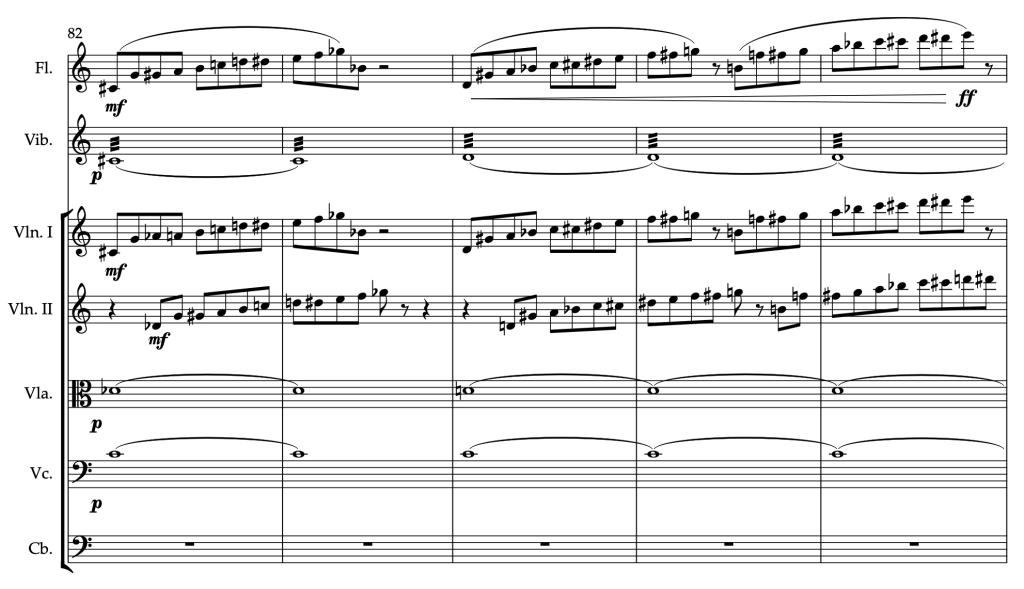
Nebulas are where stars and planetary systems are formed from collapsing clouds of gas and dust. One of the most familiar and well studied objects in space, the Orion Nebula is enormous, 24 light-years across with a mass of about 2,000 times that of the Sun.
The single generating concept of this soundscape is musical: a slow, almost timeless metamorphosis of complex 4-pitch constellations, some bright, some darker “celestial” harmony. Rather different from Debussy’s impressionist Trois Nocturnes (1892-99), the first of which, “Nuages,” depicts earthly clouds as gently undulating, colorful orchestral lines and chords.
There are many Highlands in my life. I am part Scottish, though my great grandparents are from Glasgow, not the Highlands. I do enjoy its single-malt whiskeys, though, and I went to Howell High School, the “Highlanders.” And I now live in the Texas Hill Country.
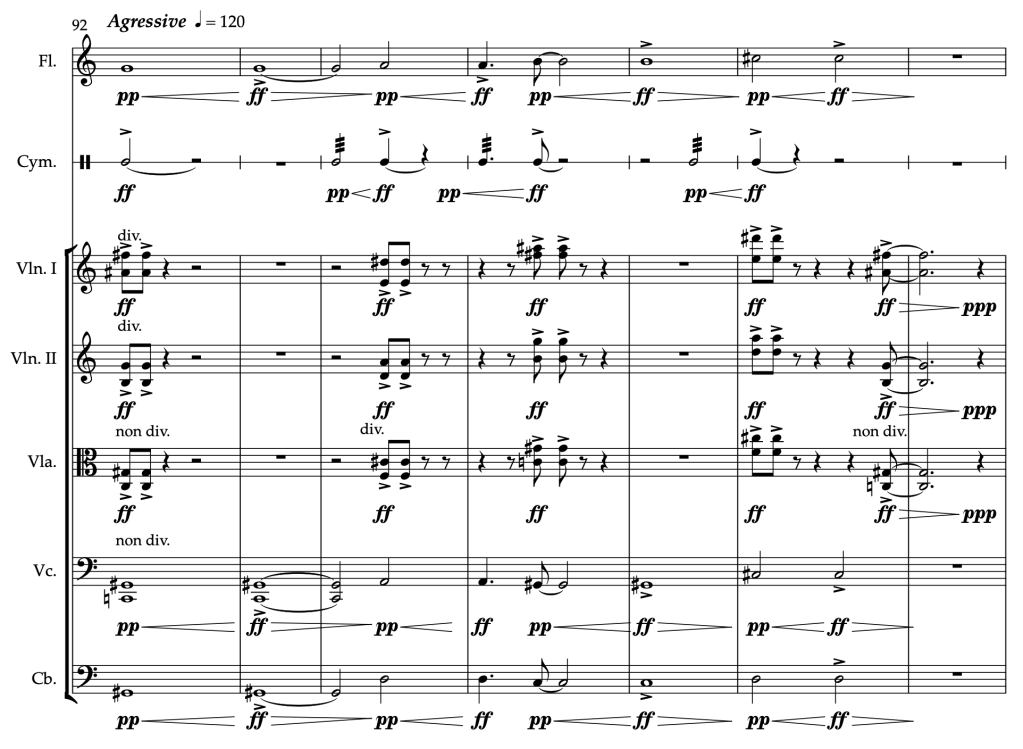
Then there is Českomoravská vrchovina. I first visited what was then still Czechoslovakia in 1991. The Bohemian-Moravian Highlands are between the two main regions of what is now the Czech Republic. The ancient town of Tabor and the massif Blaník are two points of scenic and historical interest. Highlands Sketches sound paints climbing the mountain’s rugged slope, a thunderstorm of dissonant accents, and the quiet harmonic progression of an autumn dusk.
In 1967 I was already earnestly composing for piano, trombone (my own instrument), even for orchestra. Living beside the Shiawassee River’s glacial-moraine beginnings in rural Livingston County Michigan, my best pastime was hiking along the creek’s forested banks. I was already going to Ann Arbor for trombone lessons and Youth Symphony rehearsals. In fall 1967, after my 18th birthday, I moved to Ann Arbor and enrolled at the University of Michigan. Though not yet a music major, I began playing bass trombone in the university orchestras. For 8 years, Ann Arbor with beautiful Huron River running through it was my forested Michigan home.
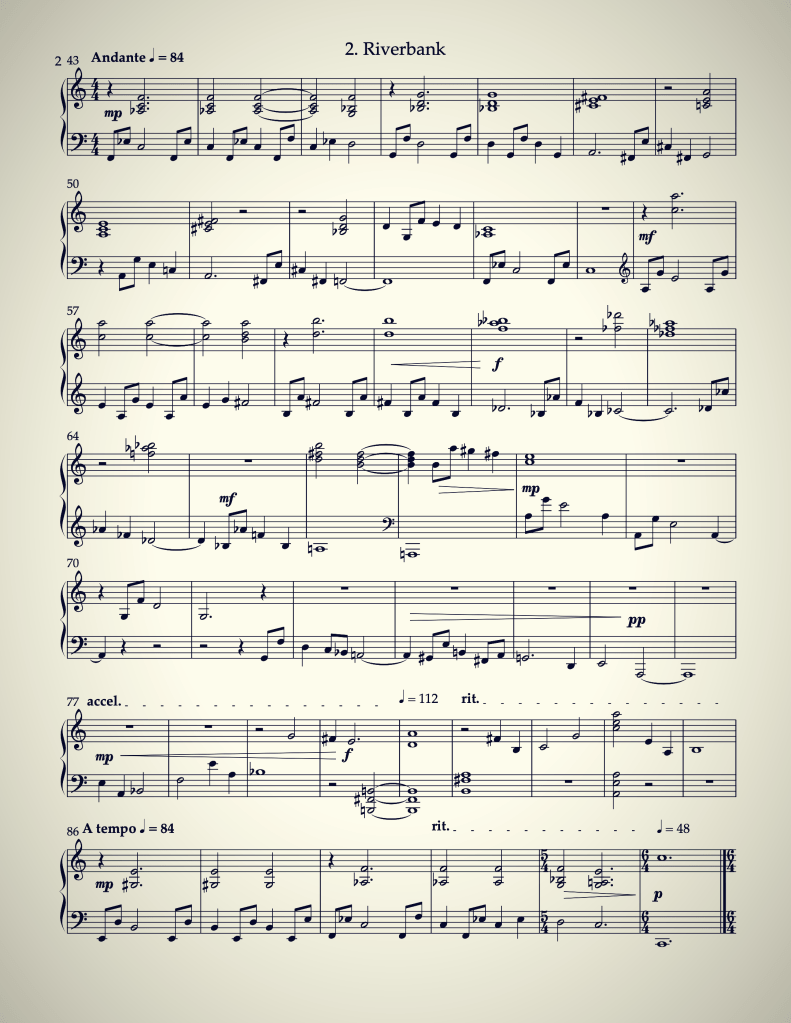
“Mystic Breeze” and “Light” were my 12th and 18th completed TC compositions. “Riverbank” is from a 1967 sketch of an “interlude” for trombone and piano. They make a nice set of three, revealing that before formal study my compositional explorations were already discovering more exotic harmonies and rhapsodic forms resembling Debussy’s Impressionism and even the post-tonal possibilities of 12-tone rows.
Looking back 55 years later, it turns out that once I began studying composition at Michigan, my first teacher, American-in-Paris composer Eugene Kurtz, immersed me in studying the music of Ravel and Debussy. The next teacher, George Balch Wilson, plunged me into the newer language of atonality and the radical explorations of the Avant Garde.
I have long admired and been influenced by the music of early 20th-century Austrian composer Anton Webern. Known historically as a member of the Second Viennese School with Alban Berg and mentor Arnold Schoenberg, the three were pioneers of so-called atonal music and 12-tone-row serial harmonic organization. I find the term “atonal” misleading and negative, as their 12-tone processes achieved new “12-tone tonalities” — not simply a rejection of traditional tonal harmony but also striving to create new and more complex tonalities.
What I admire about Webern’s mostly-quiet instrumental miniatures (his Symphonie Op. 21 has only two sparsely-scored movements) is the delicate, crystalline quality of his pitch constellations; and their gently lyric, precious setting into transparent textures, pearl-strings of delicate sound colors (called Klangfarbenmelodie).
Webern’s mentor, Schoenberg, as a Jew was compelled to emigrate to the U.S. in 1933 before it was too late. Webern, not Jewish, stayed in Vienna and survived World War II, only to be fatally shot by a U.S. Army soldier during the Allied occupation of Austria.
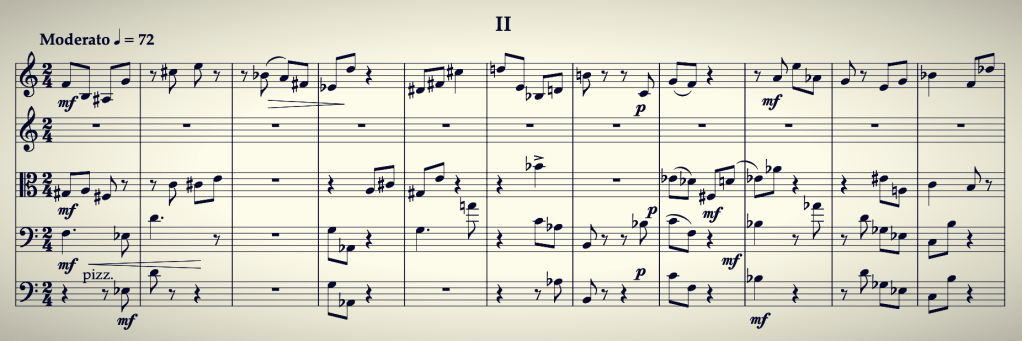
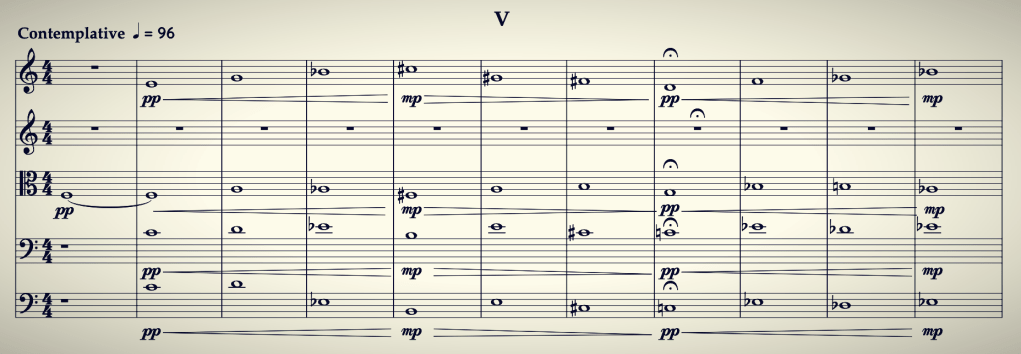
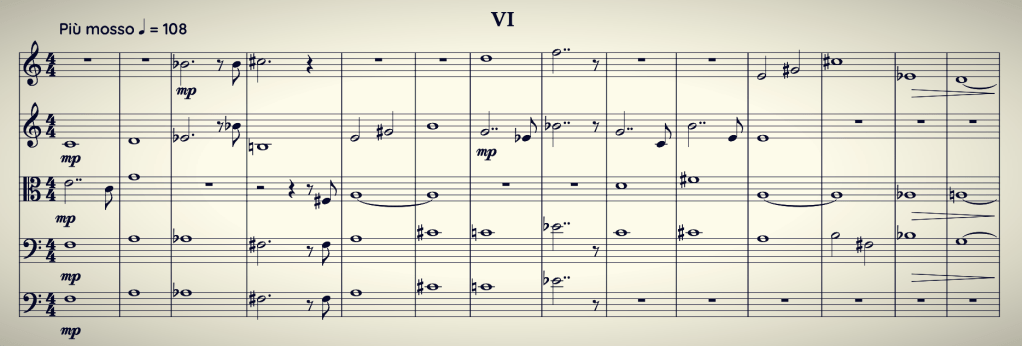
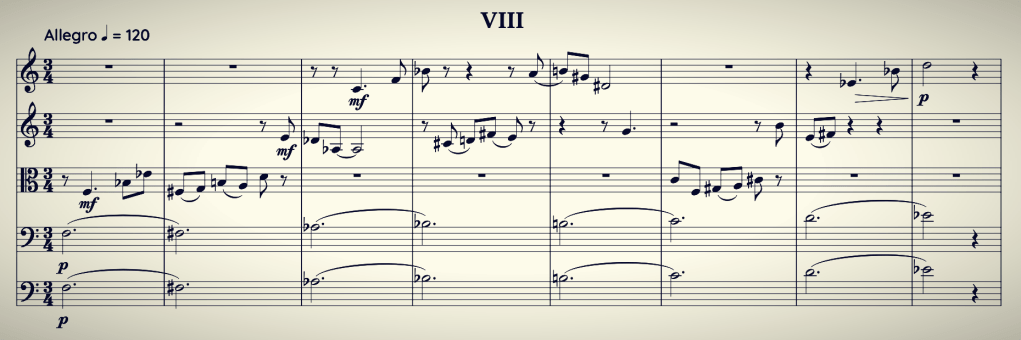
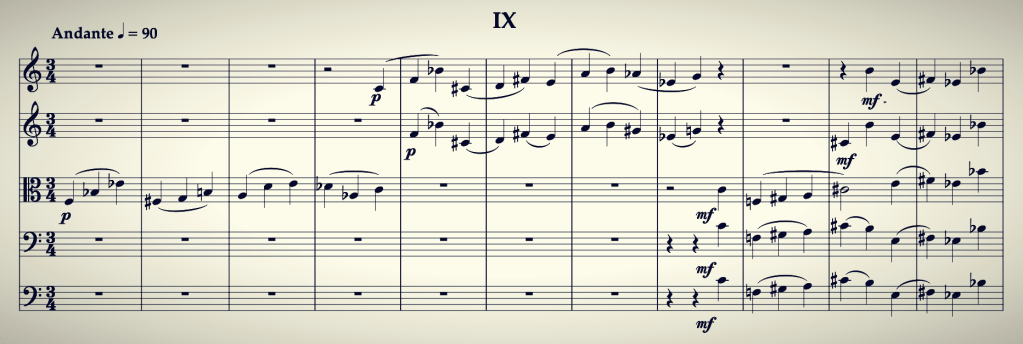
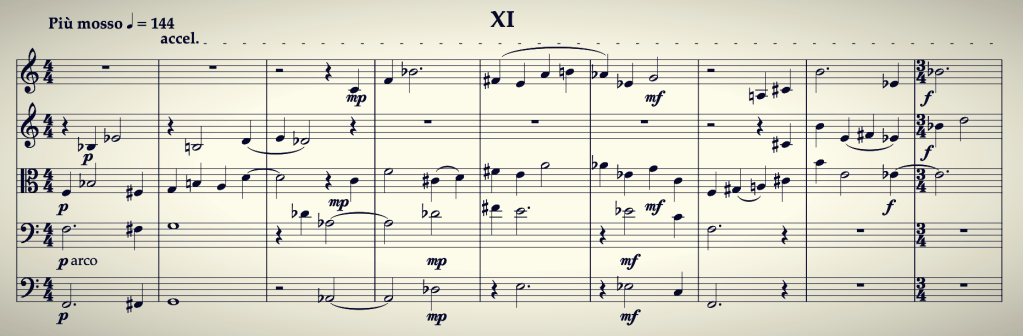
Miniatures I through IV are adapted from Webern Elegyand V through XII from MapLab7 – For Little Arnold. Viennese Sketches does not portray the historical European city but rather explores various musical textures and tonalities using the 12-tone serial techniques of the so-called Second Viennese School of composers associated with Schoenberg. While their music using these techniques was unfortunately dubbed “atonality,” my uses focus on creating constellations and counterpoint that is complex but much less dissonant and more sonorous, my sense of a new tonality.
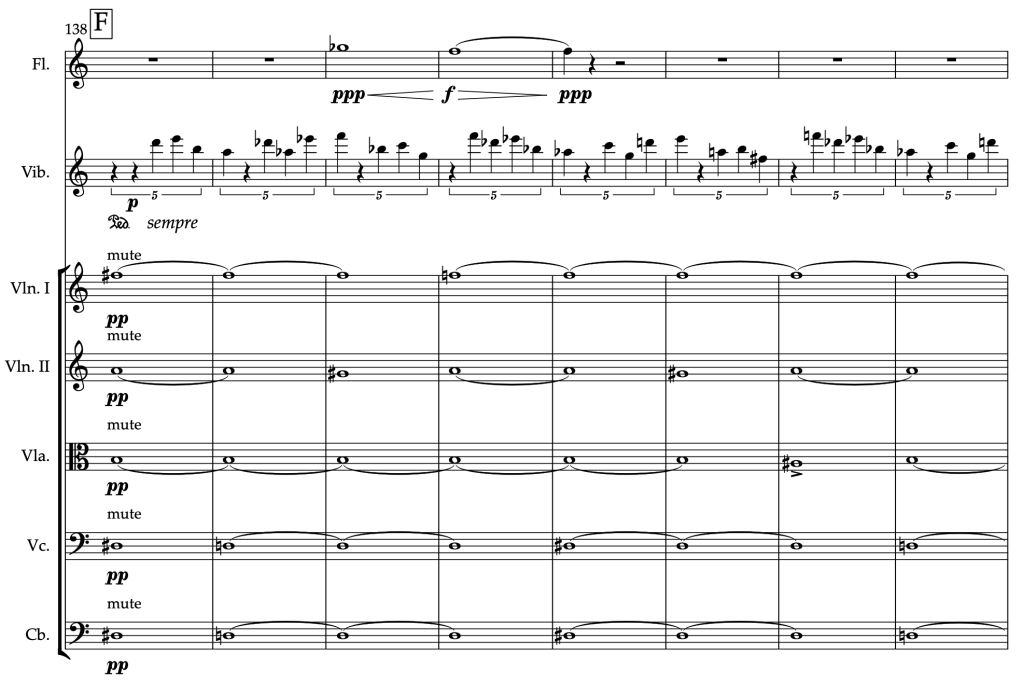
While the chamber orchestra work is organized in six movements and a coda, each miniature is excerpted below to show changing pace and textures.
A visit to the shores of Michigan’s Leelanau Peninsula inspired me to write a poem:
Peninsula upon peninsula upon grand peninsula, Lee upon Leelanau upon Lower. Cove from bay from great lake, Suttons Bay off Grand Traverse Bay off Lake Michigan.
Land curves in myriad shore shapes, Reaching out to blue water. Fresh wind weds the land and water, Sun warms bright sails and sailor.
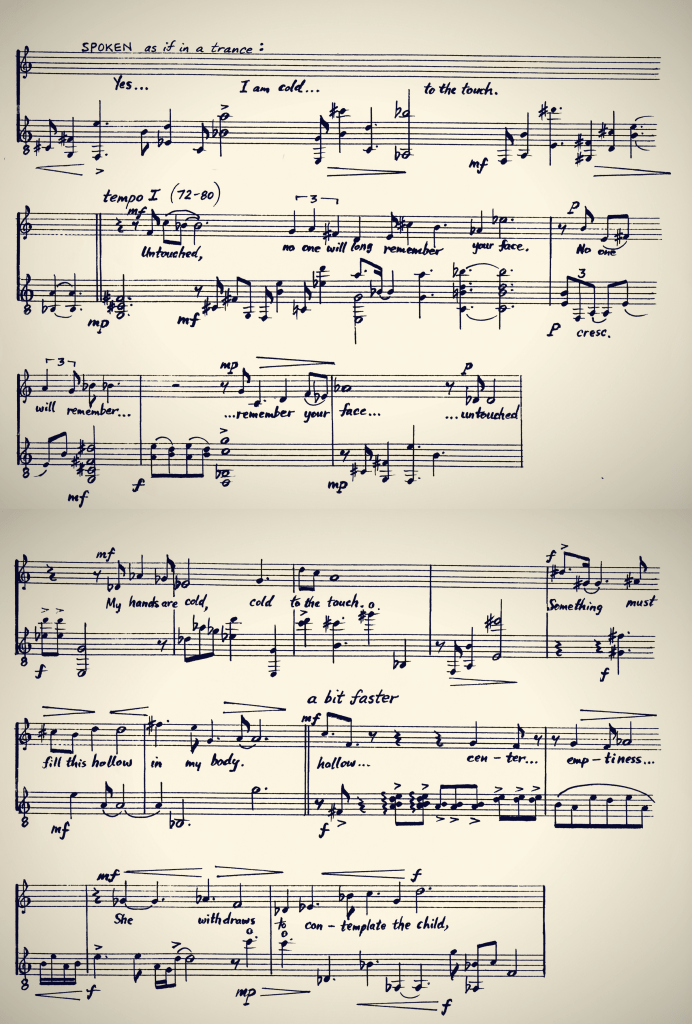
Setting it as lyrics for an art song made an example for MapLab 2: Sketch a Song. The lab instructions include a step-by-step explanation of the compositional process. (The synthesized audio rendering below is not capable of pronouncing the words.)
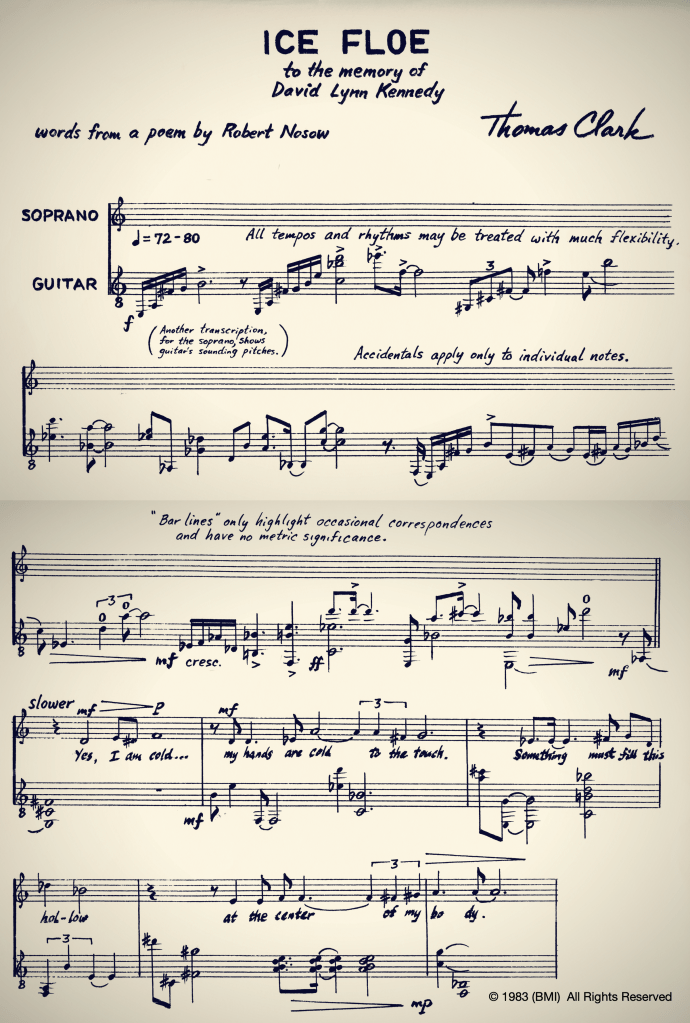
1983 . . . soprano, guitar (7:50 min.) . . . words by Robert Nosow
Robert Nosow was a graduate student in musicology at North Texas when the poem was written. David Lynn Kennedy was a grad student in guitar killed by Denton police in a tragic incident in 1983. Soprano Jing Tam was a doctoral student who also knew Kennedy, one of many NTSU/UNT music students who died during my 28 years there.
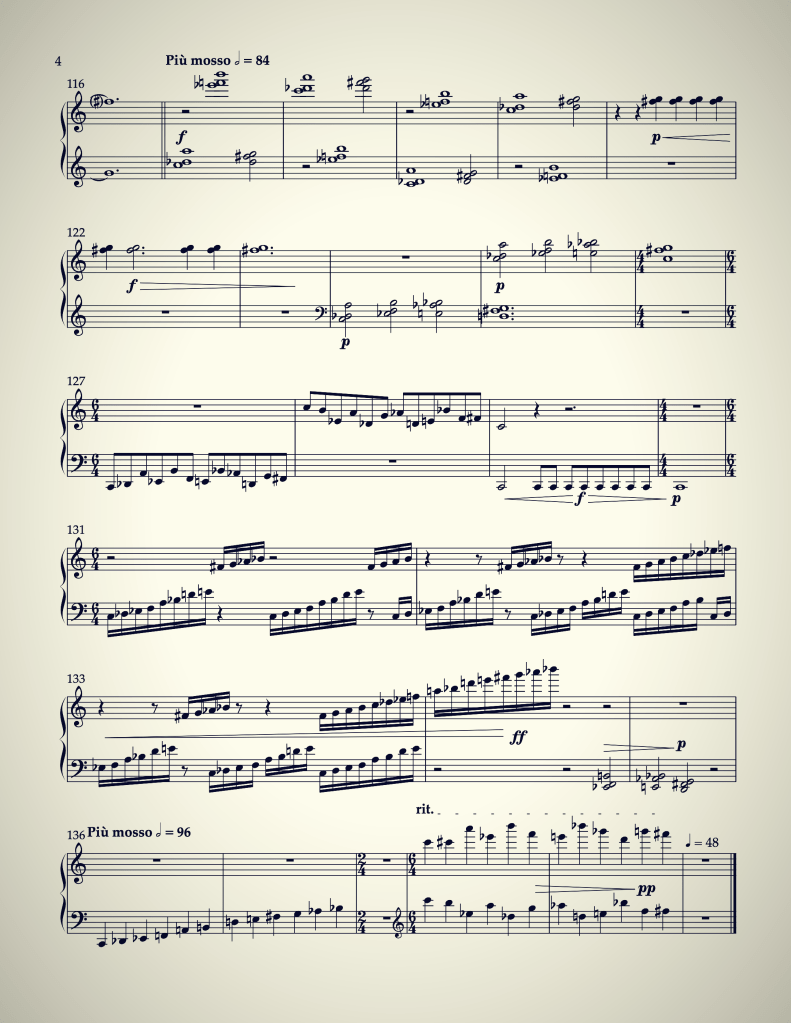
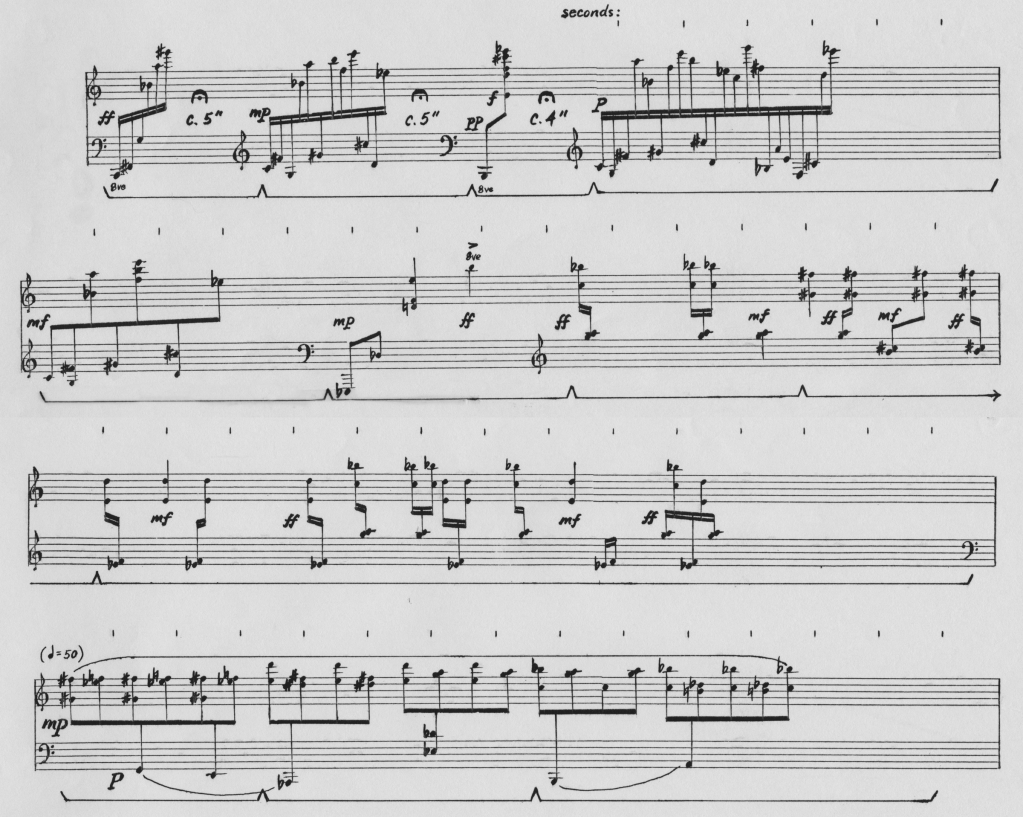
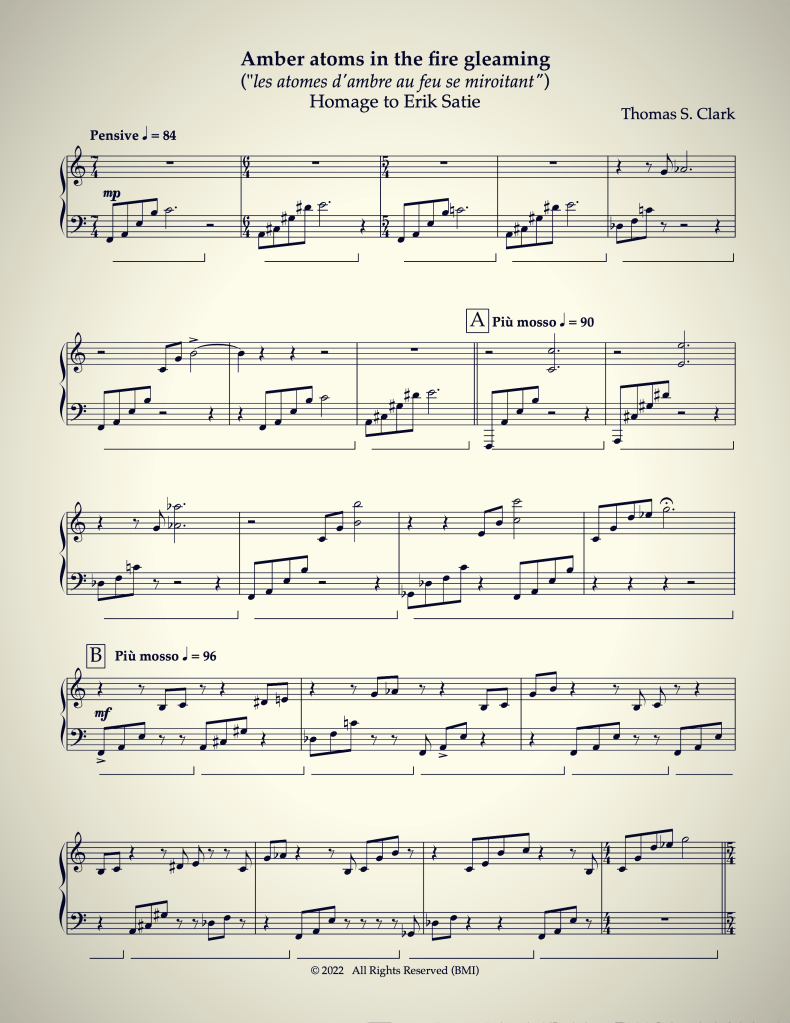
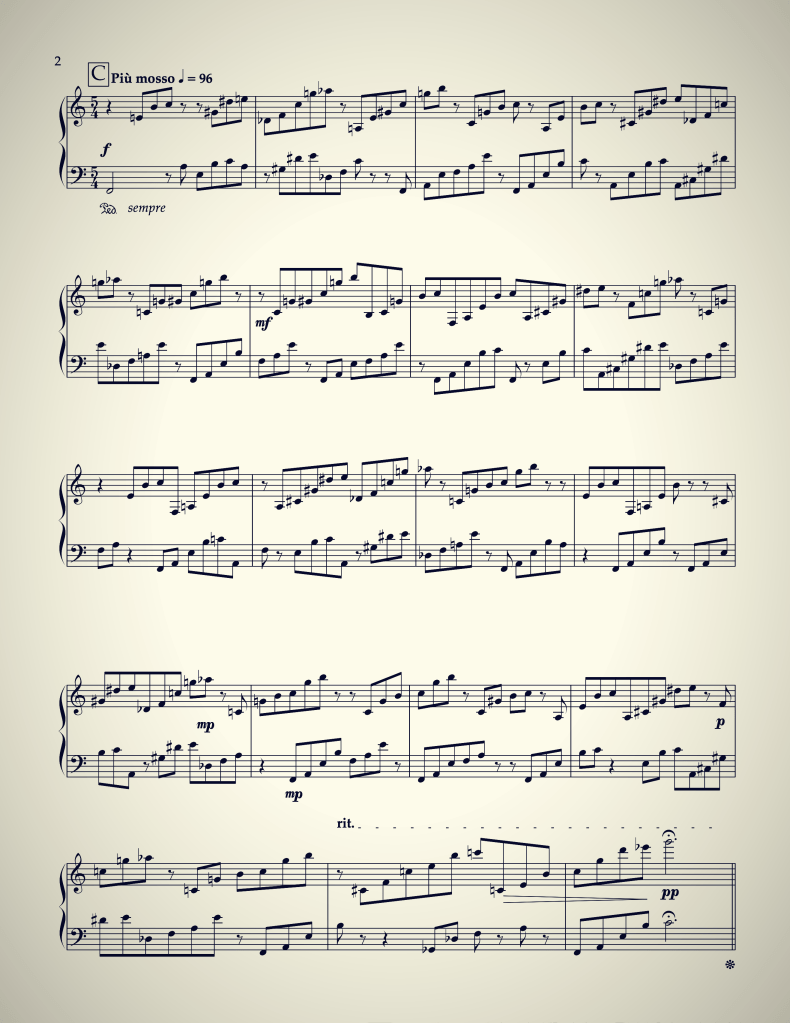
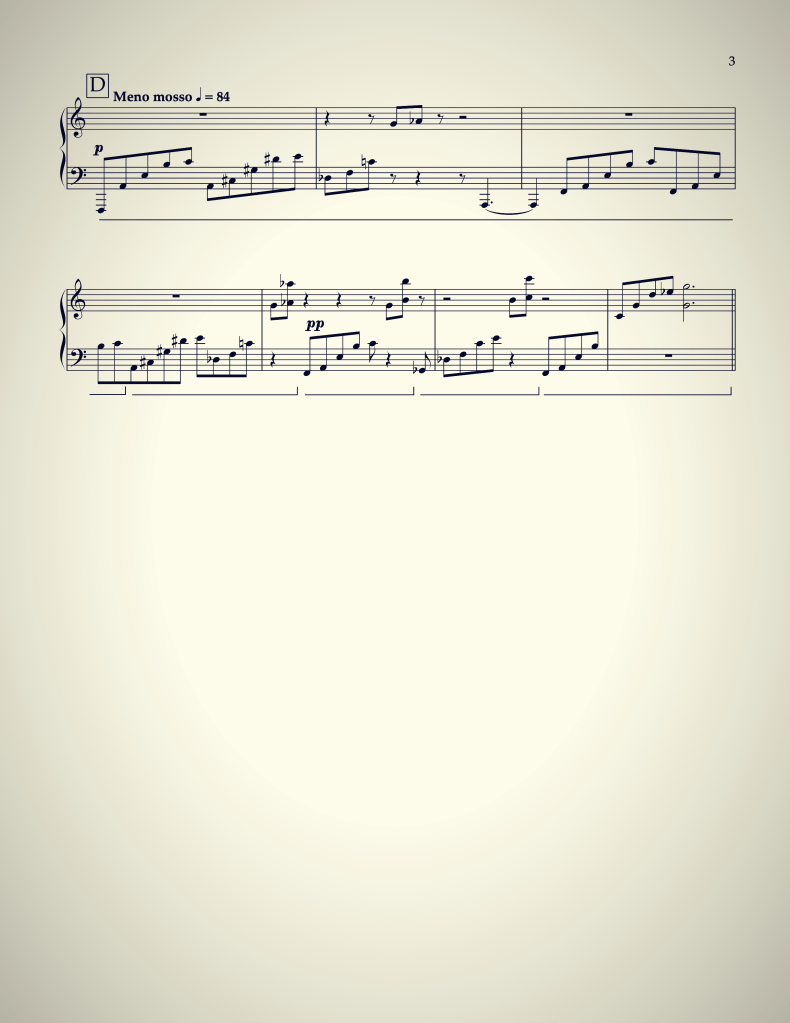
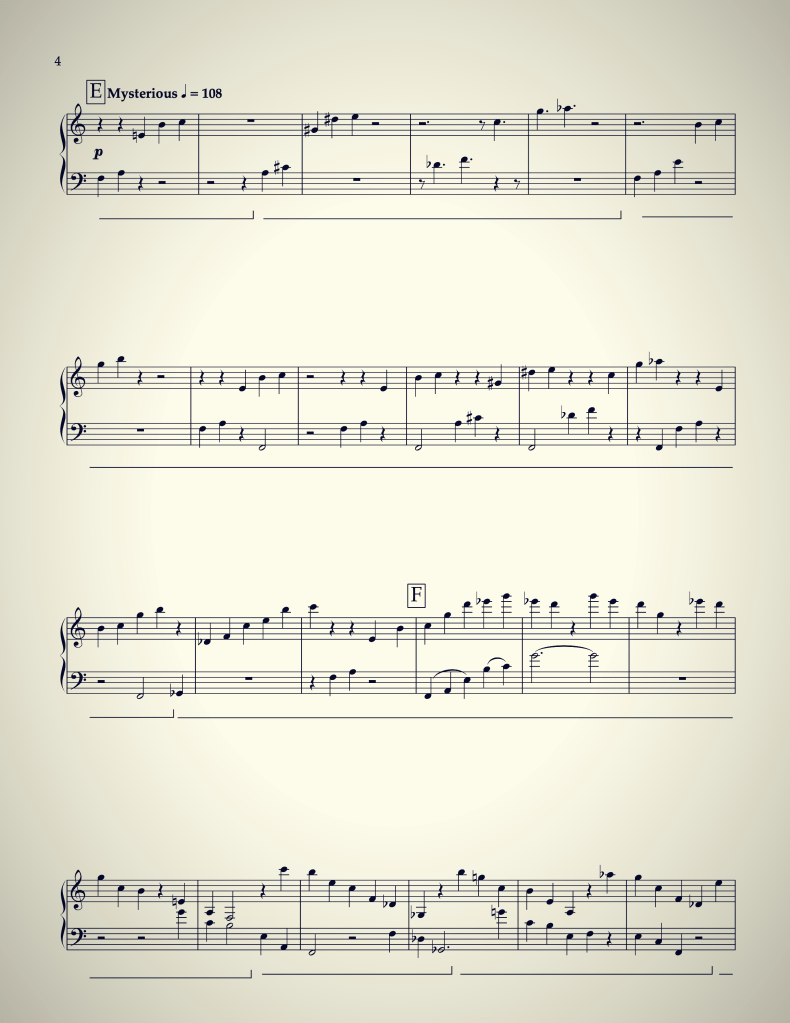
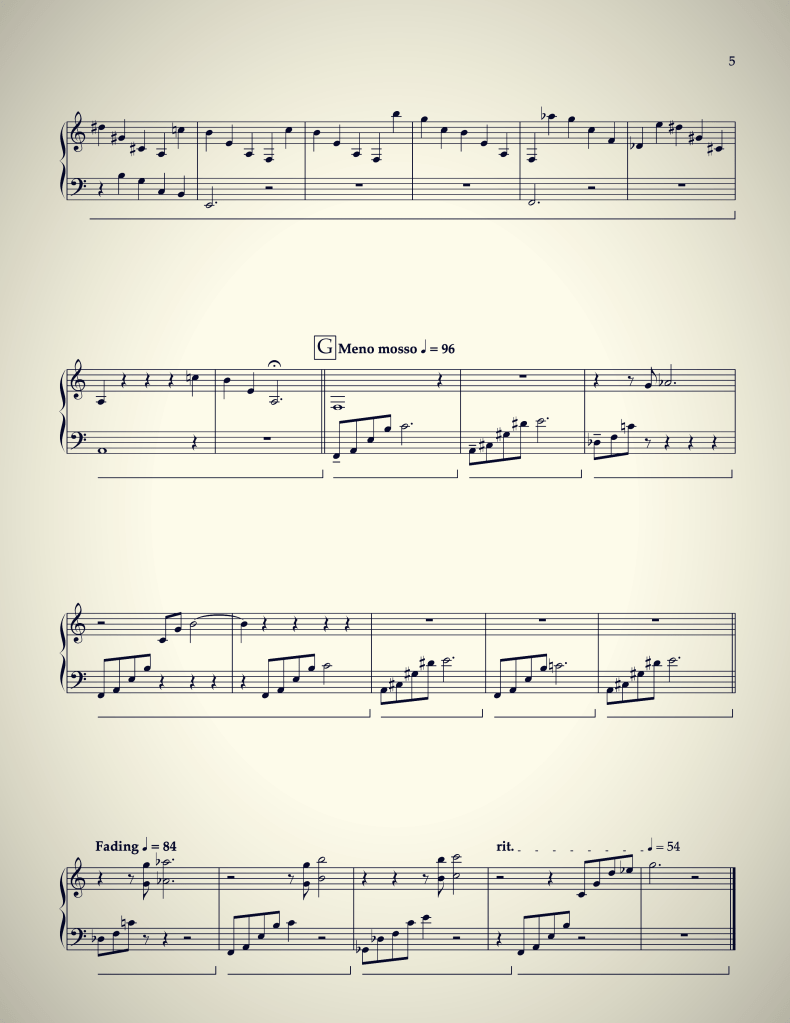
This musical sketch is titled with a translated line (“Où les atomes d’ambre au feu se miroitant”) of a French poem by de Latour that may have inspired Erik Satie — the poem ends with the word “gymnopaedia.” In keeping with Satie’s radically sparse, (one could even say) minimalist style in his Trois Gymnopédies for piano (1888), this homage generates entirely from one modern harmonic constellation, arpeggiated repeatedly in a gentle, almost imperceptible meter, then growing colorful “amber” sustained highlight sounds. Eventually the arpeggios begin to spin and swirl in a layered, kaleidoscopic texture that is “minimalist” in the 20th-century usage as the description for repetitive ostinato music.
Go to Lab 1: Genesis of a Gymnopédie in Mapping the Music Universe for a complete step-by-step explanation of the process of composing Amber Atoms in the Fire Gleaming.
Since this is modeled on a piano piece, Gymnopédie, here is a playable piano version:





















 Thomas Clark - composer / digital artist