2022 . . . collection of more advanced etudes for Piano
Mapping the Music Universeproduced several small etudes to illustrate the compositional potential of musical patterns explained in the ebook. The inspiration to collect them into a series came from many years of fascination with Bartók’s wonderful Mikrokosmos series of 153 piano pieces in modern styles. Book I contains 7 short etudes, each titled with an astronomical entity named for a mythological character and ranging in difficulty for the pianist.
Book II presents more extended compositional explorations, each suitable as a stand-alone recital piece. Beyond Mikrokosmos, Book IIpays homage to Debussy’s revered books of Preludes. The pieces in Book II embrace the Impressionist approach to texture and form, while evolving beyond Debussy’s tonal language.
In a lighthearted cabaret style, each dance adopts tunes from the iconic symphonies of master composers Mozart and Beethoven. Each is set in different key signatures from the quoted theme, as appropriate for these venerated dance forms.
Mazurka . . . Zambra . . . Tango . . . Waltz
String quartet version
(alternate transcriptions for sax or clarinet quartet)
Mazurka
Mazurka (imagine Warsaw) explores the graceful rising and falling of the melodic theme in the sometimes-neglected beautiful second movement of Beethoven‘s masterpiece, Symphony No. 5 in C Minor, Op. 67.
Zambra
An ancestor of Jarabe tapatío, the national dance of Mexico, Zambra is an old Spanish flamenco dance still performed in Andalusia. Beethoven’s Symphony No. 7 is famous partly for its majestic slow second movement, a dark dirge in A Minor that builds relentlessly through a theme and variation process. In Zambra (imagine Granada) the harmony is darkened while the persistent rhythmic repetition is lightened by a fast flamenco tempo.
Mozart’s Symphony No. 41 “Jupiter” is one of his greatest masterpieces. His No. 40 “Great G Minor” and No. 38 “Prague” are also magnificent. It makes one wonder if he had lived longer, what other stunning music would have poured forth.
Tango
Tango (imagine Buenos Aires) is built from the main themes in the opening of the No. 40 in G Minor as a languid blues tune. The keys flow like dancers, the musicians feeling their way through the shadows.
Waltz
Waltz (imagine Vienna) draws on the main theme of the No. 41 Jupiter’s finale, a curving melody of rhythmic vitality and fascinating turning shapes.
The middle movement, “Tango,” of my 2021 piece for chamber orchestra, Sinfonia, turned out to be easily transcribed for a number of different quartets. Here’s how it sounded in a version for four saxophones premiered April 15, 2022, at Texas State University:
Corvus Quartet performers Nolan Hopkins (soprano sax), Garrett Iler (alto), Ryan Halbert (tenor), and Jack Woodruff (baritone sax) studied with saxophone professor Dr. Todd Oxford.
Tango is for me uncharacteristically set in actual keys, appropriate for this venerated dance form. The keys flow like dancers, the musicians feeling their way through them while never seeing an actual key signature.
Mozart’s “Jupiter” Symphony No. 41 is one of his greatest masterpieces. His No. 40 in G Minor and No. 38 “Prague” are also magnificent. It makes one wonder if he had lived longer, what other stunning music would have poured forth. Back to No. 41 Jupiter, the first theme is a curving melody of such rhythmic vitality and fascinating turning shape that I used it as an example of both in my ebook, Mapping the Music Universe. Mozart makes the theme into a fugato, and I have adopted it in my obsessive study of canons.
Tango first sets the two main themes from the opening of the G Minor No. 40 as a languid tango tune. Following is a trio in slow waltz meter whose tune is the “Jupiter” motive from Symphony No. 41. A da capo takes us back one more time to the haunting No. 40 G Minor tango tune.
I have long admired and been influenced by the music of early 20th-century Austrian composer Anton Webern. Known historically as a member of the Second Viennese School with Alban Berg and mentor Arnold Schoenberg, the three were pioneers of so-called atonal music and 12-tone-row serial harmonic organization. I find the term “atonal” misleading and negative, as their 12-tone processes achieved new “12-tone tonalities” — not simply a rejection of traditional tonal harmony but also striving to create new and more complex tonalities.
What I admire most about Webern’s mostly-quiet instrumental miniatures (his Symphonie has only two sparsely-scored movements) is the delicate, crystalline quality of his pitch constellations; and their gently lyric, precious setting into transparent textures, pearl-strings of delicate sound colors ( called Klangfarbenmelodie). Here is a transcription for chamber orchestra with sound color much like Webern’s Symphonie Op. 21:
Webern’s mentor, Schoenberg, as a Jew was compelled to emigrate to the U.S. in 1933 before it was too late. Webern, not Jewish, stayed in Vienna and survived World War II, only to be fatally shot by a U.S. Army soldier during the Allied occupation of Austria.
The music is fashioned out of a small set of sound resources: simple sounds of drums, bright sounds of ringing metal instruments, and deep shining sounds of tam-tams. The piece is about these distinct timbres – only the sparkles employ any pitch constellations, and then just one “chord” that recycles kaleidoscopically. Most of all, the piece is about time and its articulation in free, ametric rhythm. In Thunder and Waves, the time patterns are governed by the digits of the magical numer Pi. In Sparkles, the timed recurrence of each pitch is determined by prime numbers. Both number schemes transcend periodicity, letting time float.
Growing up in the Great Lake State, being surrounded by three of the five Great Lakes formed a big part of my Michigander character. Since many summers working at what was then called the National Music Camp in Interlochen, my favorite was the closest, Lake Michigan. Its magnificent coast forms the western edge of the lower peninsula, stretching from New Buffalo all the way up to the Straits of Mackinac. Its waters reach from many Michigan harbor towns across to Chicago and Milwaukee. Its varied environments offer fascinating features such as sand dunes, ice dunes, and remote islands. This piece depicts three phenomena: approaching thunder echoing across the vast lake; sunlight sparkling on the cold surface; and eternal, powerful waves.
STAGING: Antiphonal, three widely separated batteries
LEFT – 4 low tom-toms, bass drum, orchestra bells
CENTER – small and large tam-tams, vibraphone
RIGHT – 4 low tom-toms, bass drum, orchestra bells
2021 . . . Etudes for Piano . . . Total duration: 10 minutes . . . COMPLETE SCORE
Mapping the Music Universe produced several small etudes to illustrate the compositional potential of musical patterns explained in the ebook. The inspiration to collect them into a series came from many years of fascination with Bartók’s wonderful Mikrokosmos series of 153 piano pieces in modern styles. Some of the Mapping etudes were originally sketched for piano, others adapted from more complex textures. They range in difficulty for the pianist from the simpler 1. Pisces to the more challenging 6. Scorpius.
The first seven are simpler, with each etude titled with an astronomical entity named for a mythological character.
Though the whole set is 10 minutes in length, the pianist wishing to perform some of them is welcome to select a suite of three or four. Each etude is titled with an astronical entity named for a mythological character:
Pisces – The Fish; 12th constellation of the Zodiac
3. Milky Way – Way of the White Cow in Irish myth; the galaxy containing our Solar System
4. Pleiades – Seven Daughters of sea-nymph Pleione; an open star cluster
5. Laniakea – Immense Heaven in Hawaiian; supercluster of galaxies that includes the Milky Way
6. Scorpius – The Scorpion; 8th constellation of the Zodiac
7. Andromeda – Cassiopeia’s daughter, saved from the sea monster Cetus by Perseus; a spiral nebula and nearest large galaxy to the Milky Way
Experience all seven in synthesized-sound color video on YouTube or audio only:
BOOK II
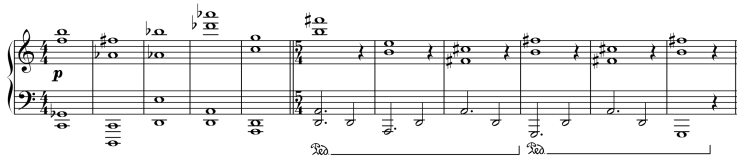
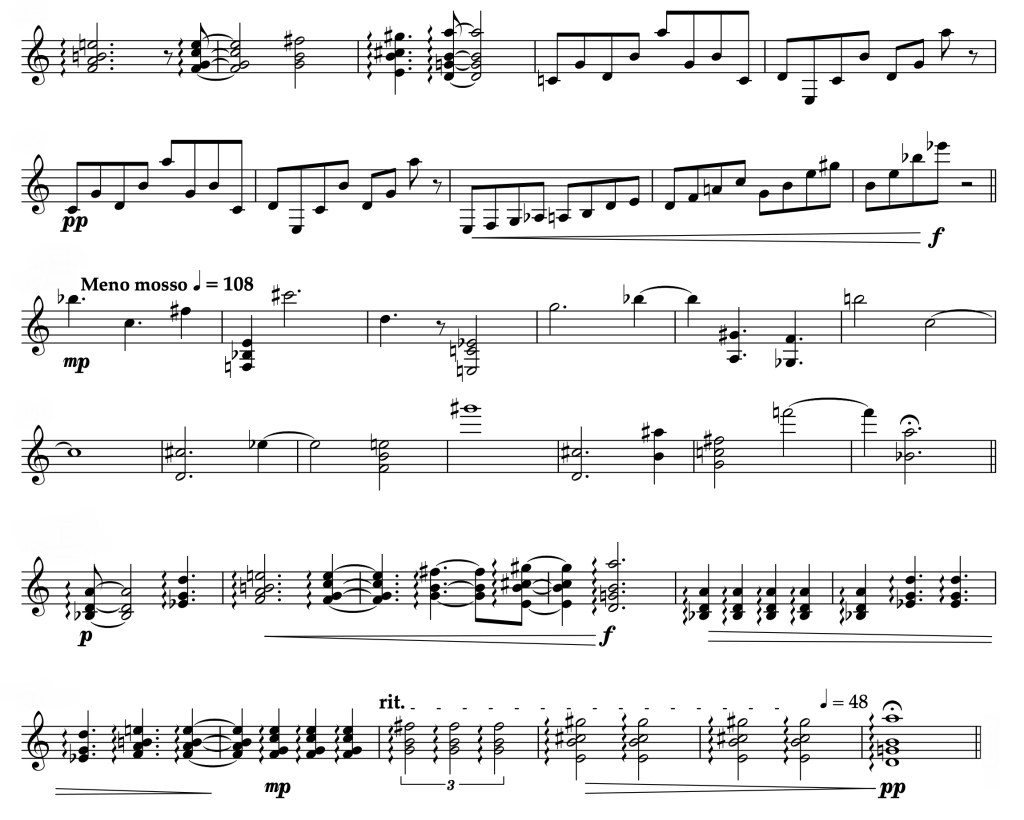
The last five Mapping the Cosmos etudes are each suitable as short stand-alone recital pieces or as a set. Beyond Mikrokosmos, they pay homage to Debussy’s revered books of Preludes. These pieces embrace the Impressionist approach to texture and form, while evolving beyond Debussy’s tonal language. Stonehenge and Lunar Litany both draw material from the 1975 four-movement piano work Geography of the Chronosphere.
8. Moonlight – an arpeggio homage to Beethoven’s famous Sonata
9. Deep Sky – profound mysteries glimpsed by telescopes
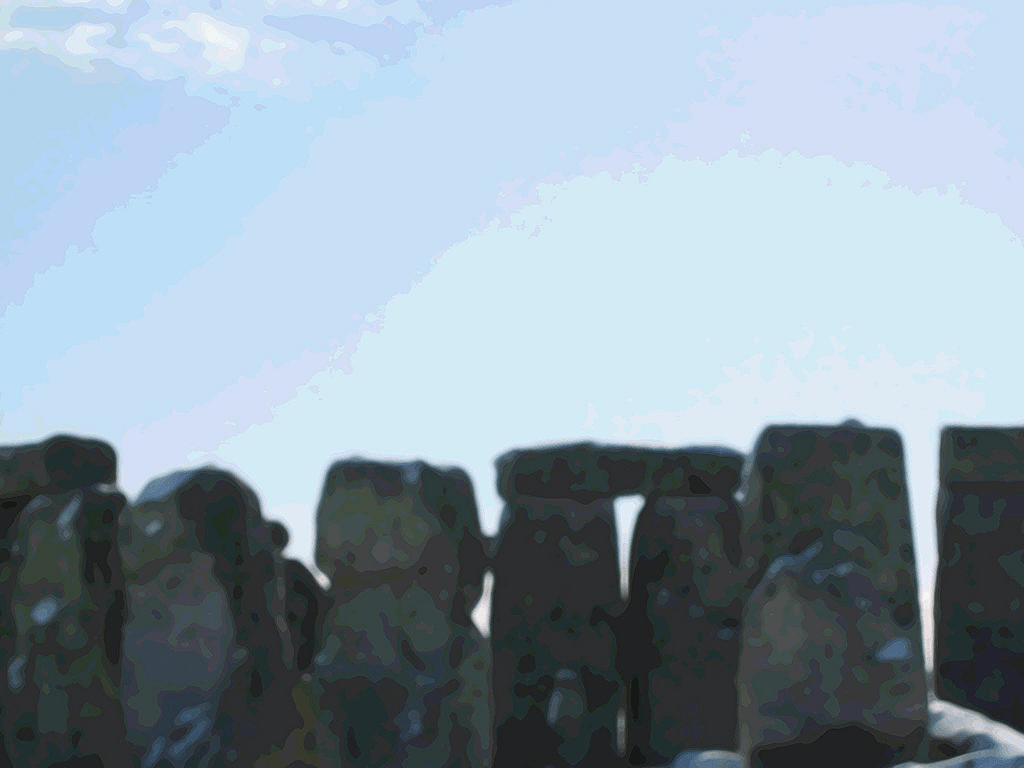
10. Stonehenge – ancient site of human worship in the cosmos
11. Lunar Litany – moon cycles governing human activity
12. Star Map – celebrating early star catalog project Carte du Ciel
The title echoes my 1975 piece for piano fancifully titled Geography of the Chronosphere.
The world is changing, rapidly evolving geopolitically and, from climate change, physically. The tone of the music contemplates these complex changes. To figure out where we’re going as a civilization, we need to rebuild and re-understand our changing “map.”
To request performance materials and permission, email the composer, tc24@txstate.edu.
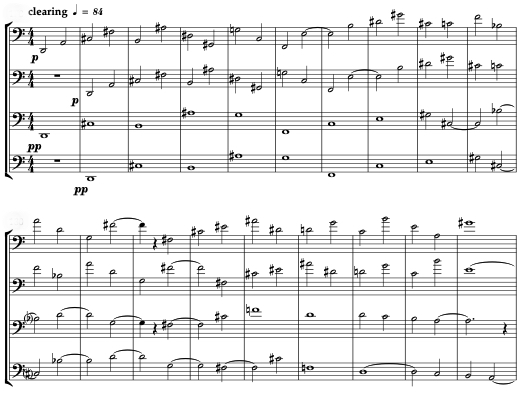
Written during the COVID pandemic for Karla Hamelin and her Texas State cello students, Looking for the Rainbow expresses both the uncertainty and hopefulness in our collective struggle to survive the storms of disease and violence.
A prequel to Rainbow Rising (2016), an earlier canonic piece for cellos, Looking for the Rainbow explores a more complex rhythmic counterpoint of darker sonorities, evoking a restless spirit of searching, anticipating.
(Canon is an ancient compositional technique, a melodic line that while in progress is closely echoed in one or more other “voices” to weave an entire contrapuntal texture out of matching threads.)
To request performance materials and permission, email the composer, tc24@txstate.edu.
2021 . . . . for the Pleasant Street Players — Ian Davidson (oboe), Vanguel Tangarov (clarinet), Ames Asbell (viola) . . . . duration: 5 minutes
Clarinet shows transposed (not concert) pitches
I have long admired and been influenced by the music of early 20th-century Austrian composer Anton Webern. Known historically as a member of the Second Viennese School with Alban Berg and mentor Arnold Schoenberg, the three were pioneers of so-called atonal music and 12-tone-row serial harmonic organization. I find the term “atonal” misleading and negative, as their 12-tone processes achieved a new “12-tone tonality” — not simply a rejection of traditional tonal harmony but also striving to create new and more complex tonalities.
What I admire most about Webern’s mostly-quiet instrumental miniatures (even his Symphonie has only two sparsely-scored movements) is the delicate, crystalline quality of his pitch constellations; and their gently lyric, precious setting into transparent textures, pearl-strings of delicate sound colors ( called Klangfarbenmelodie).
Webern’s mentor, Schoenberg, as a Jew was compelled to emigrate to the U.S. in 1933 before it was too late. Webern, not Jewish, stayed in Vienna and survived World War II, only to be fatally shot by a U.S. Army soldier during the Allied occupation of Austria.
Synthetic rendering of sample excerpt from movement II:
Synthetic rendering of sample excerpt from movement V:














 Thomas Clark - composer / digital artist