Category: choral

  • Canticum Terra

    2023 . . . antiphon for men’s chorus . . . 6:41

    Listening to a stunning recording of ancient choral music, I became re-interested in the rhythmic subtleties of voices executing the unspecified time flow of Gregorian chant. Using a variety of similar but slightly different note values, including the ancient semi-minim, minim, dotted-minim, breve, dotted-breve, and lunga), I composed a new plain chant. Beginning with pitches of a dorian mode, my wordless chant takes chromatic turns, providing tonal color without chords above a motionless deep drone. A high, windblown echo of the chant’s shape appears as prelude and coda to its “singing” deepness.

    The title (“Earth Song”) is inspired by two great 20th-century works: Mahler’s Das Lied von der Erde (1909) and Stravinsky’s Canticum Sacrum ad honorem Sancti Marci Nominis (1955). In this era facing global crises on our blue planet, Canticum Terra is a musical homage to and prayer for Mother Earth.

  • A New Lidice

    2019      SSAA choir, string trio       duration: 7 minutes

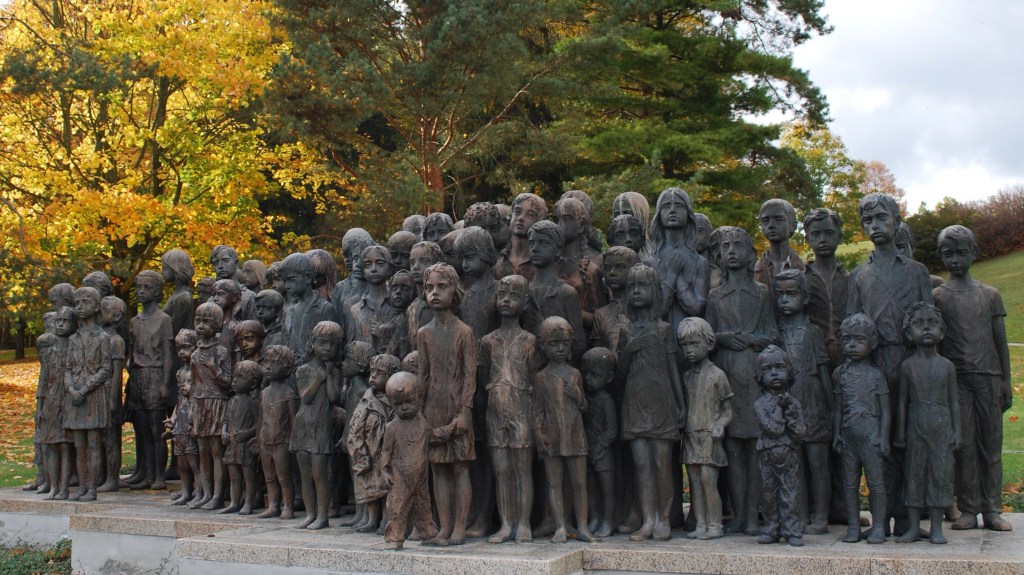
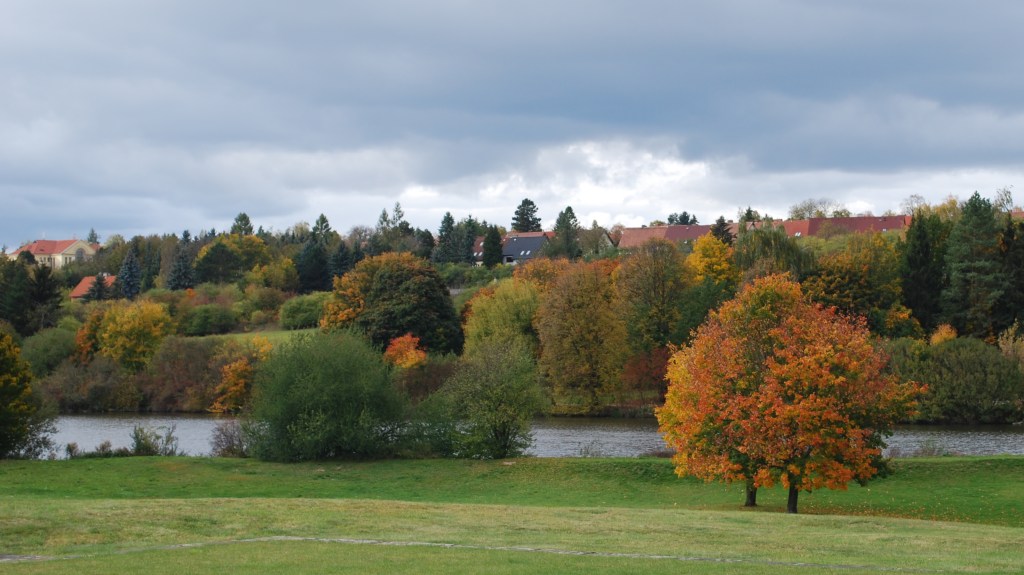
    A New Lidice is the third piece composed commemorating the story of Lidice near Prague, a charming Czech village that was brutally destroyed by the Gestapo in 1942. LIDICE REMEMBERED expressed the dark brutality of the atrocity, while RAINBOW RISING celebrated the power of hope symbolized by the beautiful memorial rose garden there.

    On June 10, 1942, all the village men were shot, the children taken away to orphanages or gas chambers, the women sent to concentration camps, and the entire village was razed. After the war, concerned British citizens led by Sir Barnett Stross convinced the world that the village should be rebuilt. The women of Lidice were able to return and were given beautiful new Czech-style homes in a planned village next to the Memorial Gardens.

    Lyrics are taken in part from a stirring Stross speech, but the voices are those of the women who bravely rebuilt their community:

    “We build a new village, while a just world watches.
    Stavíme novou vesnici. Spravedlivý svêt bude sledovat.
    Lidice belongs to the world of all who suffered.
    Mankind has one common enemy – War.
    Only a realization of our common humanity can save mankind.
    The just world will watch.”

    Premiere performance:

    April 23, 2022, Texas State University Performing Arts Center
    Student ensemble Aurora Voce conducted by Lynn Brinckmeyer
    with string students Kailey Johnson, Kelsey Sexton, Tina Moritz
  • Unseen Voices

    2018      double SATB choir, orchestra      duration: 9 minutes

    Horn in F, 2 Trumpets in C, Trombone, Bass Trombone, Triangle, Timpani, Strings

    Angels in most world religions and mythologies seem to serve one of two functions: wielding controlling power over the physical world or over human affairs; or making spiritual announcements to humans. In giving voice to the unseen voices of angels and other spirits, the choir pronounces the names of Native American and Hebrew spirits representing the power and beauty of nature – wind, moonlight, rainbows – and messages of peace and assurance. Here is our chosen cast of angel/spirit names:

      Gǎoh – chief wind spirit (Iroquois)

      Yaogah – bear spirit of the north wind (Iroquois)

      Neoga – fawn spirit of the south wind (Iroquois)

      Oyandone – moose spirit of the East Wind (Iroquois)

      Amitolane – rainbow spirit (Zuni)

      Nokomis – daughter of the moon (Algonquin)

      Gabriel – archangel of justice, annunciation (Hebrew)

      Maris stellastar of the sea (Latin)

    Ave maris stella is an 8th-Cen. Roman plainsong antiphon for Vespers. The text speaks of Gabriel announcing peace to the world.

    Gabrielis ore, funda nos in pace. (Latin)  “From the mouth of Gabriel, establish us in peace.”

    Epi gis Eireni anthropois. (Greek)  “On earth, peace to all people.”