Category: Impressionism

  • Animated Landscapes

    A Musical Sketchbook

    A collection of eight new scores for chamber orchestra with the same orchestration (4 winds, 3 brass, timpani, percussion, and strings), the musical sketches are Impressionistic soundscapes rather than symphonic narratives in form. The Sketchbook also includes extensive performance, analytic and program notes.

    Read the entire ANIMATED LANDSCAPES Sketchbook

    Each sketch paints vivid harmonic and instrumental colors in simple to complex textures of dynamically evolving tempo and pace. Titles are evocative but not determinant for the development of the musical ideas. My original 1971 orchestral composition titled ANIMATED LANDSCAPES first explored this musical approach in what was then the prevailing Midwestern composers’ large-ensemble moving-sound-mass style of the 1960s and ’70s. My harmonic and contrapuntal craft has matured enormously since then!

    Appearing first in this 50-years-later Animated Landscapes Sketchbook for small orchestra, Appalachian Autumn pays homage to Copland’s 1944 masterpiece, Appalachian Spring. In my composition studies in the 1970s, I was fascinated by Appalachian Spring the ballet as originally scored for only 12 orchestral instruments. This original scoring was a masterpiece of orchestral painting blended with the clear contrapuntal lines of chamber music, highlighting each instrument’s colorful voice. My now developed harmonic sensibilities also resemble Copland’s open, bold sonorities.

    Appalachian Autumn
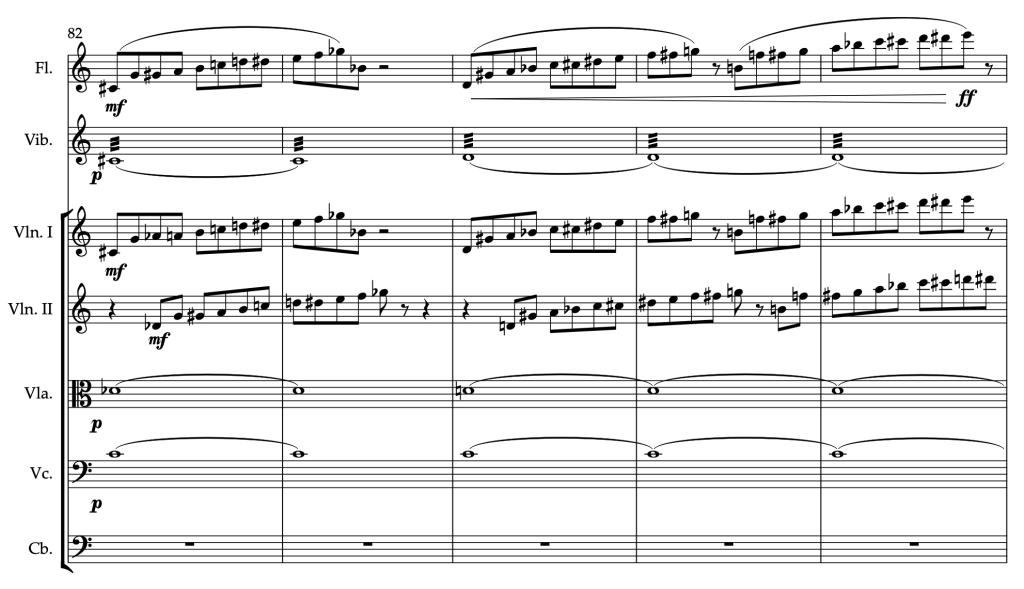
    Amber Atoms in the Fire Gleaming; Yin Yang (Air); Otter Creek (Water)
    Black Canyon (Earth); Glacier Gorge; Palo Duro (sunset) [Canyon Sketches]
    Looking for the Rainbow
    Massif; Storm; Highland dusk [Highland Sketches]
    Viennese Sketches
    Blue Ridge; Jupiter Rising [Sinfonia]
    Hrad (morning climb to the castle ruins); Ptáci (watching Leoš’s birds); Vody (forest streams and shadows); Bystroušky (mouflons and other mountain wildlife); Podzim (autumn sunset) [Hukvaldy Sketches]
    Separate listening to all 8 pieces found here . . .

    Free score and parts available from the composer: tc24@txstate.edu
  • Black Canyon

    2024 . . . Meditative sound environment.

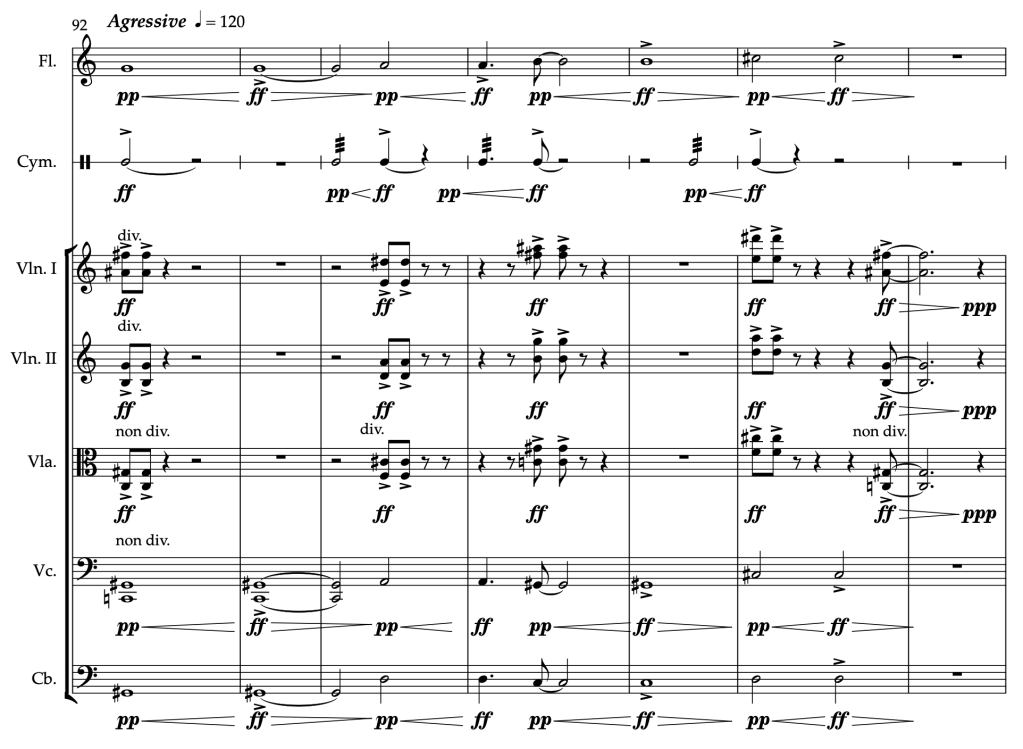
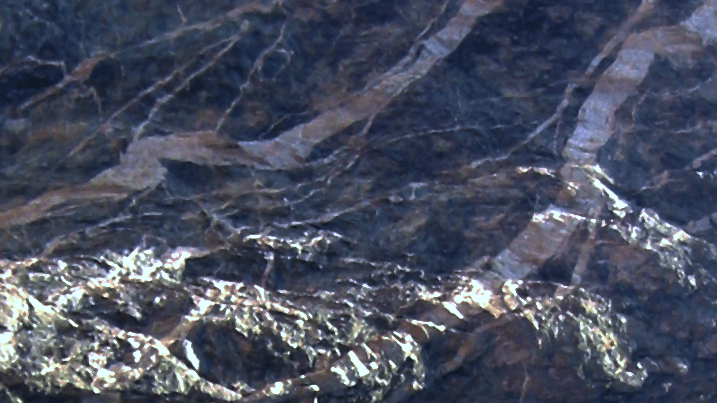
    Colorado’s Black Canyon of the Gunnison lies between narrow, tall rock cliffs of metamorphic Precambrian gneiss and schist formed 1.7 billion years ago crosscut by lighter-colored streaks of pegmatite. Due to the canyon’s depth and narrow width, its river falls from the Continental Divide in continual shadows.

    This piece takes musical counterpoint from The Book of Canons. An ancient form of Rumpelstiltskin magic, canon spins complex counterpoint out of a single melodic subject that is echoed after some delay by one or more answering lines of identical rhythmic values and melodic shape (possibly transposed).

    The art of canon pervades much of my 21st-century writing, a challenging yet stimulating and gratifying approach to texture weaving with continuous strands of material. The Book of Canons collects excerpts from these works, showing each canon’s subject as well as points and pitch levels of answers, worked out in three voices.

  • Highlands Sketches

    2023 . . . flute, percussion, strings . . . 9 minutes

    There are many Highlands in my life. I am part Scottish, though my great grandparents are from Glasgow, not the Highlands. I do enjoy its single-malt whiskeys, though, and I went to Howell High School, the “Highlanders.” And I now live in the Texas Hill Country.

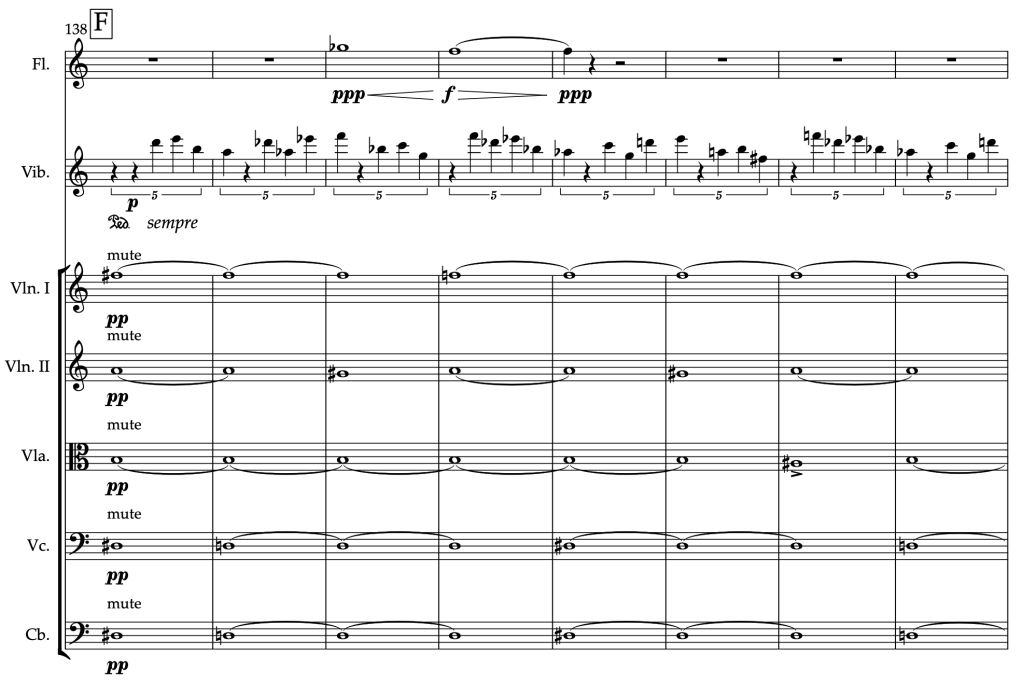
    Then there is Českomoravská vrchovina. I first visited what was then still Czechoslovakia in 1991. The Bohemian-Moravian Highlands are between the two main regions of what is now the Czech Republic. The ancient town of Tabor and the massif Blaník are two points of scenic and historical interest. Highlands Sketches sound paints climbing the mountain’s rugged slope, a thunderstorm of dissonant accents, and the quiet harmonic progression of an autumn dusk.

    Score samples:

    I. Massif (“Velký Blaník”)

    II. Storm (“bouřka”)

    III. Dusk (“soumrak”)

  • Arbor Sketches

    1967 / edited 2023 . . . piano or harp (6:40)

    In 1967 I was already earnestly composing for piano, trombone (my own instrument), even for orchestra. Living beside the Shiawassee River’s glacial-moraine beginnings in rural Livingston County Michigan, my best pastime was hiking along the creek’s forested banks. I was already going to Ann Arbor for trombone lessons and Youth Symphony rehearsals. In fall 1967, after my 18th birthday, I moved to Ann Arbor and enrolled at the University of Michigan. Though not yet a music major, I began playing bass trombone in the university orchestras. For 8 years, Ann Arbor with beautiful Huron River running through it was my forested Michigan home.

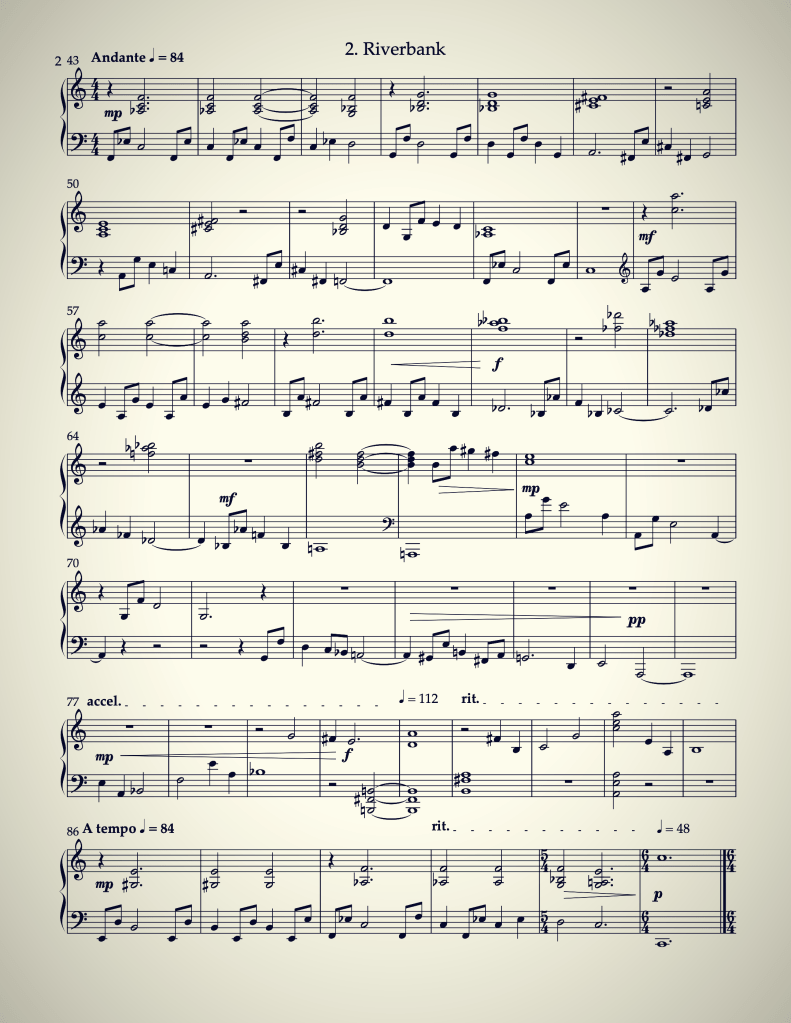
    “Mystic Breeze” and “Light” were my 12th and 18th completed TC compositions. “Riverbank” is from a 1967 sketch of an “interlude” for trombone and piano. They make a nice set of three, revealing that before formal study my compositional explorations were already discovering more exotic harmonies and rhapsodic forms resembling Debussy’s Impressionism and even the post-tonal possibilities of 12-tone rows.

    Looking back 55 years later, it turns out that once I began studying composition at Michigan, my first teacher, American-in-Paris composer Eugene Kurtz, immersed me in studying the music of Ravel and Debussy. The next teacher, George Balch Wilson, plunged me into the newer language of atonality and the radical explorations of the Avant Garde.

    1. Breeze
    2. Riverbank
    3. Light
  • Sea Sketches

    2023-24 . . . sonic meditation . . . 21 minutes

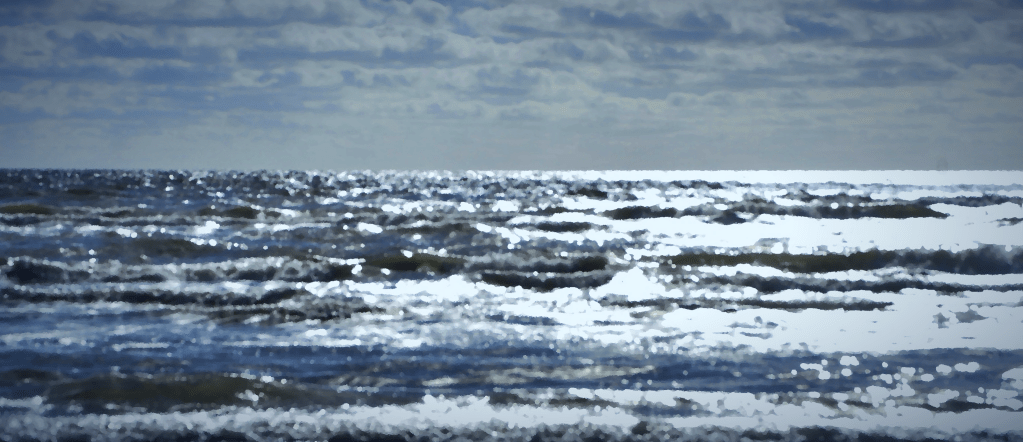
    Homage to Debussy’s monumental Impressionist work, La Mer, the four scenes of Sea Sketches sound-paint waves, deep currents, wind, and sun-sparkling surfaces, employing swelling sound colors and post-modern cyclic techniques in a pan-diatonic tonal setting.