Category: orchestra

  • Viennese Sketches

    Twelve Miniatures in Twelve Tones

    2023 . . . chamb. orch: Fl, Ob, Clar, Bsn, Hn, Trp, Tbn, Timp, Vibraphone, Strings

    12 minutes

    I have long admired and been influenced by the music of early 20th-century Austrian composer Anton Webern. Known historically as a member of the Second Viennese School with Alban Berg and mentor Arnold Schoenberg, the three were pioneers of so-called atonal music and 12-tone-row serial harmonic organization. I find the term “atonal” misleading and negative, as their 12-tone processes achieved new “12-tone tonalities” — not simply a rejection of traditional tonal harmony but also striving to create new and more complex tonalities.

    What I admire about Webern’s mostly-quiet instrumental miniatures (his Symphonie Op. 21 has only two sparsely-scored movements) is the delicate, crystalline quality of his pitch constellations; and their gently lyric, precious setting into transparent textures, pearl-strings of delicate sound colors (called Klangfarbenmelodie).

    Webern’s mentor, Schoenberg, as a Jew was compelled to emigrate to the U.S. in 1933 before it was too late. Webern, not Jewish, stayed in Vienna and survived World War II, only to be fatally shot by a U.S. Army soldier during the Allied occupation of Austria.

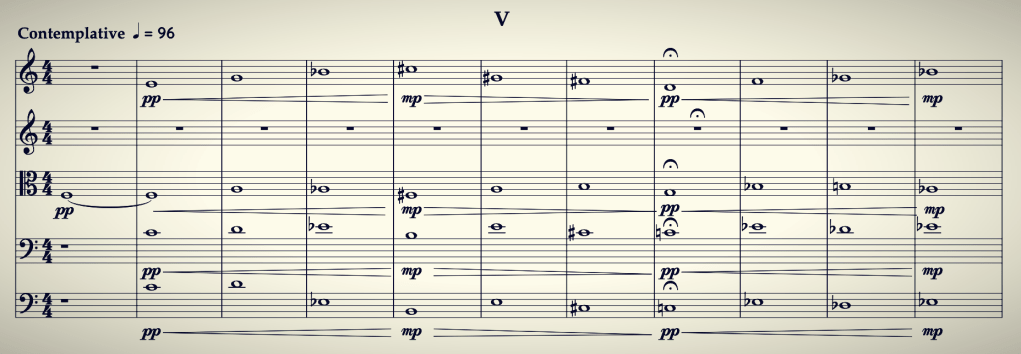
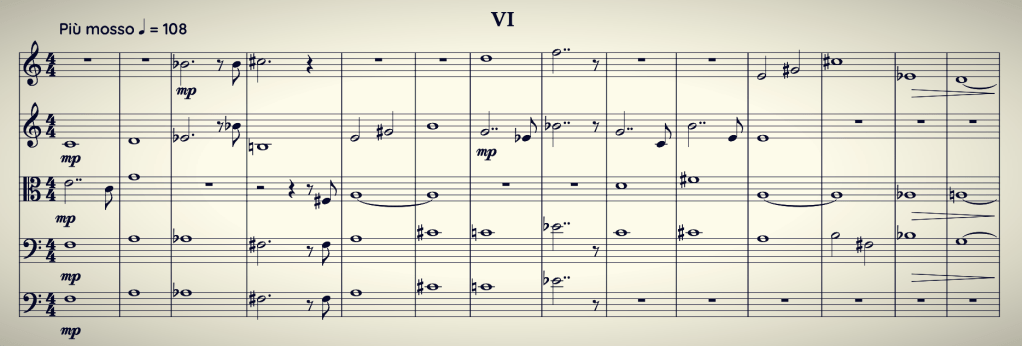
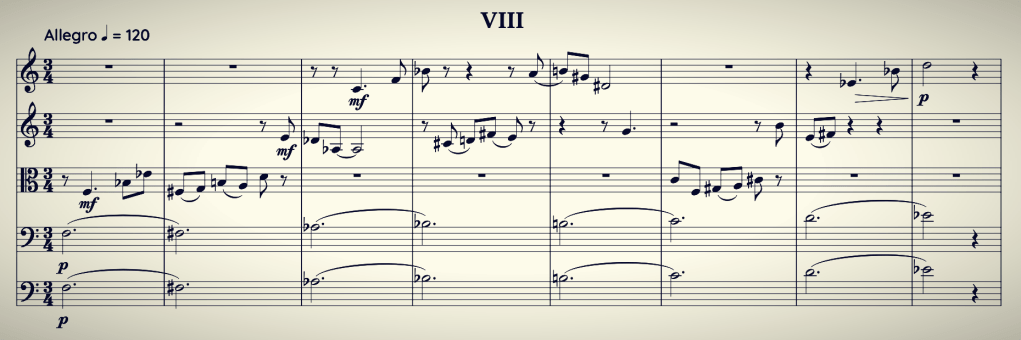
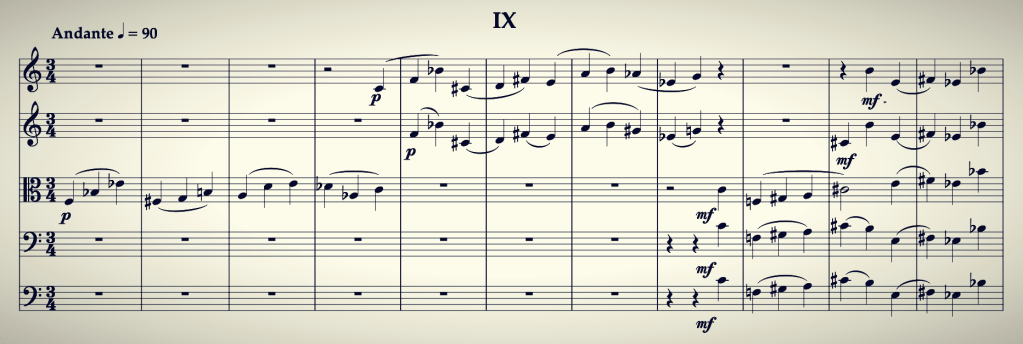
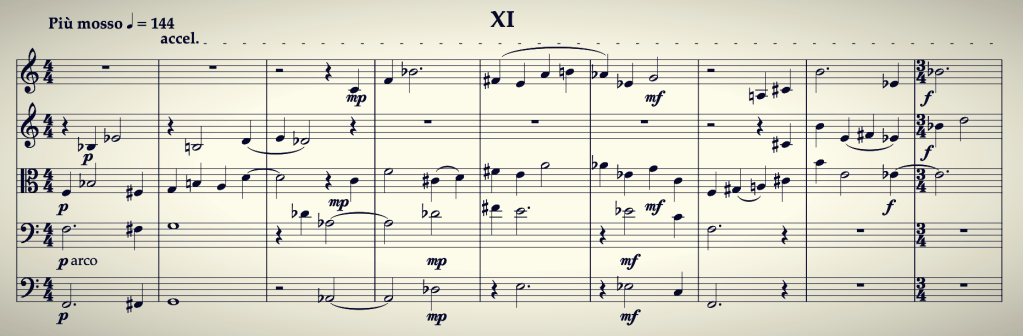
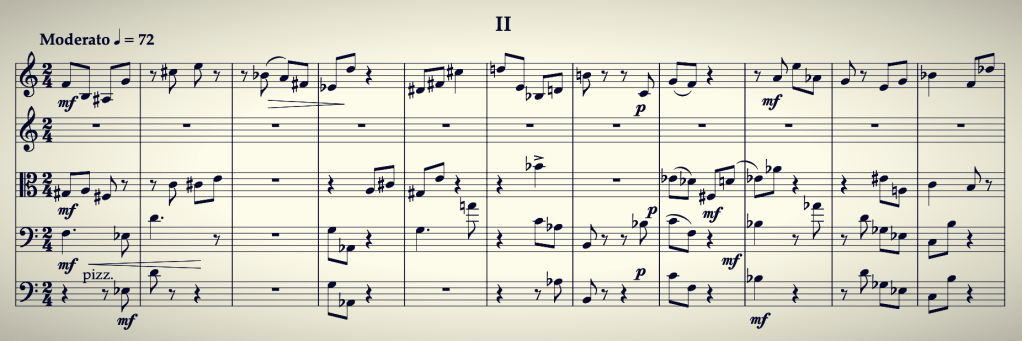
    Miniatures I through IV are adapted from Webern Elegy and V through XII from MapLab7For Little Arnold. Viennese Sketches does not portray the historical European city but rather explores various musical textures and tonalities using the 12-tone serial techniques of the so-called Second Viennese School of composers associated with Schoenberg. While their music using these techniques was unfortunately dubbed “atonality,” my uses focus on creating constellations and counterpoint that is complex but much less dissonant and more sonorous, my sense of a new tonality.

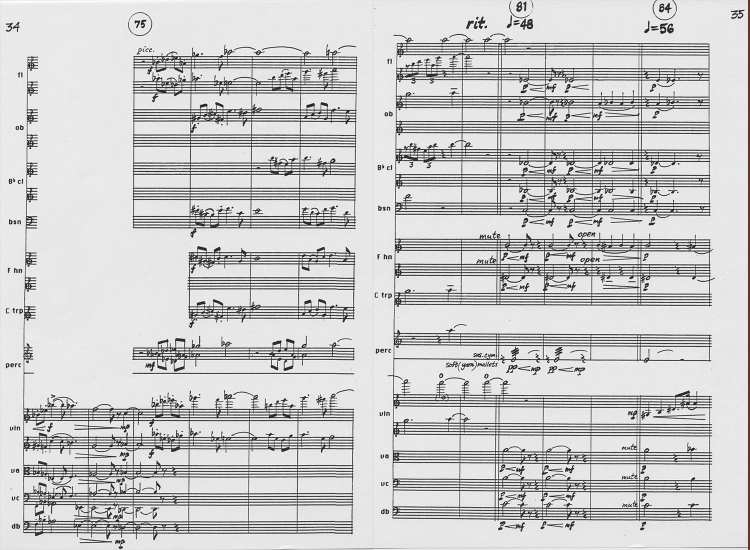
    While the chamber orchestra work is organized in six movements and a coda, each miniature is excerpted below to show changing pace and textures.

  • Aristotle’s Elements

    2022 . . . four sound sculptures for orchestra (15:30)

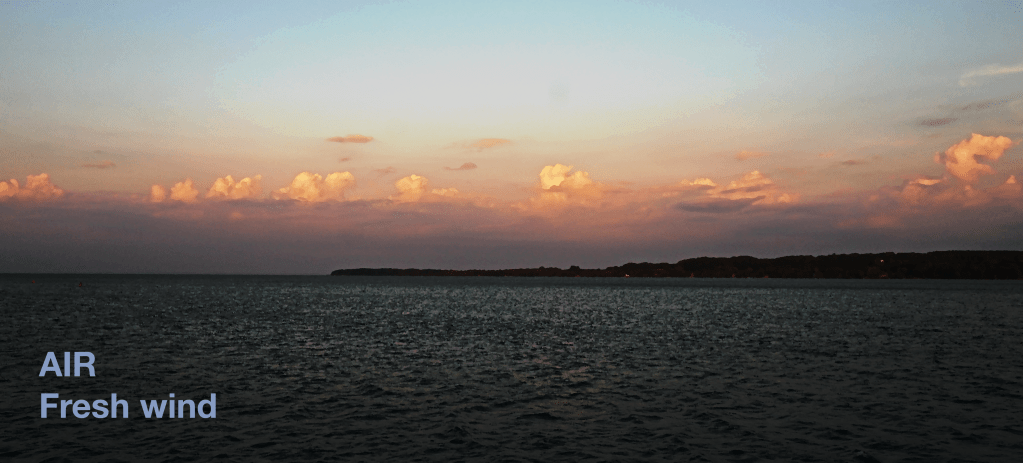
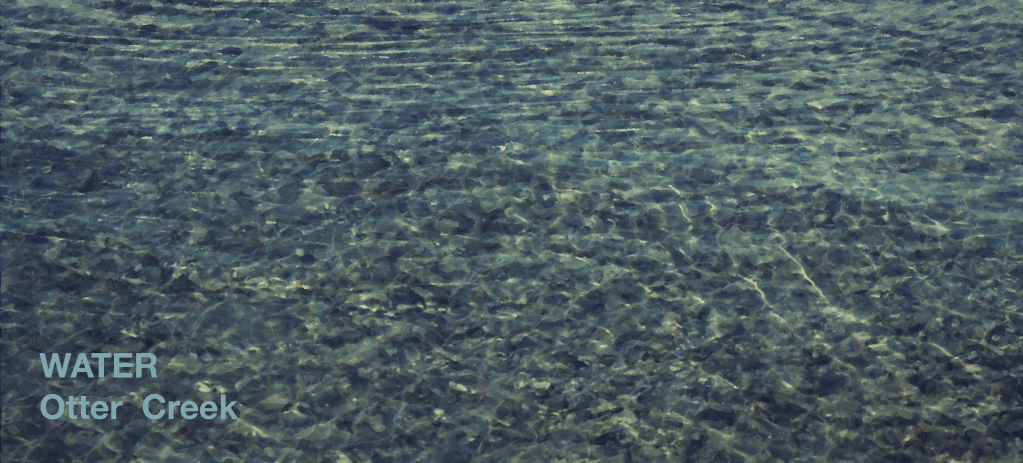
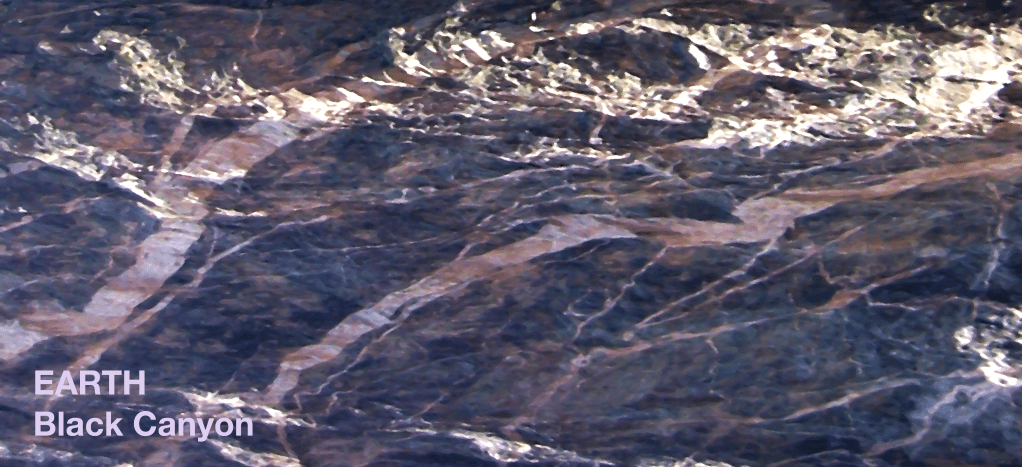
    One feature of my modern-music and composition e-book Mapping the Music Universe is a set of composing experiments called MapLabs. Each provides lab instructions to gather material and make compositional choices, and each provides an example piece built step by step along the path of the lab instructions. The sample pieces for the first four MapLabs fit together here as the metaphorical elements, fire, air, water, and earth, of Aristotle’s concept of the world’s physical matter. My mostly abstract photo images provide a visual background for listening.

    Where the amber atoms in the fire gleaming
    Mingled their sarabande with the gymnopaedia.
    (Latour)

    Fresh wind weds the land and water,
    Sun warms bright sails and sailor.

    Where tiny Otter Creek trickled out onto a more secluded sandy beach
    Offering northward a spectacular view of Empire Bluff
    .

    The Black Canyon of the Gunnison, named for the ever-present shadows
    The narrow canyon’s steep, sheer, tall rock walls cast on the river flowing far below.

    Aristotle’s Elements

    These images are set in motion by the magic of various Ken Burns effects for a video version on the TClark Art Music YouTube channel.

    In another arrangement transcribed for wind ensemble in 2023, the order is changed:

    I. Amber Atoms (FIRE) 4:46
    II. Fresh Wind (AIR) 3:40
    III. Black Canyon (EARTH) 3:12
    IV. Otter Creek (WATER) 3:04
  • Sinfonia

    2021 . . . chamber orchestra (Flute, Oboe, Clarinet, Bassoon, 2 Horns, C Trumpet, Trombone, Timpani, Percussion, Strings)

    Duration: 21 minutes in three movements – I. 8 min.; II. 8 min.; III. 5 min.

    Mozart’s Jupiter Symphony is one of his greatest masterpieces. His No. 40 in G Minor and No. 38 “Prague” are also magnificent. It makes one wonder if he had lived longer, what other stunning music would have poured forth. Back to No. 41 Jupiter, the first theme is a curving melody of such rhythmic vitality and fascinating turning shape that I used it as an example of both in my ebook, Mapping the Music Universe. Mozart makes the theme into a fugato, and I have adopted it in my obsessive study of canons. You can see the shape of its first six notes in the violin opening of Jupiter Rising, then elsewhere it permeates the contrapuntal material of the rest of the piece. The middle movement takes a break from it, setting the main themes from the opening of the G Minor No. 40 as a languid tango tune, followed by a trio in slow waltz meter that reverts briefly back to the bright Jupiter tune. The final movement actually extends our signature Jupiter theme into a 12-tone row, generating a more expansive tonality in its animated landscape.

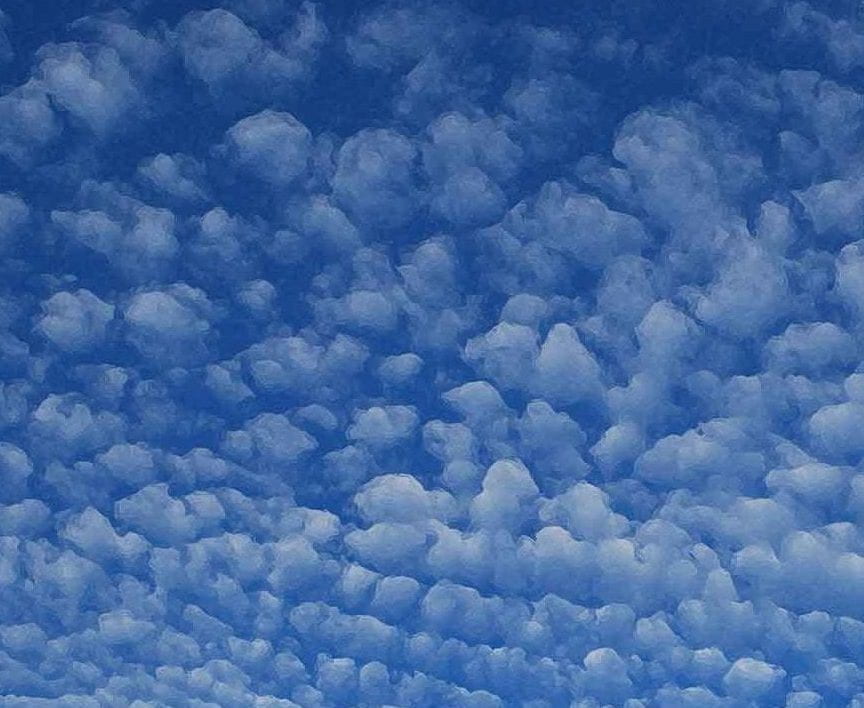
    I. Jupiter Rising depicts the mysterious splendor of moonrise, large and deeply-hued in the eastern evening sky. This movement creates a sonic metaphor for that visual phenomenon, but portraying instead the rising of Jupiter, the largest object in the solar system other than the sun itself. It only looks much, much smaller to us than the moon because it is so much farther away. My favorite Mozart symphony is Symphony No. 41 in C Major, K.551. His longest and last symphony, it is nicknamed “Jupiter” — fitting that his lengthiest and greatest symphony is named for the largest planet, a great gas giant. A vivid musical motive begins and generates the majestic final movement. I use it as the musical subject of this movement, relentlessly canonic in deployment. At some moments, as many as 8 contrapuntal soundings overlap each other in a gentle, cloud-like texture.

    II. Tango is set in an actual key, appropriate for this venerated dance form though uncharacteristic for my writing. The harmonies flow like dancers, the musicians feeling their way through the tonalities while never seeing an actual key signature.

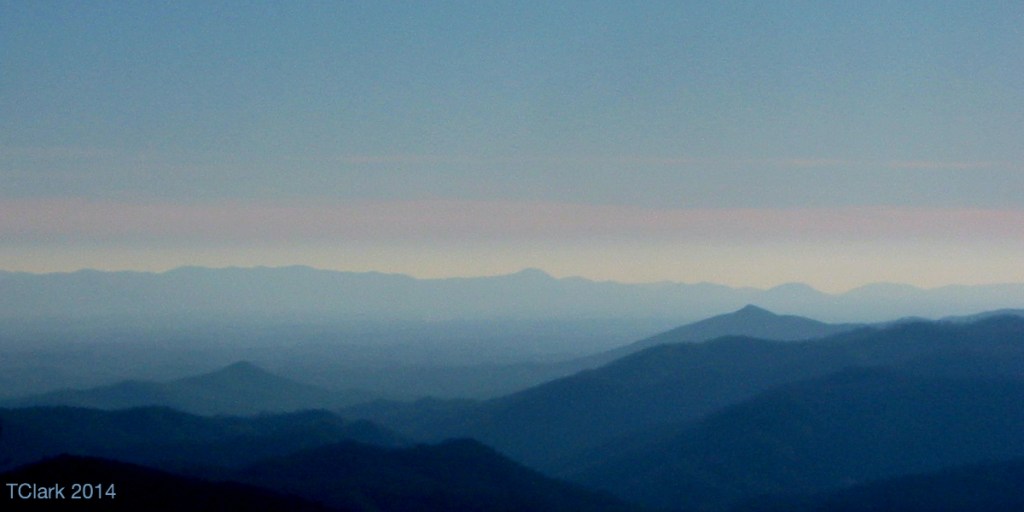
    III. Blue Ridge refers to the beautiful hazy curves on the horizon as one gazes out from the top of the Blue Ridge Parkway, an hour west of my former home in the Piedmont in North Carolina. I also remember a similarly mystic vista looking south from Monterrey, Mexico toward the foothills of the Sierra Madre Oriental mountains. The musical fabric is what I have called an “animated landscape,” not a still postcard but a soaring flight over and through the soundscape.

  • Three States of Water

    2021       string orchestra         duration: 22 minutes

    Inspired by the great serenades for strings of Dvořák and Tchaikovsky, this suite explores musical metaphors for the physics of H2O in interesting atmospheric and geographic settings.

    I. Cold front (VAPOR becomes SOLID): In low clouds on mountain tops, water vapor can become super-cooled and become freezing fog, filling the air with small ice crystals and freezing to surfaces, similar to very light snow. In the western United States, the common name for freezing fog is “pogonip.”

    II. Ice Dunes (SOLID): In the Leelanau Peninsula of Michigan, the Lake Michigan surf sometimes whips up and freezes in mid-air, forming weird ice caverns and ice dunes.

    III. Nuages (VAPOR), French for clouds, is one of Debussy’s three beautiful Nocturnes for orchestra, quoted here as a theme for variations. Water vapor is technically invisible. The clouds we see are actually masses of minute liquid droplets and frozen crystals. Thus this movement embodies all three states of water.

    IV. Vltava (LIQUID): The great river Vltava flows majestically through Prague. Smetana’s depiction of it in his monumental Ma Vlast is usually translated as The Moldau.

    To request performance materials and permission, email the composer, tc24@txstate.edu.

  • Unseen Voices

    2018      double SATB choir, orchestra      duration: 9 minutes

    Horn in F, 2 Trumpets in C, Trombone, Bass Trombone, Triangle, Timpani, Strings

    Angels in most world religions and mythologies seem to serve one of two functions: wielding controlling power over the physical world or over human affairs; or making spiritual announcements to humans. In giving voice to the unseen voices of angels and other spirits, the choir pronounces the names of Native American and Hebrew spirits representing the power and beauty of nature – wind, moonlight, rainbows – and messages of peace and assurance. Here is our chosen cast of angel/spirit names:

      Gǎoh – chief wind spirit (Iroquois)

      Yaogah – bear spirit of the north wind (Iroquois)

      Neoga – fawn spirit of the south wind (Iroquois)

      Oyandone – moose spirit of the East Wind (Iroquois)

      Amitolane – rainbow spirit (Zuni)

      Nokomis – daughter of the moon (Algonquin)

      Gabriel – archangel of justice, annunciation (Hebrew)

      Maris stellastar of the sea (Latin)

    Ave maris stella is an 8th-Cen. Roman plainsong antiphon for Vespers. The text speaks of Gabriel announcing peace to the world.

    Gabrielis ore, funda nos in pace. (Latin)  “From the mouth of Gabriel, establish us in peace.”

    Epi gis Eireni anthropois. (Greek)  “On earth, peace to all people.”

  • AURORA

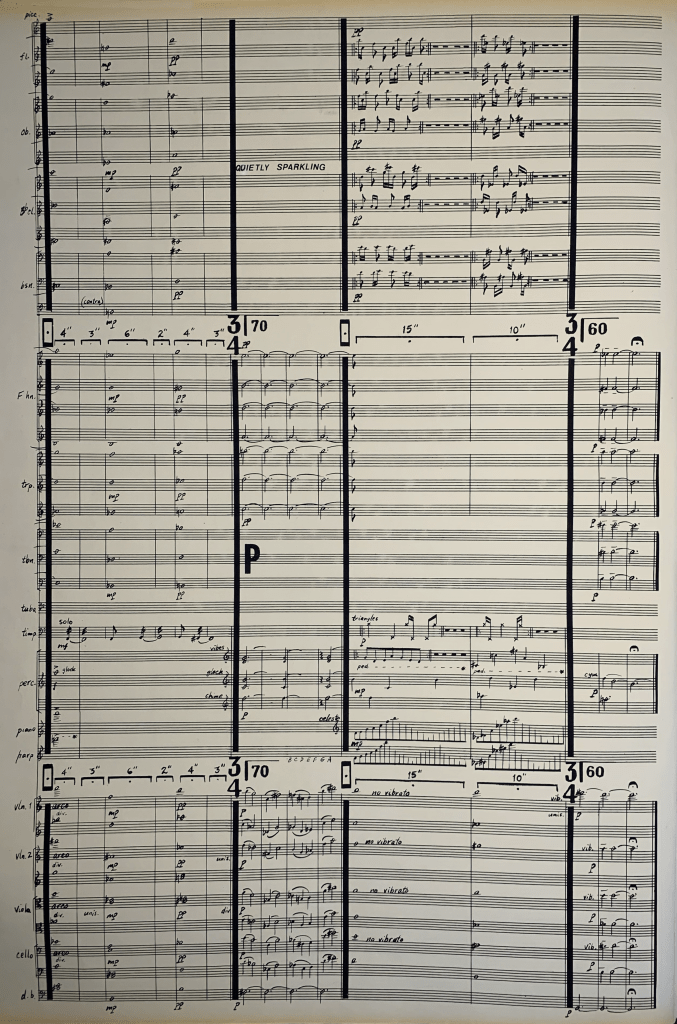
    Facets of Color and Time. 1987.   chamber orchestra (picc, fl, 2 ob, 2 cl, bsn, 2 hn, trp, perc, strings)      duration: 9 minutes

    1988 Denton, Texas
  • ILLUMINATIONS: 3 Refractions of Time

    1976 . . . symphony orchestra (picc, 2 fl, 2 ob, Eng. hn, 2 clar, bass cl, 2 bsn, contrabsn; 4 hn, 3 trp, 3 tbn, tuba; timp, 3 perc, piano/celeste, harp; strings) . . . (19 min.)

    Bicentennial commission from the Federation of Women’s Clubs; premiered by the World Youth Symphony, Interlochen, Michigan

    1. PROJECTION (future)

    2. REFLECTION (past)

    3. EMANATION (present)

  • Animated Landscapes

    picc, 2 fl, 2 ob, Eng.hn, 2 cl, bass cl, 2 bsn, contra-bsn, 4 horns, 3 trp, 3 tbn, tuba, timp,  2 perc, celeste, harp, strings                                                              Duration: 9 minutes