Category: sound sculptures

  • Sea Sketches

    2023-24 . . . sonic meditation . . . 21 minutes

    Homage to Debussy’s monumental Impressionist work, La Mer, the four scenes of Sea Sketches sound-paint waves, deep currents, wind, and sun-sparkling surfaces, employing swelling sound colors and post-modern cyclic techniques in a pan-diatonic tonal setting.

  • Passing Storm

    Animated Landscape No. 4

    2022 . . . sound painting (4:30)

    In 1973, I composed my second orchestra piece as a graduate student at the University of Michigan. The title was inspired by John Cage’s famous Imaginary Landscapes No. 4, which we performed as I was an ensemble member of Contemporary Directions. The idea of animating an otherwise static sound mass, devoid of progressive harmony, was a quintessential feature of what I came to think of as the Midwestern Style of 1960s and 1970s large ensemble music. Successful models included prize winning pieces such as (my teacher) Leslie Bassett’s Variations for Orchestra (1966), Donald Erb’s The Seventh Trumpet (1969), and Joseph Schwantner’s …and the mountains rising nowhere (1977) and Aftertones of Infinity (1979).

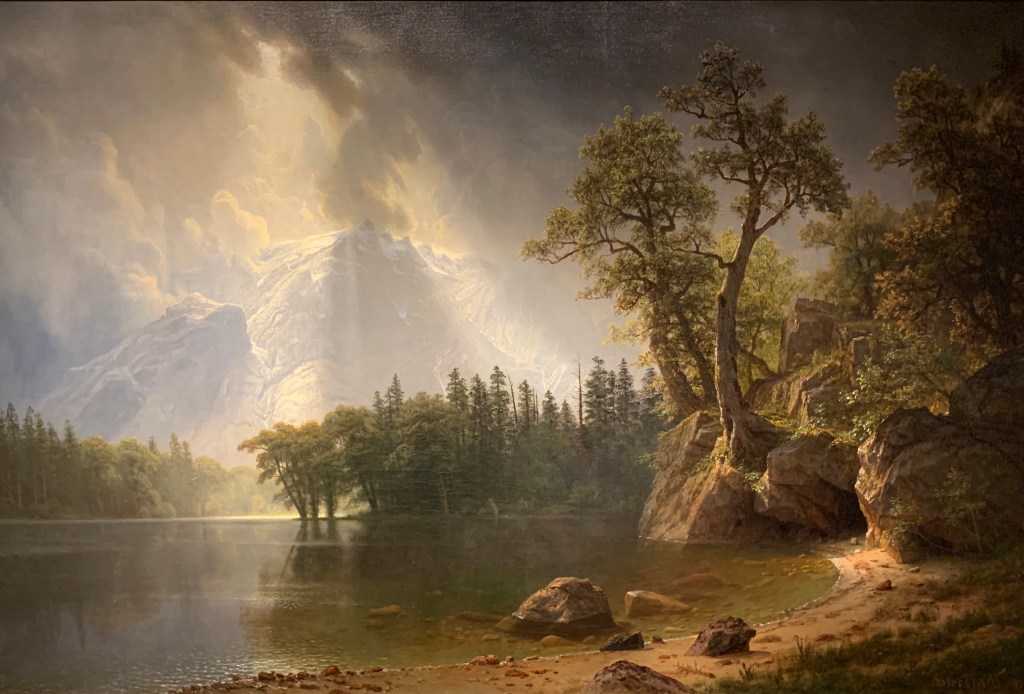
    So many great American landscape artists of the 19th century painted fascinating panoramic scenes. One of my favorites, who captured the grandeur of Western, mountainous landscapes, was Albert Bierstadt:

    Albert Bierstadt: Passing Storm over the Sierra Nevadas (1870) – San Antonio Museum of Art

    You can see stark contrasts in brightness and in sense of motion between the mirror-smooth water and roiling clouds. Even the word “passing” in the title suggests change, a necessary ingredient of an analog musical landscape.

    While not trying to actually map the physical composition of any painting, my musical inspiration came from considering this painting’s features of background, foreground, and highlights of strong visual focus. Musical gestures started with distant swelling sonorities, which as they crescendo feel like they are emerging forward toward us. After deciding to name the piece Passing Storm after the Bierstadt, however, I realized I had no storm in the music, just gentle sprinkles. Thus was created a stronger sonic rendering of the sprinkles to provide a more aggressive introduction. The following four minutes overlaps sound masses animated in time, contrasting dark vs. bright sounds, loud vs. soft, and timeless sustained sound vs. busy points of “light.”

  • Aristotle’s Elements

    2022 . . . four sound sculptures for orchestra (15:30)

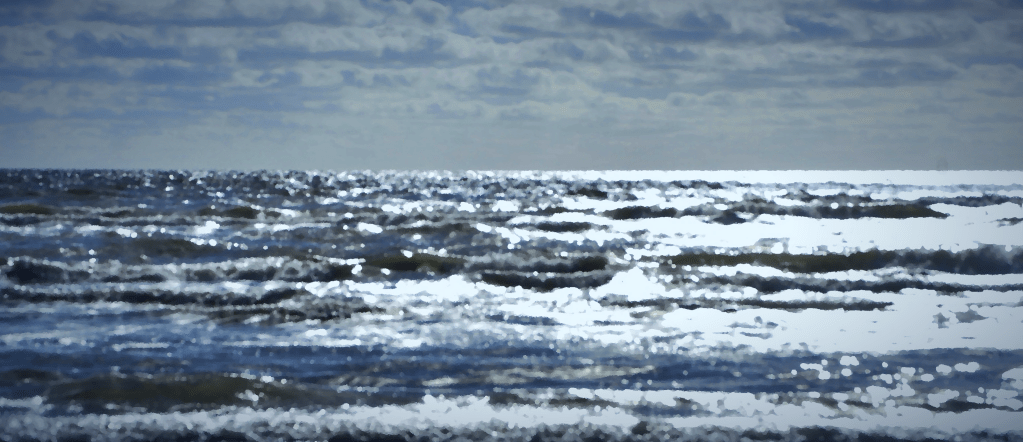
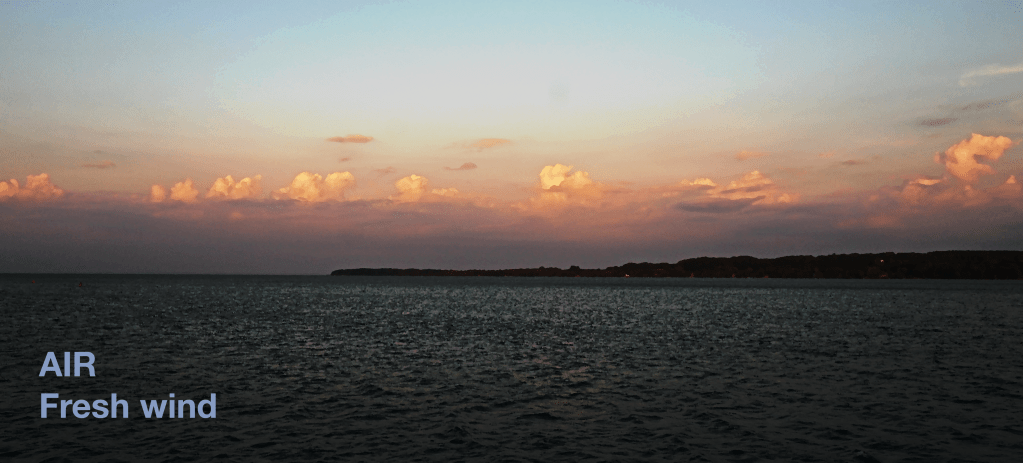
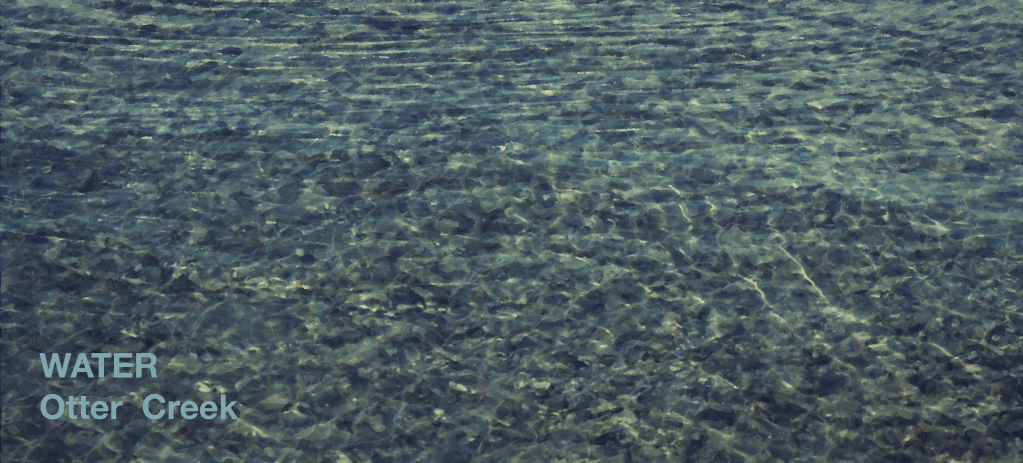
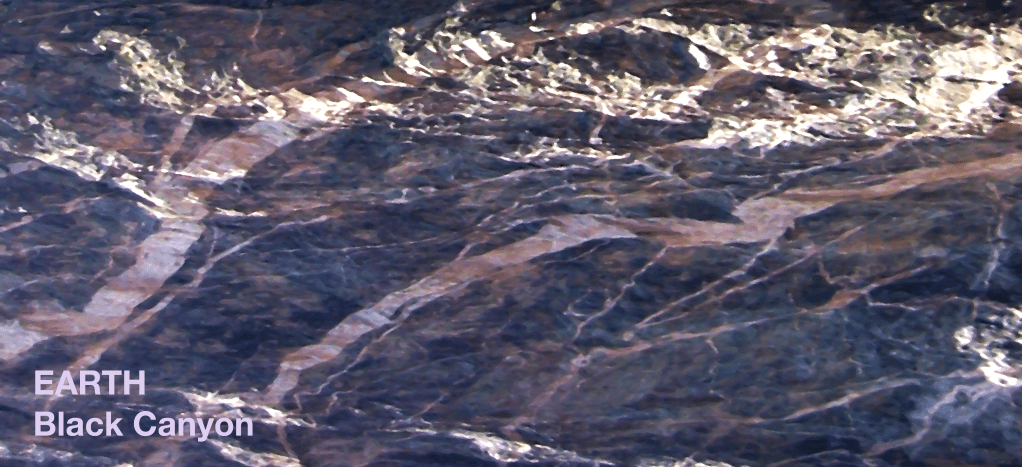
    One feature of my modern-music and composition e-book Mapping the Music Universe is a set of composing experiments called MapLabs. Each provides lab instructions to gather material and make compositional choices, and each provides an example piece built step by step along the path of the lab instructions. The sample pieces for the first four MapLabs fit together here as the metaphorical elements, fire, air, water, and earth, of Aristotle’s concept of the world’s physical matter. My mostly abstract photo images provide a visual background for listening.

    Where the amber atoms in the fire gleaming
    Mingled their sarabande with the gymnopaedia.
    (Latour)

    Fresh wind weds the land and water,
    Sun warms bright sails and sailor.

    Where tiny Otter Creek trickled out onto a more secluded sandy beach
    Offering northward a spectacular view of Empire Bluff
    .

    The Black Canyon of the Gunnison, named for the ever-present shadows
    The narrow canyon’s steep, sheer, tall rock walls cast on the river flowing far below.

    Aristotle’s Elements

    These images are set in motion by the magic of various Ken Burns effects for a video version on the TClark Art Music YouTube channel.

    In another arrangement transcribed for wind ensemble in 2023, the order is changed:

    I. Amber Atoms (FIRE) 4:46
    II. Fresh Wind (AIR) 3:40
    III. Black Canyon (EARTH) 3:12
    IV. Otter Creek (WATER) 3:04
  • Nuages

    (Clouds)

    2022 . . . sound environment . . . (8:30)

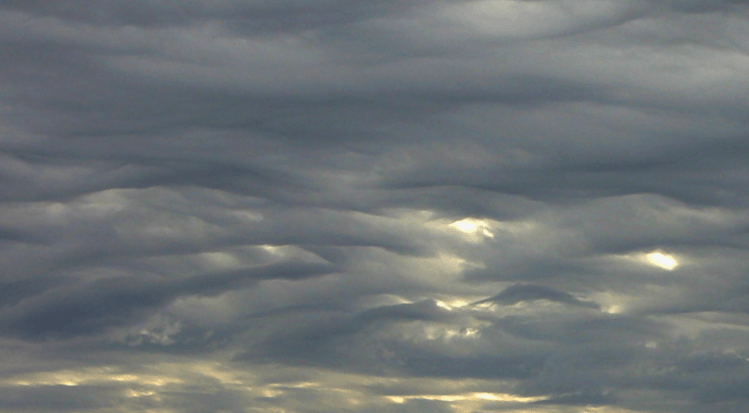
    Quoting Debussy as homage to the first of his beautiful Nocturnes, musical patterns float, repeat, morph, disappear. Many of my earlier compositions are titled under the category of “Animated Landscapes,” referencing a musical analog to landscape painting, sketching musical textures of moving, evolving pitch constellations and colors. Perhaps that makes Nuages a “skyscape.”

    Much of the musical material is shared with the third movement of my string orchestra work, Three States of Water.

  • Summit Ridge

    2022 . . . digital sound sculpture (7 minutes)

    Composed after reading Ed Viesturs’ book, No Shortcuts to the Top, his first-person account of the successful quest to climb to the summits of the 14 tallest mountains in the world, all taller than 8,000 meters (26,247 feet) above sea level. My most vivid personal and photographic experience with glacier-topped mountain ridges includes several visits to Rocky Mountain National Park, where the Continental Divide rises to a spectacular ridge of 12,000-ft. peaks beside 14,259-ft. Long’s Peak. My son Owen and I once hiked to the summit of 12,234-ft. Flattop Mountain — less than half the elevation of Viesturs’ 8,000 meters. As its name suggests, Flattop’s summit is not dramatic but connects with the string of ridges between spectacular Hallett Peak (center of photo) and Otis Peak (left of Hallett).

    Musical patterns are all based on constellation streams of four complex 8-pitch interval arrays, as explained in Mapping the Music Universe. The chords are first presented as tall monolithic blocks separated by silence in the style of Morton Feldman:

    Then they become rhythmically steady arpeggios, constantly repeating in the style of John Adams. Out of this continuous ridge of arpeggios emerge the individual pitches of the four sonorities, rising to sonic summits.

    Other majestic mountain ridges I’ve admired include the Sierra Madre Oriental Mountains on the southwestern horizon of Monterrey, Nuevo León, Mexico, as seen from the Macroplaza. Then there is the Blue Ridge Mountains in North Carolina, where we once lived just an hour from the scenic Blue Ridge Parkway. Neither as high as the Rockies, both these sloping ridges change their deep blue hues with clouds and the sun’s progress through a day. Finally, though the Texas Hill Country is not really mountains at all, we live on its eastern edge on a road named Summit Ridge Drive.

  • Meteorology

    2022 . . . digital sound sculptures . . . (9:30)

    Nimbus

    Modern physics understands that all matter is built up from just five fundamental “particles”: electrons, up quarks and down quarks with electrical charge; and gluons and photons with no electrical charge. They are not exactly particles, though, but infinitesimal points of spin in space/time. That’s where this sound composition experiment began. Two 4-pitch segments of the octatonic scale appear (“quarks”), then spin at their own speeds, while smaller 3-pitch sets (“electrons”) spin above and below them. At times, the sound mass explodes with a shower of electron sparks, then reforms.

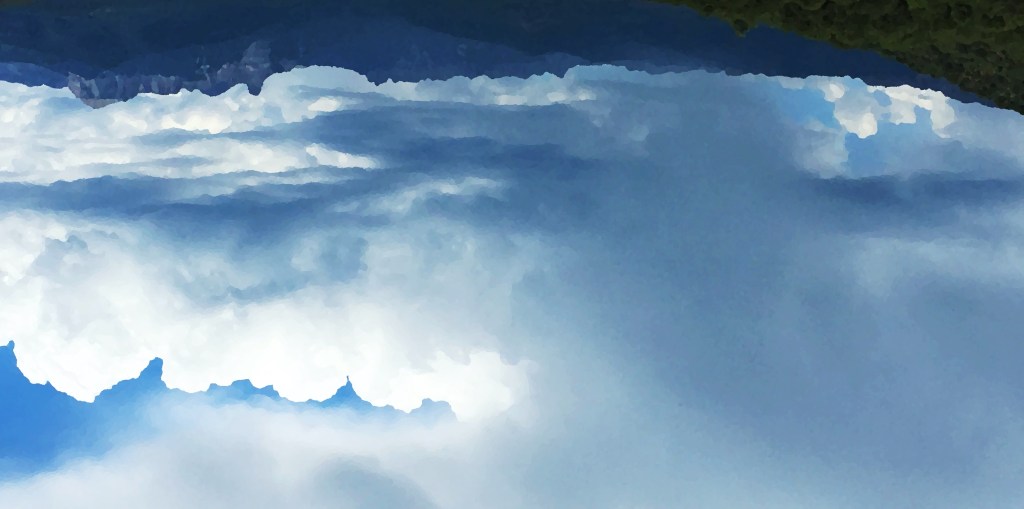
    While quarks are hard to imagine and impossible to visualize, we love to watch puffy white cumulus clouds. Their kinetic energy becomes more visible when they grow into dark, precipitation-bearing cumulonimbus storm clouds, bringing rain and crackling electricity.

    Squall

    A tree limb branching out from a trunk, then smaller limbs branching from it, again and again to smaller and smaller branches — a classic example of a recursive process. Sometimes lightning shows this same recursive branching process. While the tree branches take years to fill out, lightning is a sudden explosion of electricity over a split second. Thunder, as sound travels much slower than light, is heard later than the lightning flash is seen — unless, of course, it is very close by!

  • Blue Sphere

    The Magic of Pi

    Sound sculpture . . . 2022 . . . 6:23

    Ever since it was viewed and photographed from space (see below) by Apollo 17 in 1972, Planet Earth has become known as the Blue Planet.

    The Blue Marble photograph of Earth, taken by the Apollo 17 mission. The Arabian peninsula, Africa and Madagascar lie in the upper half of the disc, whereas Antarctica is at the bottom.
    The Blue Marble

    Such a distant perspective reveals the pervasive blue water of oceans, brilliant white of cloud layers, and some brown/green shapes of land masses beneath. It also reveals the spherical shape of our globe. (Euclid said a sphere is a hollow 3-dimensional rotation of a circle, and scientists have measured that Earth is not a perfectly round ball but a solid ellipsoid.) Nonetheless, the eternal, perfect rotating sphere is our iconic notion of Earth’s shape. Spheres and the Euclidean circle that generates them in three dimensions are governed by the mathematical constant π, defined in Euclidean geometry as the ratio of a circle’s circumference to its diameter.

    Pi is magic, an irrational number that cannot be expressed as a common fraction. Its decimal calculation never ends, never settling into a repeating pattern of digits, which appear to be random . . . and infinite. It starts 3.1415926535897932384626433…

    The beginning of its decimal expression was used in composing Blue Sphere as both a rhythmic timing pattern and a corresponding dance of the lowest 9 pitches of a Pythagorean overtone series. This is one way to literally hear π, expressing musically the eternal restlessness of our rotating blue sphere.

  • Mycology

    sound sculptures . . . 2022 . . . duration: 10 minutes

    Pilot Mountain, North Carolina

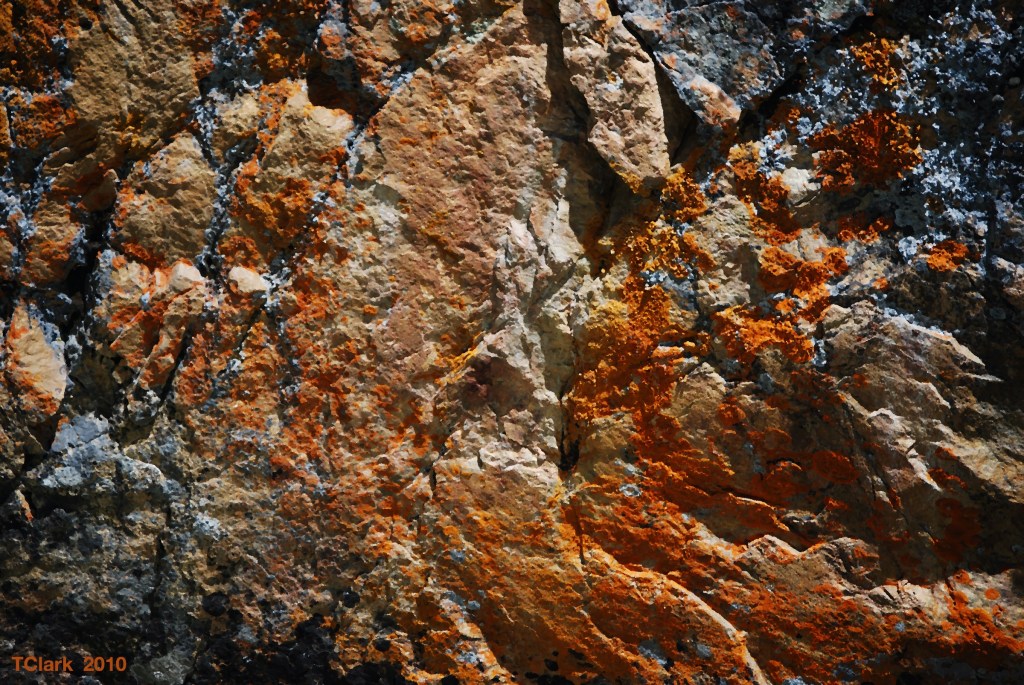
    I read a fascinating book, Entangled Life by Merlin Sheldrake (Random House, 2021) about the bizarre world of fungi. Mycelium is the root-like mass of a fungus branching out in soil, forming a colony too small to see or grown to span thousands of acres as in Armillaria. Lichens are complex fungal communities of different organisms, like the black rocky shoreline stripes of Hydropunctaria.

    Mycelium

    branching, thread-like hyphae

    Branching is a recursive process, with a pitch splitting into two mirroring lines of pitches, then each of those lines mirror splitting again. By powers of 2, the branches eventually build a tone-mass of 8 lines then even massive 16-pitch sonorities.

    Hydropunctaria maura

    “water speckled midnight”

    Pointillistic speckles are set in the dark tonal colors of a Viennese 12-tone pitch series, never random but kaleidoscopically sparkling in a restless texture of overlapping rhythms.

    MYCOLOGY

    arranged for Brass Choir
  • Leelanau Sketches

    Sound sculptures . . . 2022 . . . duration: 30 minutes

    Michigan, The Great Lake State, is two enormous peninsulas surrounded by Lakes Michigan, Superior, and Huron. Actually, there are many smaller peninsulas extending out into the lakes. The Leelanau Peninsula (north of the venerable Interlochen music camp where I spent many summers) extends about 30 miles from the northwestern corner of the mitten-shaped Lower Peninsula into Lake Michigan. Algonquian-speaking tribes occupied this area prior to European colonization. The land is now home to lighthouses, wineries, ski slopes, inland lakes, and coastal dunes and beaches.

    Listen uninterrupted to all four sketches . . .

    Leelanau Sketches

    Or separately to any of the individual sketches . . .

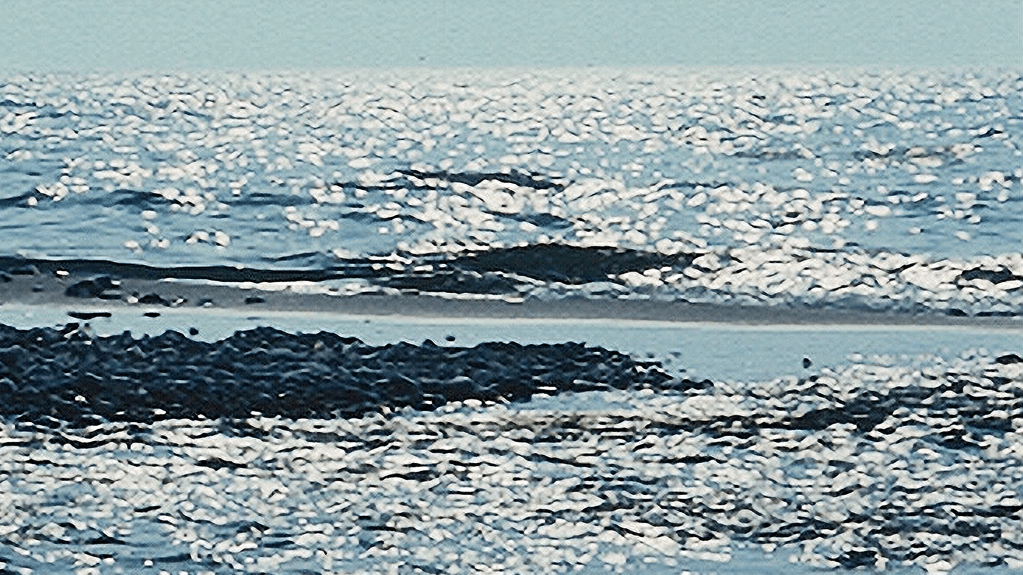
    Shining Water

    The changing patterns of sunlight sparkling on water always fascinates me, particularly on Lake Michigan looking west from the Leelanau Peninsula.

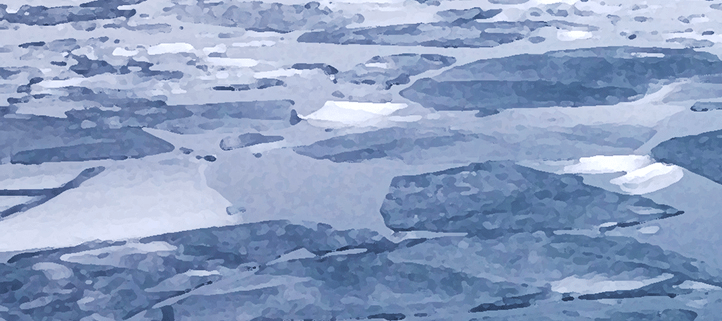
    Ice Caves

    On the Leelanau Peninsula’s western shore, the Lake Michigan surf sometimes whips up and freezes in mid-air, forming weird ice caverns and ice dunes.

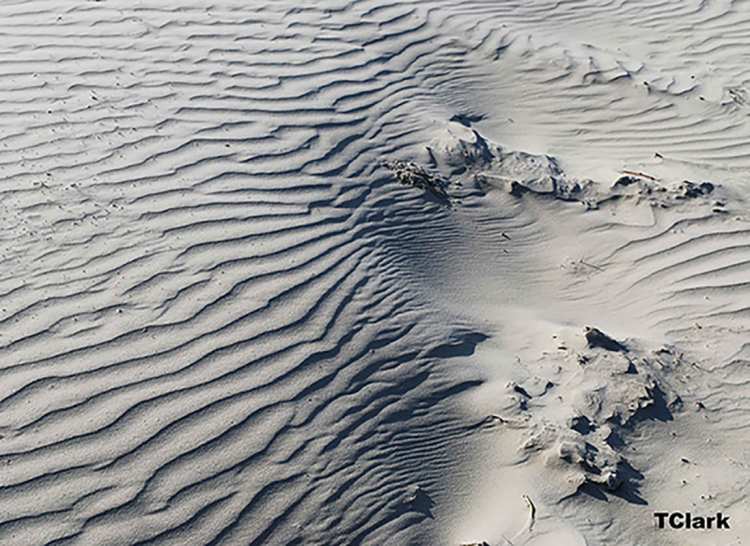
    Sleeping Bear Dunes

    Ojibwe legend tells of a fierce forest fire on the western shore of Lake Michigan, forcing a mother bear and her two cubs into the water to swim to the opposite shore. After many miles of swimming, the exhausted cubs drowned. When the mother bear reached the eastern shore, she waited on top of a high bluff in hopes that her cubs would finally appear. Moved by the mother bear’s determination and faith, the Great Spirit created two islands to commemorate the cubs, and the winds buried the sleeping bear under the sands of the dunes, where she still waits.

    The main dune is enormous, a mountain of sand rising dramatically above the shore of Lake Michigan. The bear’s bluff atop this majestic mass of earth is a serene vista of radiant sun, windblown sand and waves.

    See more images at TClark digital art galleries
    Autumn on M22

    A scenic autumn drive around the peninsula on Highway M22 is a glory of light sifting down through a canopy of colored leaves. The 75-mile drive from Empire on M22 winds northeast to Northport then south around the east side of the peninsula along Grand Traverse Bay to Traverse City.

  • LIGHTFORMS 2: Star Spectra

    1993, Borik Press (Raleigh, NC) . . . computer music . . . duration: 7:30

    Three excerpts: