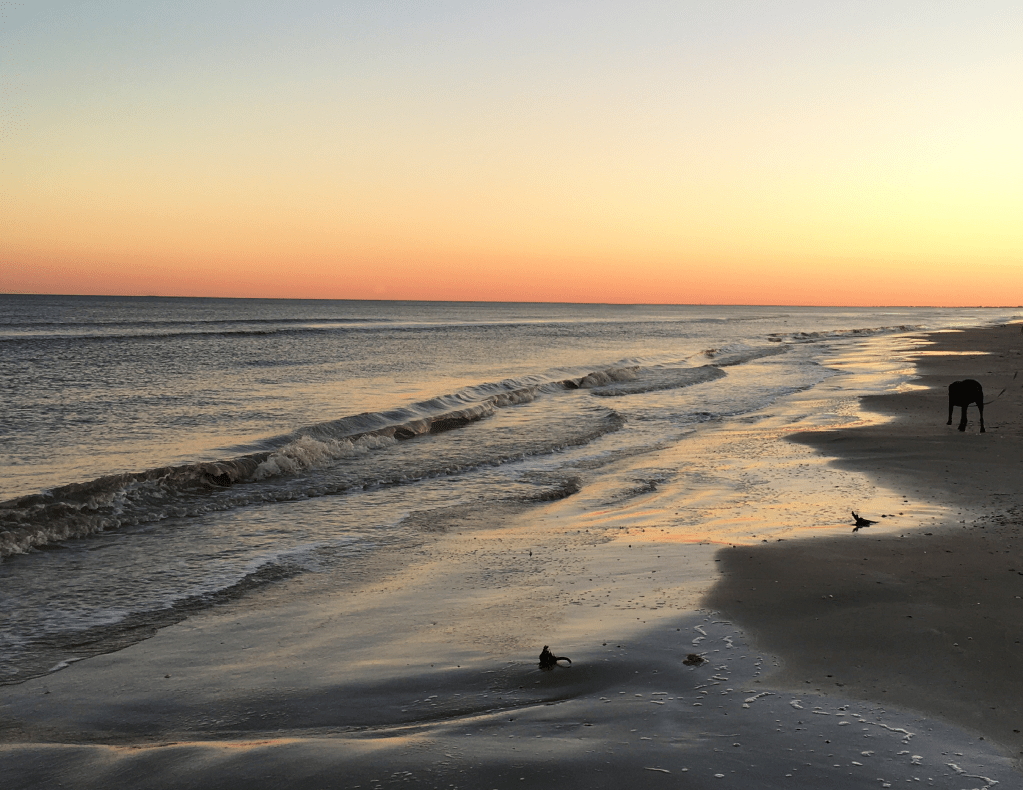
The next in the series begun with the 1971 original, Nocturne for orchestra, Olympic Shoreswas scored for wind ensemble. A large 1974 work for double choir, brass, and tape, Shores of Infinity, preceded it. While the same textural approach to a large instrumental ensemble continued, the title reflected my Pacific Lutheran University experience in Washington state the previous year.
Olympic Shores
Clark 1975 (TC-31)
NTSU (now UNT) Symphony Band
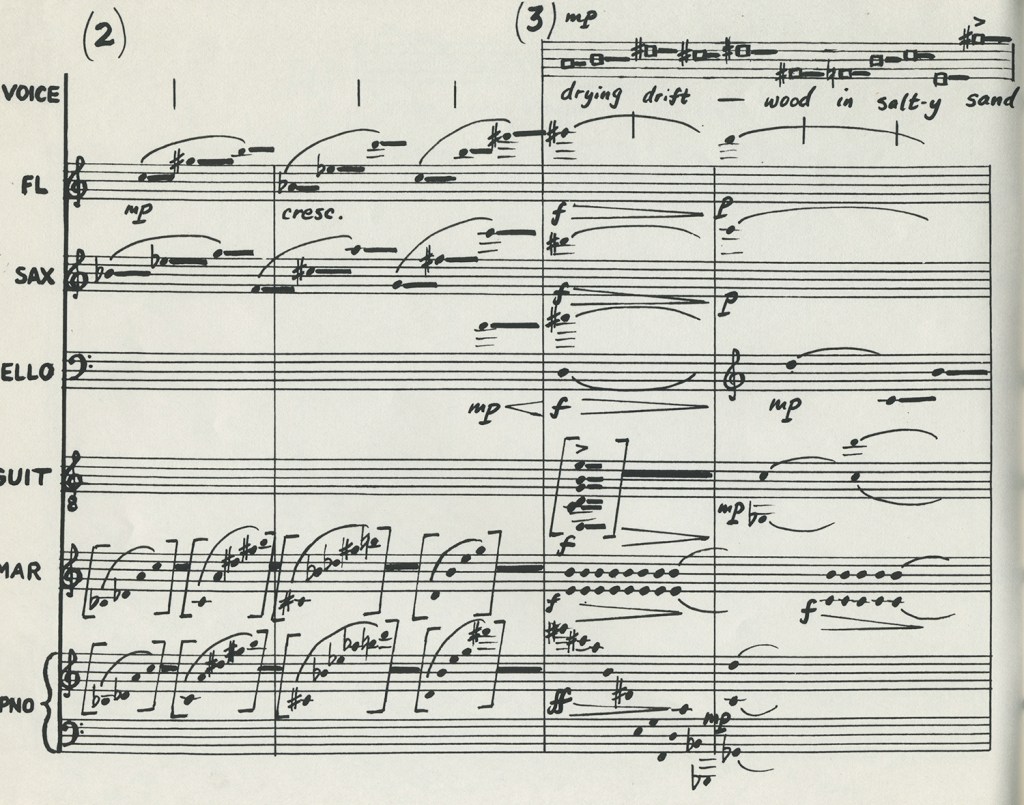
A chamber music piece titled Shores (TC-44) followed in 1978, which opened a new stream of writing for me with its completely non-metric time notation, bright arpeggiated pitch constellations, and oscillations animating the harmony and the texture.
Though it was performed in 1978 in Denton by the NTSU New Music Performance Lab, I’ve not been able to salvage an old recording.
Three pieces of the early 20th century, which I studied deeply in the 1970s and later used extensively in my teaching of modern music, were each masterful explorations of musical sound color:
Claude Debussy’s La Mer (1905), an iconic tone poem of Impressionistic musical painting with an orchestral palette
Arnold Schoenberg’s “Farben (Summer Morning by a Lake: Chord-Colors”, the third of his Five Pieces for Orchestra, Op. 16 (1909) — a gentle study of orchestral sound color
Anton Webern’s Symphony, Op. 21 (1928), whose first movement is a delicate gem of pointillistic color canon built on one enormous, static, symmetrical 13-pitch constellation
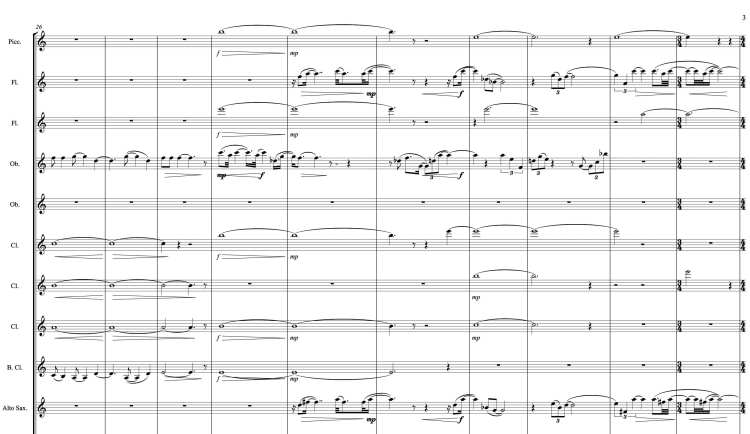
After fifty years, these works are embedded more deeply than ever in my musical consciousness. Farben pays special homage to Schoenberg’s masterpiece, layering kaleidoscopic wind-instrument colors to build massive, morphing constellations, echoing Webern’s hidden chord-color symmetry.
In the midst of my recent Impressionistic “Sketches” series, the 2024 piece Folio(TC143) was a throwback to the more abstract sound mass style of the 1960s and ’70s. Its percussive attacks and inert masses of sound were all synthesized, also throwbacks to my early days of electronic tape music. (One of the earliest electronic compositions, Stockhausen’s 1960 Nr. 12 Kontakte, was full of sounds like giant steel beams hitting a concrete floor!) The other retro feature of Folio is suggested in its title: homage to Earle Brown’s 1952 FOLIO, a collection of abstract art scores in stark, proportional graphic notation.
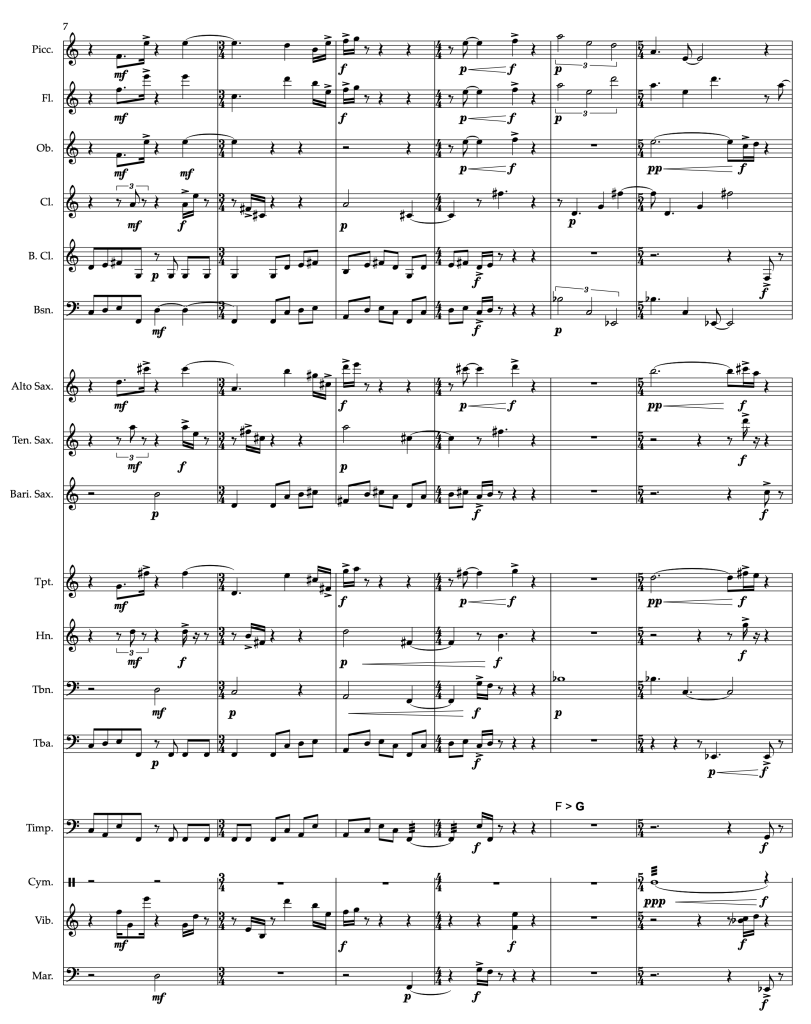
A wind and percussion transformation of Folio was challenging. Folio (TC143) was composed in the abstract avant-garde style of the ’60s. It carved sound sculptures of solid, hard-edged sonorities in expansive pitch/time space. Now colored with cool woodwind sounds, radiating brass, and sparkling percussion, GEODES animates Folio‘s solid sound masses in surging and fading rhythmic textures.
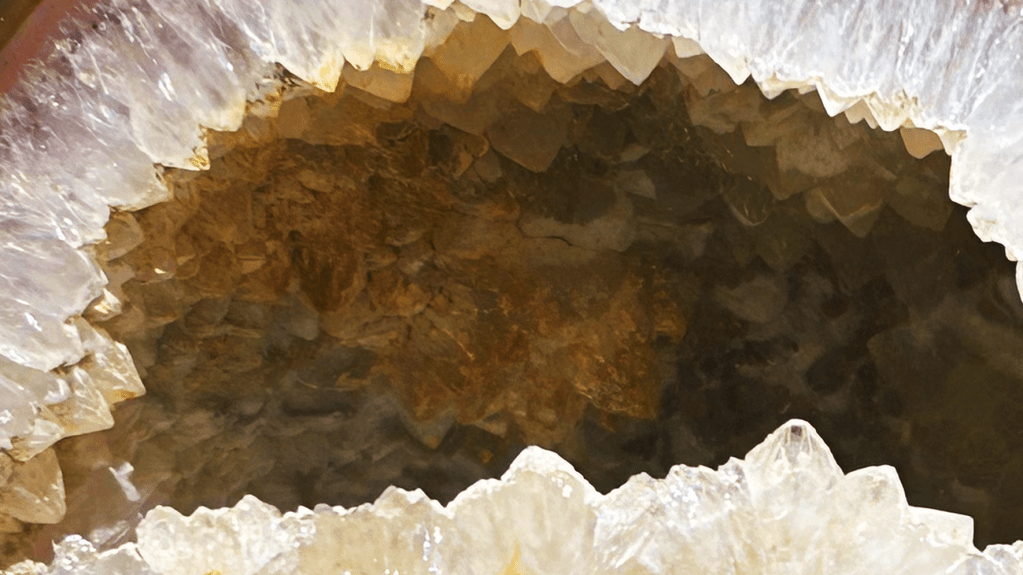
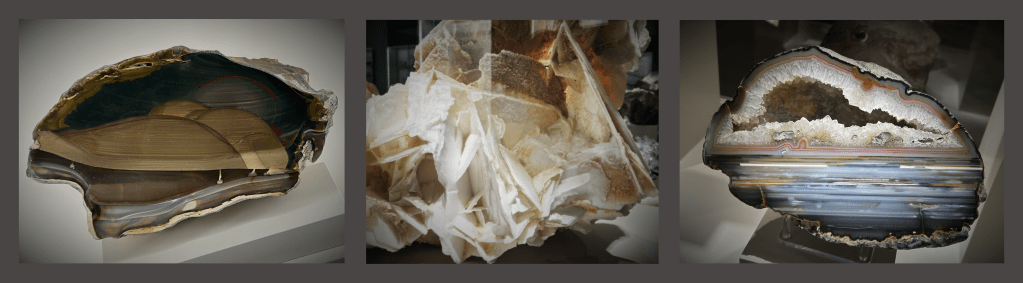
The chaotic boldness of rocks . . . my own collection of many found on beaches and hikes, but also splendid displays at three places: Dick’s Rock Shoppe in Estes Park, Colorado; Lizzadro Museum of Lapidary Art in Elmhurst (now in Oak Brook), Illinois; and a wonderful gallery of geodes at the Permian Basin Petroleum Museum in Midland, Texas. A geode is Nature’s sculpture, an inscrutable gray rock sphere that, when sawed open, reveals a magical world of dazzling-colored crystals. Different minerals make crystals of varied hues of pink, purple, umber, or cream, reflecting new light.
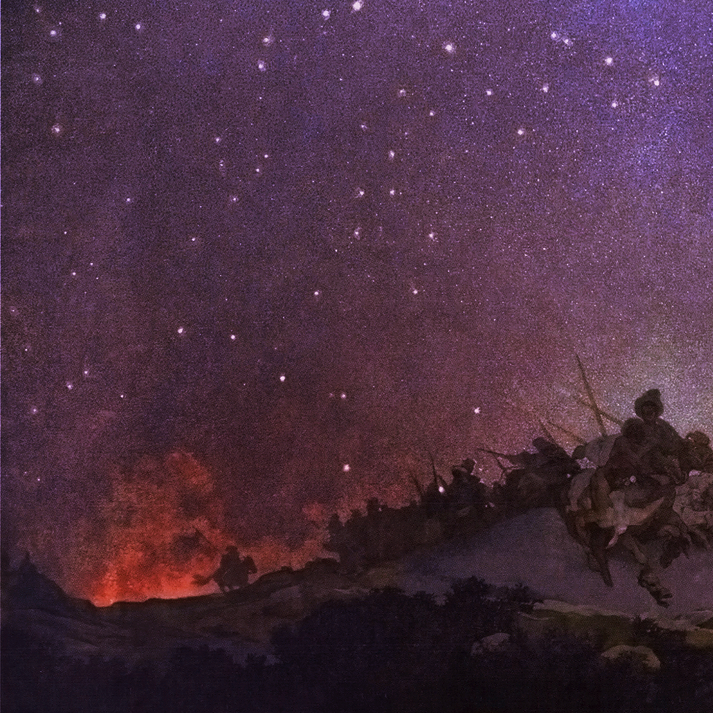
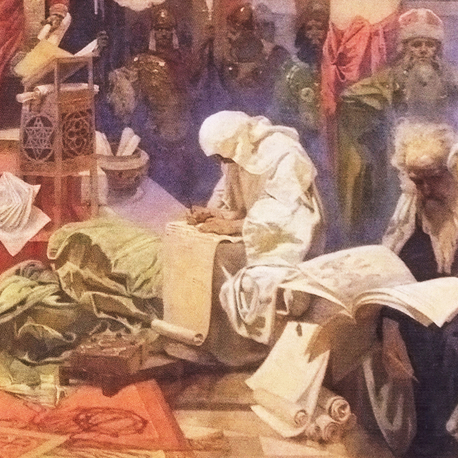
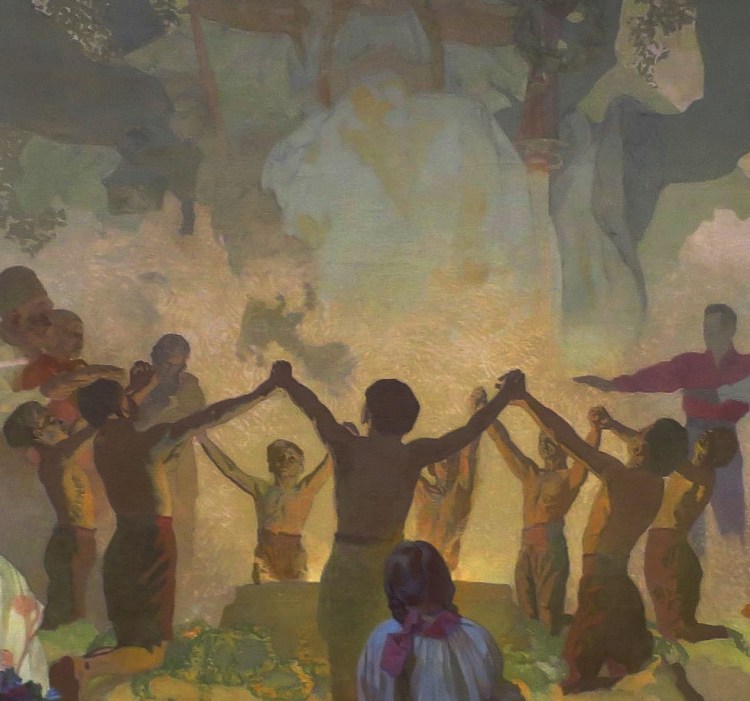
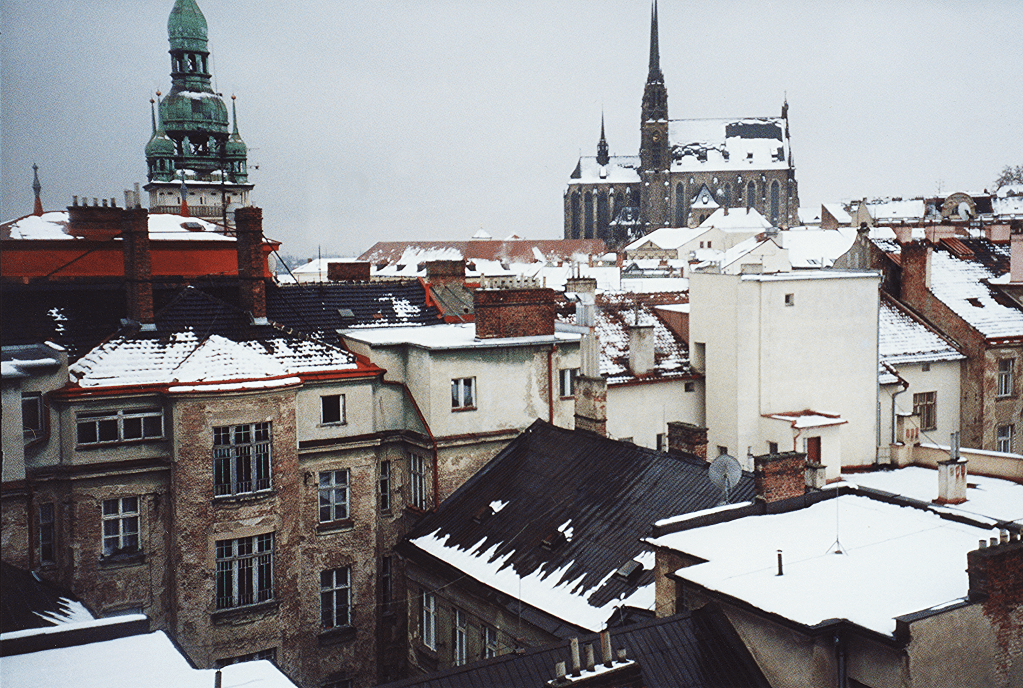
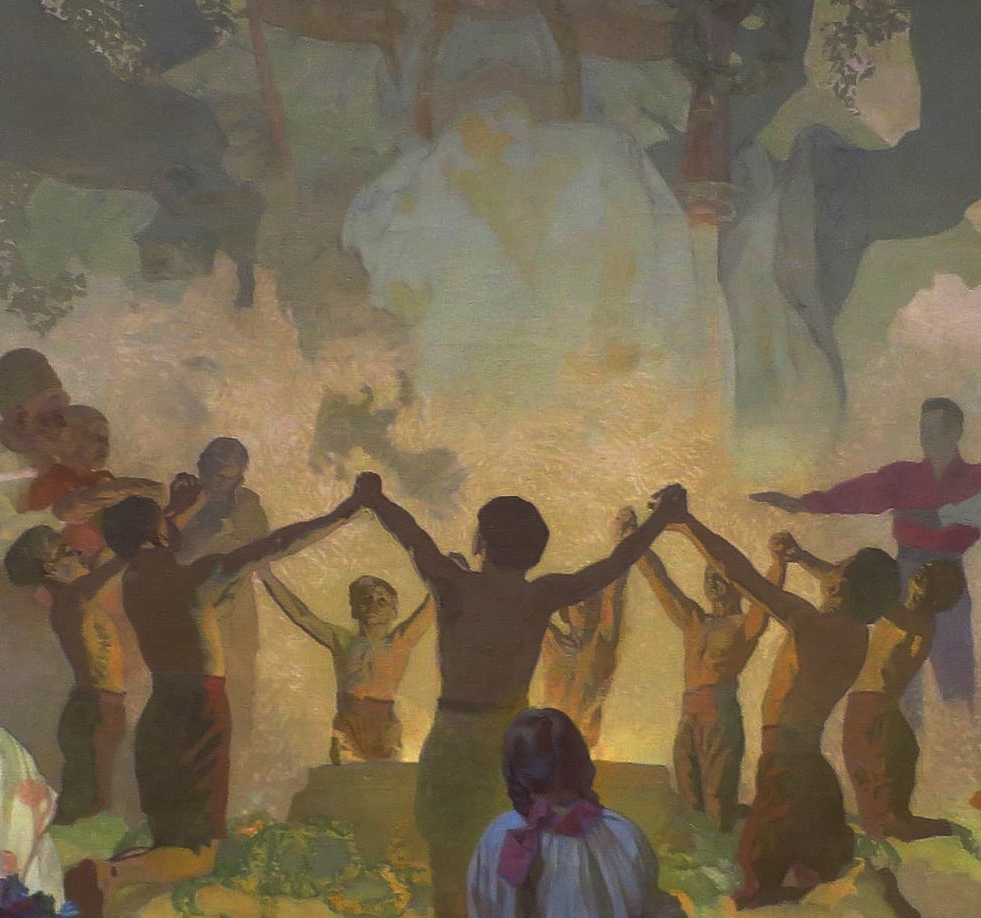
In 1991 I made my first trip to Czechoslovakia to perform at the International Music Festival in the ancient Moravian city of Brno. It was on a side trip to the nearby town of Moravsky Krumlov that I first saw Alfons Mucha’s series of epic paintings depicting the history of the Slavic world. The stories expressed in these 17 enormous unframed canvases were intriguing, but I was most inspired by his dazzling rendering of light, the hallmark of truly great artists. Five stood out and became my challenge to complete the transformation of their depictions of light into music.
In the midst of my recent Impressionistic “Sketches” series, the 2024 piece Folio was a throwback to the more abstract sound mass style of the 1960s and ’70s. Its percussive attacks and inert masses of sound were all synthesized, also throwbacks to my early days of electronic tape music. (One of the earliest electronic compositions, Stockhausen’s 1960 Nr. 12 Kontakte, was full of sounds like giant steel beams hitting a concrete floor!) The other retro feature of Folio is suggested in its title: homage to Earle Brown’s 1952 FOLIO, a collection of abstract art scores in stark, proportional graphic notation.
This wind and percussion transformation of Folio was challenging. But I thought about the chaotic boldness of rocks — my own collection of many found on beaches and hikes, but also splendid displays at three places: Dick’s Rock Shoppe in Estes Park, Colorado; Lizzadro Museum of Lapidary Art in Elmhurst (now in Oak Brook), Illinois; and a wonderful gallery of geodes at the Permian Basin Petroleum Museum in Midland, Texas. Geodes are Nature’s sculptures, inscrutable gray rocks that, when sawed open, reveal magical worlds of dazzling-colored crystal structure.
Leos Janácek composed his great concert work, Sinfonietta, in 1926 for the Sokol Gymnastic Festival in Prague. It is what I call musical sketches of his home city, Brno, the largest city in the Moravian east of what was then Czechoslovakia. I visited Brno several times starting in 1991 to perform my music at its International Music Festival. The festival traditionally ends with a performance of Sinfonietta by the Brno Philharmonic in Janácek Divadlo (theatre). In 1993 my ballet, PTACI, was premiered at historic Mahunovo Divadlo, across a plaza from Janácek Divadlo.
Though I could have continued my “Sketches” series with a “Brno Sketches,” instead this new work is a set of more abstract variations partly based on and quoting themes from Sinfonietta (in the tradition of Brahms’ Variations on a Theme of Haydn). Variation 1 “Canon” engages that ancient musical technique, evoking Brno’s medieval history. Variation 2 “Overtones” explores two harmonic series, C and Bb, painted over each other in layers of color, with hints of fanfare emerging through the clouds. Variation 3 “Constellations” is a kaleidoscopic succession of large sonorities built on stone-sturdy Perfect Fifth intervals brightened by jazz-like added tones. Variation 4 “Fanfare” is an ostinato pattern-music fantasia on Sinfonietta‘s grand fanfare themes.
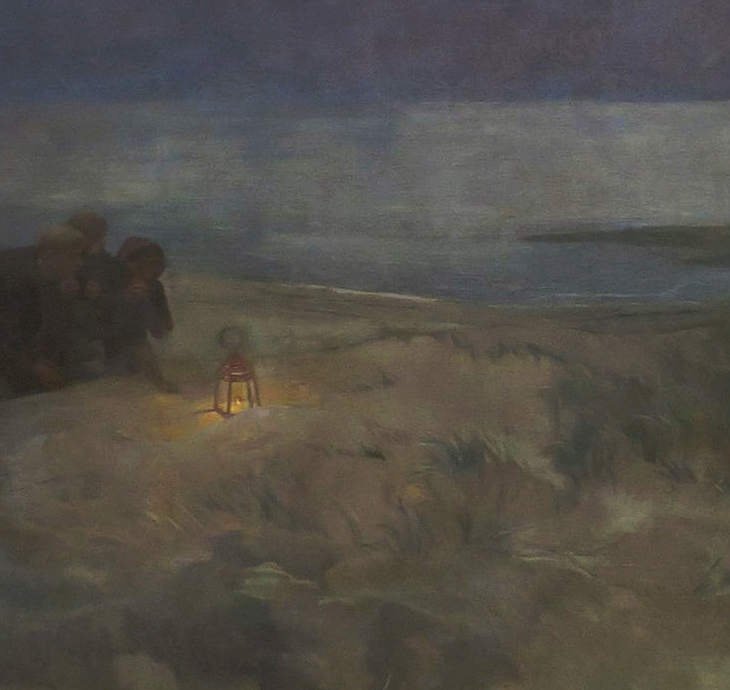
Five sound sketches on the historical paintings of Alfons Mucha (1996/2005)
I first traveled to the Moravian region of Czechoslovakia in 1991 to conduct my own music at the 26th International Music Festival in Brno. While there, I visited the South Moravian town of Moravský Krumlov. Its castle served as a museum gallery for the epic paintings, Slovanská Epopej, of Alfons Mucha. Better known as the father of art nouveau through his many famous Paris posters, Mucha was deeply interested in Slavic culture and history. The 20 paintings, each a monumental canvas hung as a tapestry, vividly depict both historical and mythical scenes.
Mucha’s Light: Ancient Images is dedicated to Miroslav Marada, the Moravian gentleman who first showed the paintings to the composer in 1991. A teacher, history buff, and lover of the local wines of south Moravia, Marada fascinated me with elaborate tales, explaining the symbolism of each painting. The five works I selected to sketch musically have a common element, masterfully painted images of exotic light. Composing musical analogs for these ancient images, I incorporated medieval music from the Bohemian/Moravian region of central Europe. The music weaves authentic medieval chant tunes into an intensely contrapuntal fabric, interspersed with modern sparks, streaks, and splashes of sound color. Originally composed for brass quintet, the musical images called for a richer, more varied sound-color palette:
The death of the great Flemish composer Jan Ockeghem in 1497 marked the end of Western Music’s Medieval style period. The most famous composer of the late 15th century, Ockeghem’s style of choral music was intensely contrapuntal, filled with canons, and freely exploratory in harmony and form. Josquin, already emerging as the great pioneering composer of the early Renaissance, revered Ockeghem, as do I. The first part of Canzona 1497 explores such canonic contrapuntal structures in a modern harmonic setting. While the second part settles into a more Medieval harmony of simple diatonic lines, both parts of the piece indulge in a striking Ockeghem idea: spinning repetitive contrapuntal material in a texture that is paradoxically animated in surface but stationary in prolonging one sustained harmony. I hear this feature of Ockeghem’s music as an ancestor to the mid-20th-century ostinato music of American composers Terry Riley, Steve Reich, John Coolidge Adams . . . and me.
To request performance materials and permission, email the composer, tc24@txstate.edu.
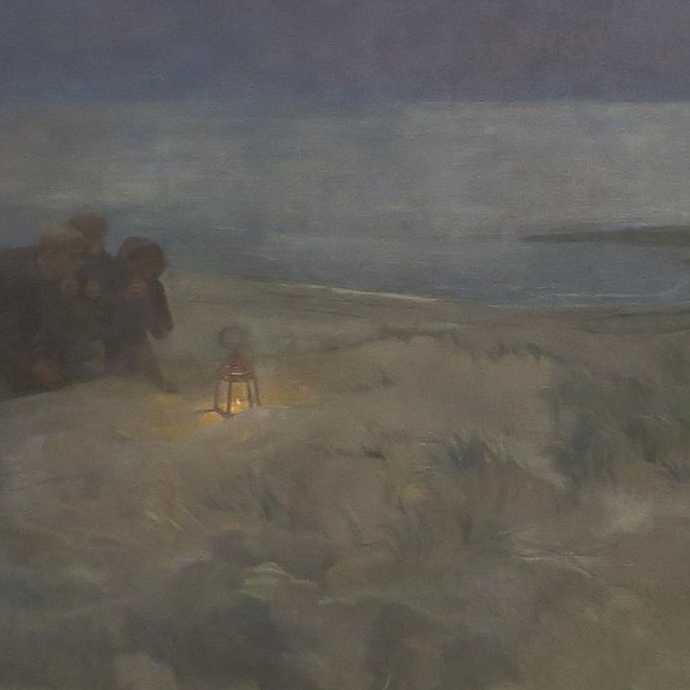
First Light is a double reference. It is the term used when a new telescope is commissioned and opens its optics for the first time to capture light. When Texas State University opened its new Performing Arts Center, the 2015 inaugural concert in the acoustically splendid Recital Hall was titled “First Light.”
The older reference is to native American mythology, which tells origin stories of the First People who emerge from the Dark World into the light of the rising sun (the Blackfoot sun god is called Natosi). In Navajo mythology, “Early on the morning of the fourth day, Little Dawn Boy began to sing his magic song. As he finished the song, an arch of shimmering light, all rose, violet, blue, and every color, and delicate as a veil, began to stretch from the summit of the purple mountain to the top of the white cliff. He then saw a bright Rainbow Bridge grow before his eyes. Singing with delight, he hastened over the Rainbow Bridge. As he ran a wind sprang up and blew a many-colored mist to the top of the cliff.” [First People: American Indian Legends]
To request performance materials and permission, email BMI-affiliated composer Thomas Clark, tc24@txstate.edu.









 Thomas Clark - composer / digital artist