2024 . . . wind ensemble . . . (13 min.) . . . Picc, Fl, Ob, 3 Clar, Alto Sax, Ten Sax, Bari Sax, Bsn, 3 Trp, 2 Hn, 2 Tbn, Euph, Tuba, Timp, Perc, Dbl Bass
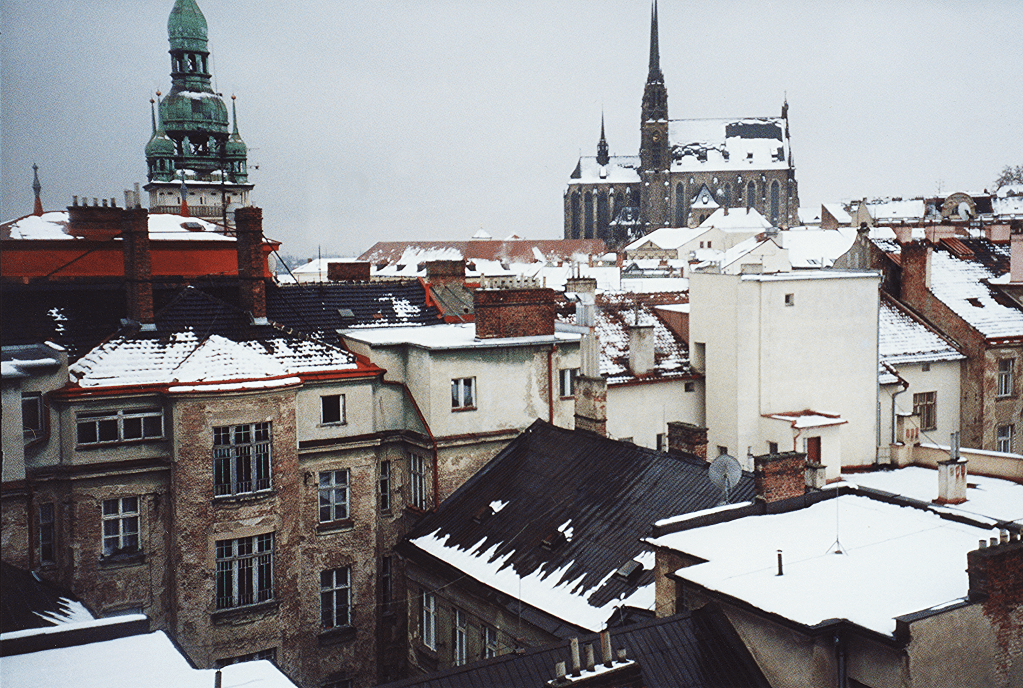
Leos Janácek composed his great concert work, Sinfonietta, in 1926 for the Sokol Gymnastic Festival in Prague. It is what I call musical sketches of his home city, Brno, the largest city in the Moravian east of what was then Czechoslovakia. I visited Brno several times starting in 1991 to perform my music at its International Music Festival. The festival traditionally ends with a performance of Sinfonietta by the Brno Philharmonic in Janácek Divadlo (theatre). In 1993 my ballet, PTACI, was premiered at historic Mahunovo Divadlo, across a plaza from Janácek Divadlo.
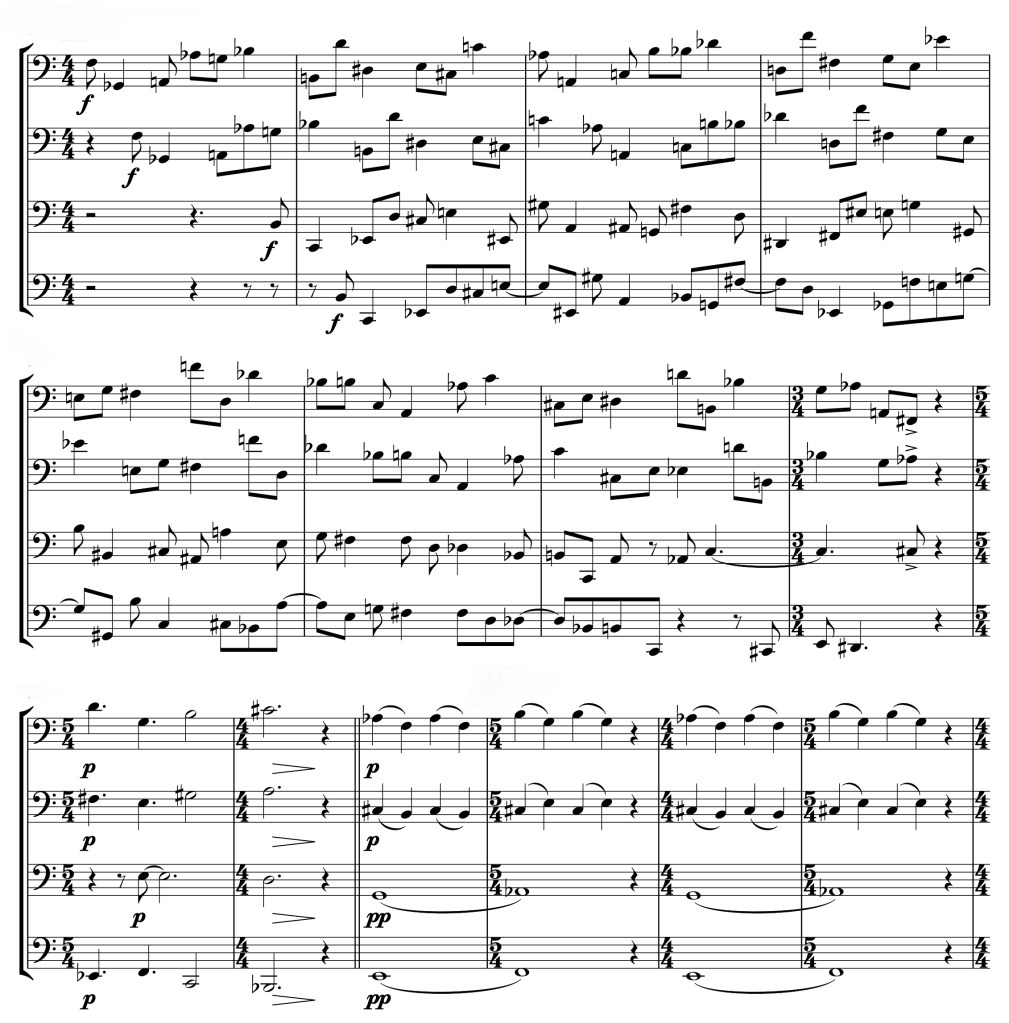
Though I could have continued my “Sketches” series with a “Brno Sketches,” instead this new work is a set of more abstract variations partly based on and quoting themes from Sinfonietta (in the tradition of Brahms’ Variations on a Theme of Haydn). Variation 1 “Canon” engages that ancient musical technique, evoking Brno’s medieval history. Variation 2 “Overtones” explores two harmonic series, C and Bb, painted over each other in layers of color, with hints of fanfare emerging through the clouds. Variation 3 “Constellations” is a kaleidoscopic succession of large sonorities built on stone-sturdy Perfect Fifth intervals brightened by jazz-like added tones. Variation 4 “Fanfare” is an ostinato pattern-music fantasia on Sinfonietta‘s grand fanfare themes.
To obtain free performance materials, email: TC24@txstate.edu
 Thomas Clark - composer / digital artist