Tag: cello music

  • Looking for the Rainbow

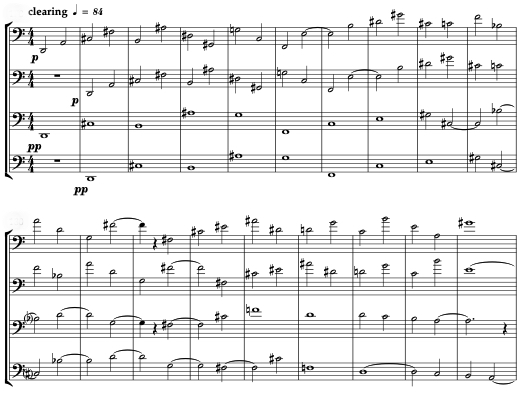
    2021 . . . . cello quartet or cello choir . . . . duration: 9 minutes

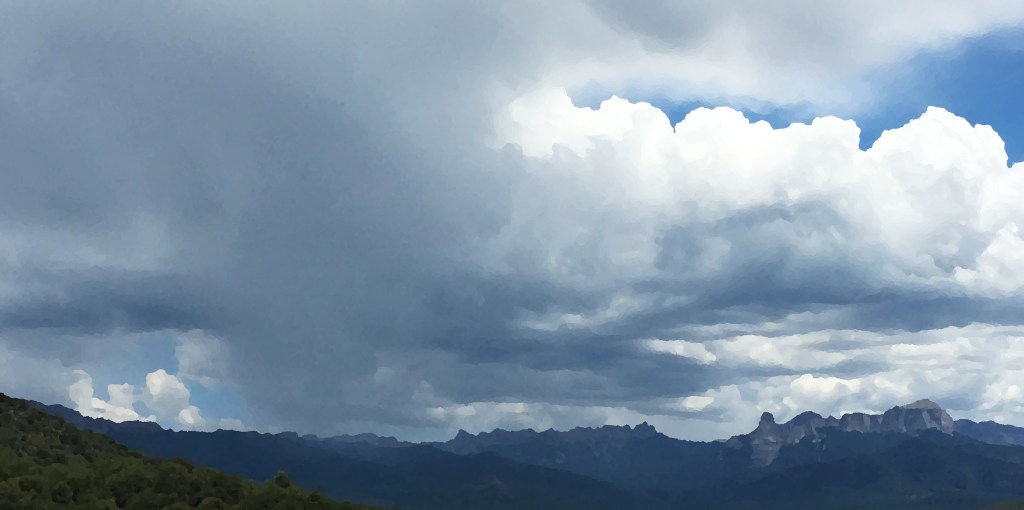
    Written during the COVID pandemic for Karla Hamelin and her Texas State cello students, Looking for the Rainbow expresses both the uncertainty and hopefulness in our collective struggle to survive the storms of disease and violence.

    A prequel to Rainbow Rising (2016), an earlier canonic piece for cellos, Looking for the Rainbow explores a more complex rhythmic counterpoint of darker sonorities, evoking a restless spirit of searching, anticipating.

    (Canon is an ancient compositional technique, a melodic line that while in progress is closely echoed in one or more other “voices” to weave an entire contrapuntal texture out of matching threads.)
    To request performance materials and permission, email the composer, tc24@txstate.edu.
  • Karlův Most (Charles Bridge)

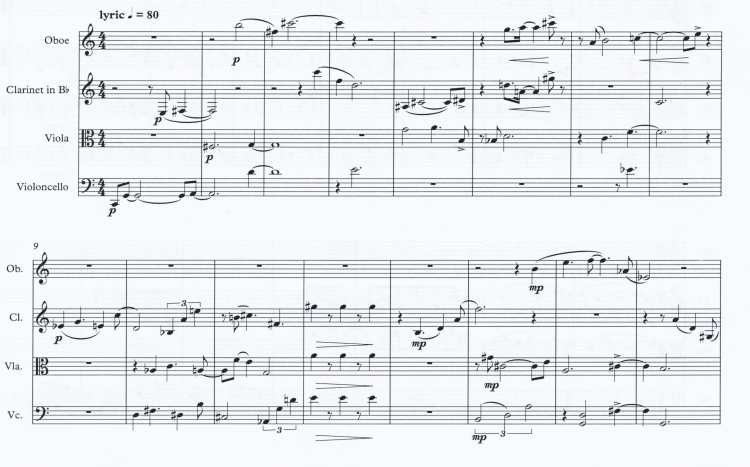
    2018     oboe, clarinet, viola, cello.    Duration 7:30

    Middle in a series of three works (following Hukvaldy Sketches and preceding Climbing Blaník) inspired by Czech culture and written for the Pleasant Street Players, Ian Davidson, Vanguel Tangarov, Ames Asbell, and their musical associates.

    The stone Charles Bridge spans the great Vltava in Prague, connecting Old Town to the Lesser Quarter’s St. Vitus Cathedral and Presidential Palace. Built in the 14th century, its 16 arches are guarded at each end by magnificent bridge towers typical of Prague‘s Gothic architecture. Some 30 statues watch over peddlers and a constant stream of local and tourist pedestrians. To be among them always evokes strong feelings of history and the joy of Bohemian life.


    To request performance materials and permission, email BMI-affiliated composer Thomas Clark, tc24@txstate.edu

  • Modern Inventions

    2016 . . . 12 contrapuntal etudes . . . 15 minutes

    This set of 12 etudes for two contrapuntal voices was first composed as modern 20th-century style studies for the aural skills workbook ARRAYS. They echo the musical characters of early 20th-century composers Debussy, Bartók, Stravinsky, Hindemith, Varese, Webern, and others of mid-century such as Dallapiccola. Though the “invention” designation recalls Bach’s great Two-Part Inventions, a more direct inspiration was Bartók’s Mikrokosmos, six books of piano etudes.

    Though originally scored in limited treble and bass ranges suitable for singing, the intervallic and rhythmic complexities are more suitable for instrumental studies. Versions of the twelve are available for string orchestra, or for pairs of instruments:

    • viola & cello
    • clarinet & bass clarinet
    • trombone & bass trombone

    The 12 Contrapuncti are graduated in challenge for study, but can also be performed, as one short suite of four, or two or three suites altogether in any order.

    Suite I

    • 1. Strolling – tempo = 48
    • 2. Boldly – tempo = 72
    • 3. Celestial – tempo = 54
    • 4. Proudly – tempo = 78

    Suite II

    • 5. Dancing – tempo = 54
    • 6. Skating – tempo = 126
    • 7. Exploring – tempo = 132
    • 8. Contemplative – tempo = 128

    Suite III

    • 9. Emphatically – tempo = 84
    • 10. Precise – tempo = 66
    • 11. Mysterious – tempo = 72
    • 12. Aggressive – tempo = 84

    Here are all 12 played by strings:

    [order – Suite II, Suite III, Suite I]

    To request study/performance materials, email composer

    Thomas Clark, tc24@txstate.edu