2024 . . . chamber orchestra . . . 8 minutes (Originally for Karla Hamelin and her Texas State cello students)
First composed in 2021 during the COVID pandemic, Looking for the Rainbow expresses both the uncertainty and hopefulness in our collective struggle to survive the storms of disease and violence.
A prequel to Rainbow Rising (2016), an earlier canonic piece for cellos, Looking for the Rainbow explores a more complex rhythmic counterpoint of darker sonorities, evoking a restless spirit of searching, anticipating. (Canon is an ancient compositional technique, a melodic line that while in progress is closely echoed in one or more other “voices” to weave an entire contrapuntal texture out of matching threads.)
I have long admired and been influenced by the music of early 20th-century Austrian composer Anton Webern. Known historically as a member of the Second Viennese School with Alban Berg and mentor Arnold Schoenberg, the three were pioneers of so-called atonal music and 12-tone-row serial harmonic organization. I find the term “atonal” misleading and negative, as their 12-tone processes achieved new “12-tone tonalities” — not simply a rejection of traditional tonal harmony but also striving to create new and more complex tonalities.
What I admire about Webern’s mostly-quiet instrumental miniatures (his Symphonie Op. 21 has only two sparsely-scored movements) is the delicate, crystalline quality of his pitch constellations; and their gently lyric, precious setting into transparent textures, pearl-strings of delicate sound colors (called Klangfarbenmelodie).
Webern’s mentor, Schoenberg, as a Jew was compelled to emigrate to the U.S. in 1933 before it was too late. Webern, not Jewish, stayed in Vienna and survived World War II, only to be fatally shot by a U.S. Army soldier during the Allied occupation of Austria.
Miniatures I through IV are adapted from Webern Elegyand V through XII from MapLab7 – For Little Arnold. Viennese Sketches does not portray the historical European city but rather explores various musical textures and tonalities using the 12-tone serial techniques of the so-called Second Viennese School of composers associated with Schoenberg. While their music using these techniques was unfortunately dubbed “atonality,” my uses focus on creating constellations and counterpoint that is complex but much less dissonant and more sonorous, my sense of a new tonality.
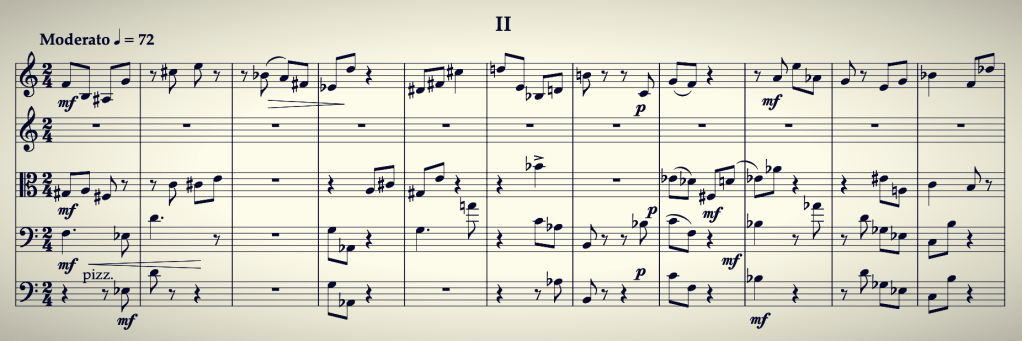
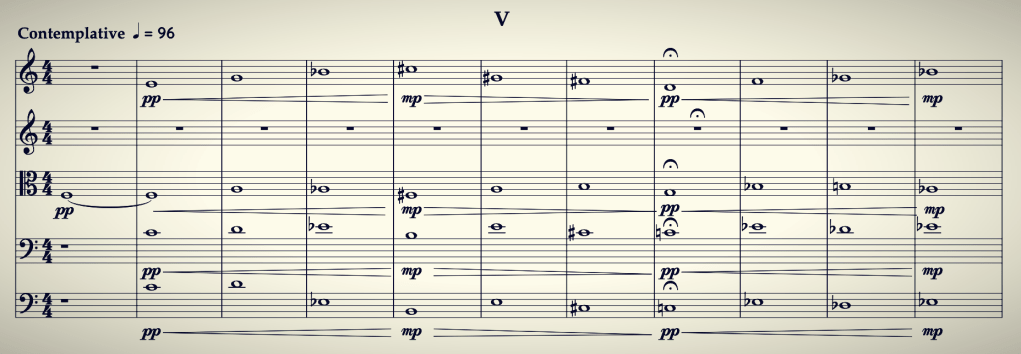
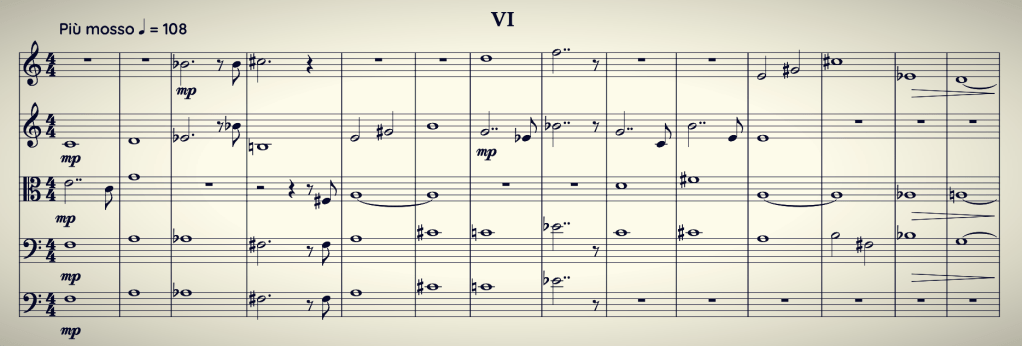
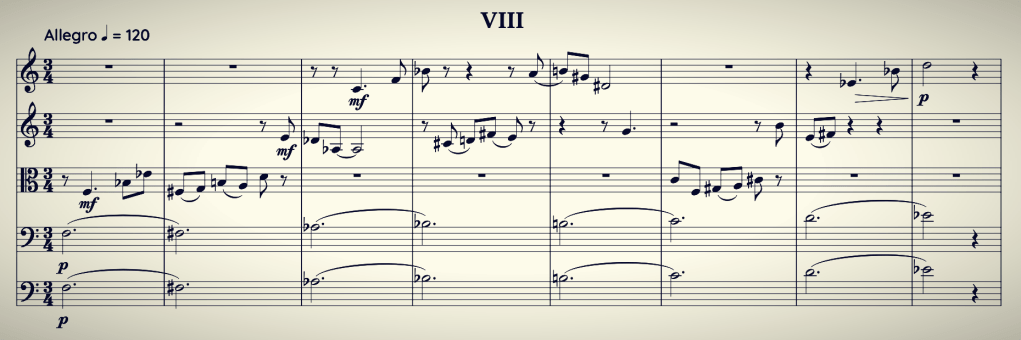
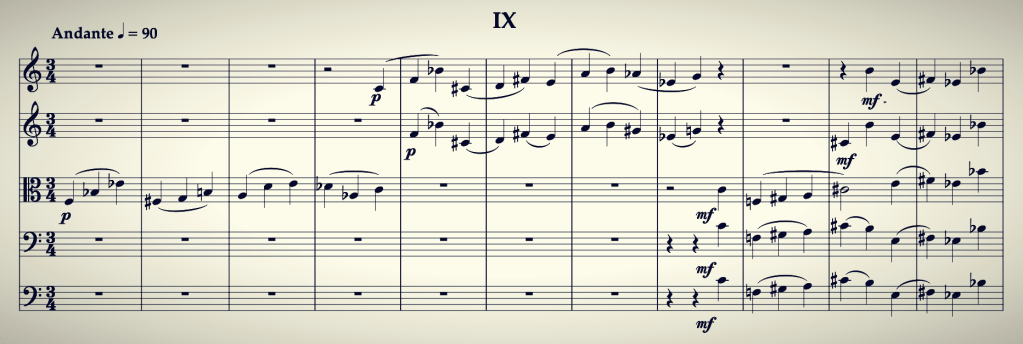
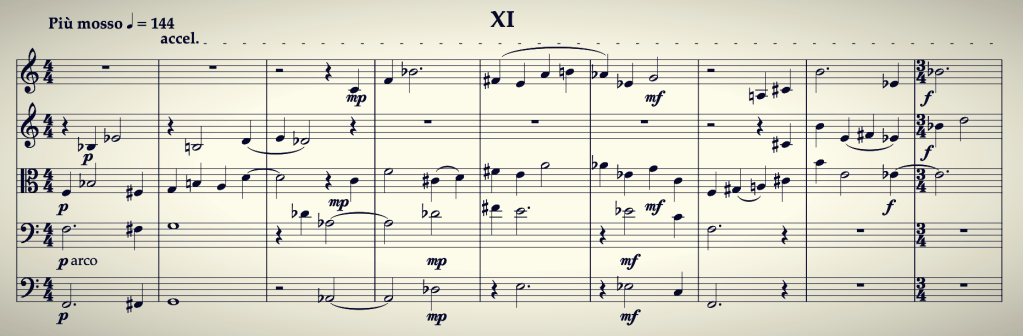
While the chamber orchestra work is organized in six movements and a coda, each miniature is excerpted below to show changing pace and textures.








 Thomas Clark - composer / digital artist