2025 . . . piano and electronic music . . . 6:45
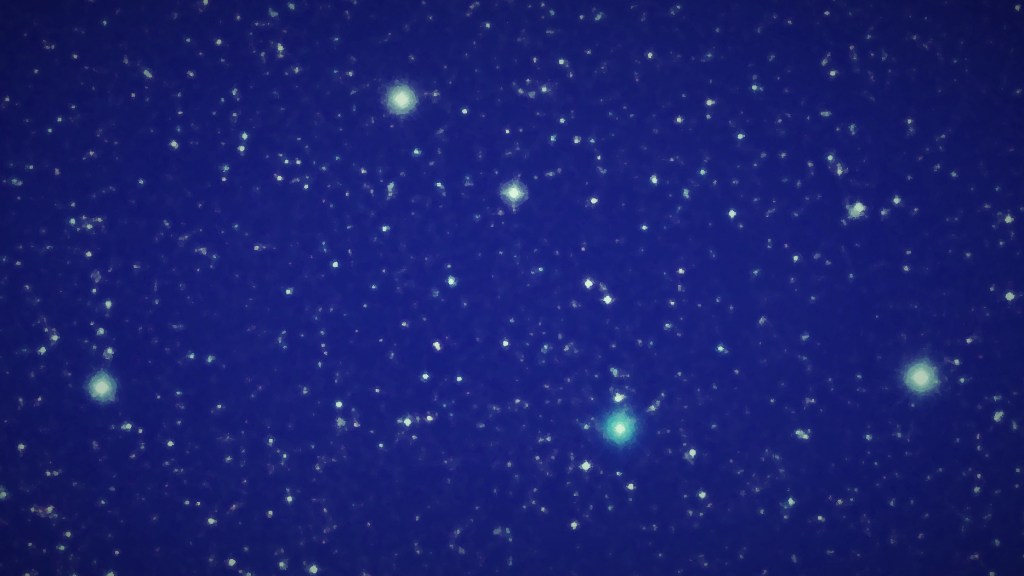
The constellation Cassiopeia in the northern sky is named after the vain queen Cassiopeia, mother of Andromeda in Greek mythology. One of 48 constellations listed by the ancient astronomer Ptolemy, its distinctive ‘W‘ shape is formed by five bright stars. Cassiopeia contains some of the most luminous stars known, including three hypergiants. Its brightest star, Cassiopeia A (“Schedar”), is a supernova remnant and bright radio source.
The music arose from tracing a map of its brightest points of light. The coordinates of these points on a two-dimensional graph were converted into time and pitch patterns articulating a grand sonority. The graph can be rotated, kaleidoscopically transforming the pattern into similar sonorities.
The same treatment applied to Cassiopeia’s constellation neighbors Perseus and Cepheus builds a denser field of sounds, metaphorically echoing the brilliant star-studded dark sky as seen through a powerful telescope.

 Thomas Clark - composer / digital artist