A visit to the shores of Michigan’s Leelanau Peninsula inspired me to write a poem:
Peninsula upon peninsula upon grand peninsula, Lee upon Leelanau upon Lower. Cove from bay from great lake, Suttons Bay off Grand Traverse Bay off Lake Michigan.
Land curves in myriad shore shapes, Reaching out to blue water. Fresh wind weds the land and water, Sun warms bright sails and sailor.
Setting it as lyrics for an art song made an example for MapLab 2: Sketch a Song. The lab instructions include a step-by-step explanation of the compositional process. (The synthesized audio rendering below is not capable of pronouncing the words.)
Michigan, The Great Lake State, is two enormous peninsulas surrounded by Lakes Michigan, Superior, and Huron. Actually, there are many smaller peninsulas extending out into the lakes. The Leelanau Peninsula (north of the venerable Interlochen music camp where I spent many summers) extends about 30 miles from the northwestern corner of the mitten-shaped Lower Peninsula into Lake Michigan. Algonquian-speaking tribes occupied this area prior to European colonization. The land is now home to lighthouses, wineries, ski slopes, inland lakes, and coastal dunes and beaches.
Listen uninterrupted to all four sketches . . .
Leelanau Sketches
Or separately to any of the individual sketches . . .
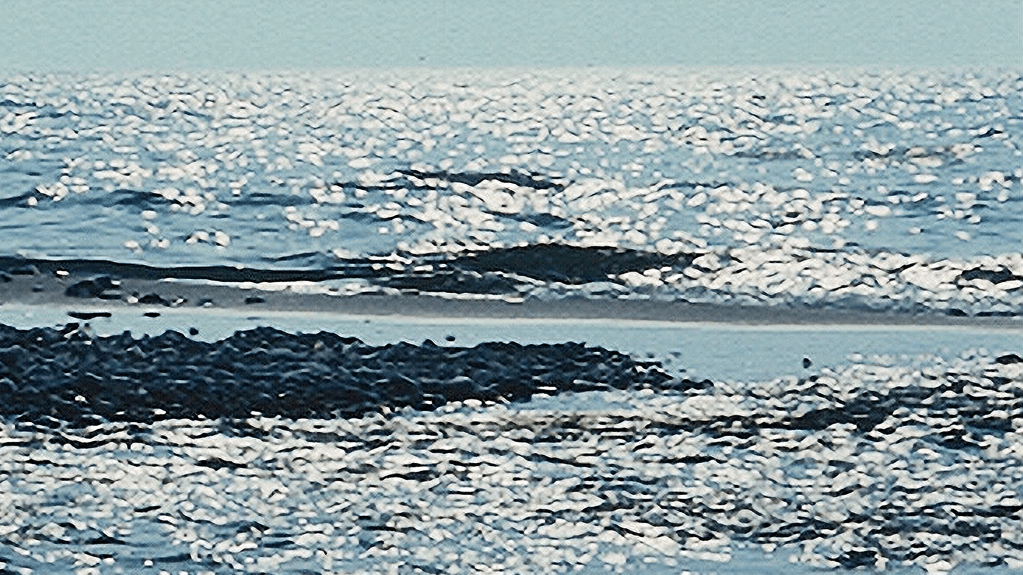
Shining Water
The changing patterns of sunlight sparkling on water always fascinates me, particularly on Lake Michigan looking west from the Leelanau Peninsula.
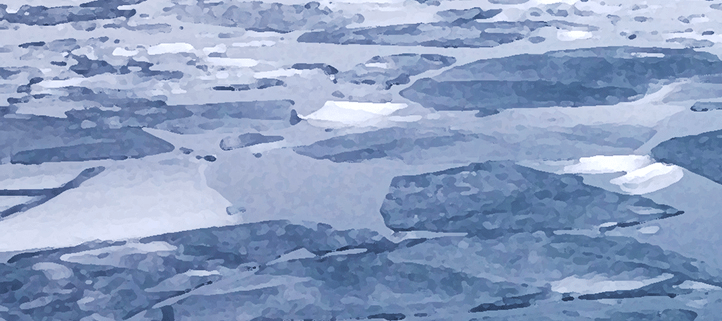
Ice Caves
On the Leelanau Peninsula’s western shore, the Lake Michigan surf sometimes whips up and freezes in mid-air, forming weird ice caverns and ice dunes.
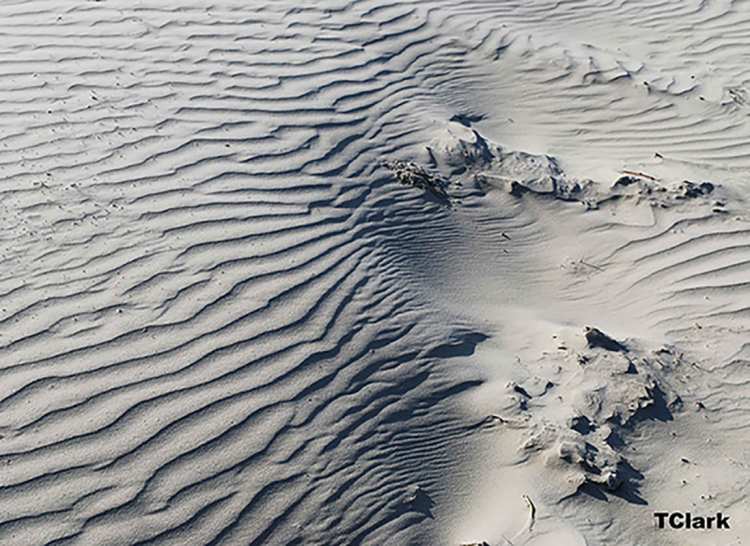
Sleeping Bear Dunes
Ojibwe legend tells of a fierce forest fire on the western shore of Lake Michigan, forcing a mother bear and her two cubs into the water to swim to the opposite shore. After many miles of swimming, the exhausted cubs drowned. When the mother bear reached the eastern shore, she waited on top of a high bluff in hopes that her cubs would finally appear. Moved by the mother bear’s determination and faith, the Great Spirit created two islands to commemorate the cubs, and the winds buried the sleeping bear under the sands of the dunes, where she still waits.
The main dune is enormous, a mountain of sand rising dramatically above the shore of Lake Michigan. The bear’s bluff atop this majestic mass of earth is a serene vista of radiant sun, windblown sand and waves.
A scenic autumn drive around the peninsula on Highway M22 is a glory of light sifting down through a canopy of colored leaves. The 75-mile drive from Empire on M22 winds northeast to Northport then south around the east side of the peninsula along Grand Traverse Bay to Traverse City.
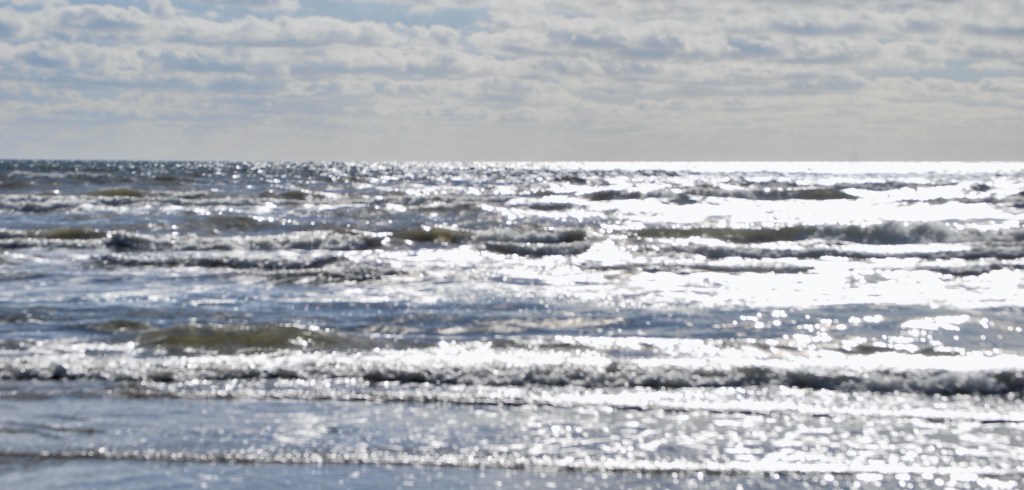
The music is fashioned out of a small set of sound resources: simple sounds of drums, bright sounds of ringing metal instruments, and deep shining sounds of tam-tams. The piece is about these distinct timbres – only the sparkles employ any pitch constellations, and then just one “chord” that recycles kaleidoscopically. Most of all, the piece is about time and its articulation in free, ametric rhythm. In Thunder and Waves, the time patterns are governed by the digits of the magical numer Pi. In Sparkles, the timed recurrence of each pitch is determined by prime numbers. Both number schemes transcend periodicity, letting time float.
Growing up in the Great Lake State, being surrounded by three of the five Great Lakes formed a big part of my Michigander character. Since many summers working at what was then called the National Music Camp in Interlochen, my favorite was the closest, Lake Michigan. Its magnificent coast forms the western edge of the lower peninsula, stretching from New Buffalo all the way up to the Straits of Mackinac. Its waters reach from many Michigan harbor towns across to Chicago and Milwaukee. Its varied environments offer fascinating features such as sand dunes, ice dunes, and remote islands. This piece depicts three phenomena: approaching thunder echoing across the vast lake; sunlight sparkling on the cold surface; and eternal, powerful waves.
STAGING: Antiphonal, three widely separated batteries
LEFT – 4 low tom-toms, bass drum, orchestra bells
CENTER – small and large tam-tams, vibraphone
RIGHT – 4 low tom-toms, bass drum, orchestra bells
I have often gazed at beautiful bodies of water, especially Lake Michigan and, more recently, the river Vltava in Prague. This sonic sketch combines musical metaphors for several features common to these majestic waters: waves and currents; sun sparkling on the surface; deep hues of the colder water below; twinkling stars above.
Longfellow’s famous poem, The Song of Hiawatha, though it is about Lake Superior, in the first two stanzas vividly verbalizes some of these images:
“By the shining Big-Sea-Water”
“Bright above him shone the heavens, Level spread the lake before him”
Inspired by the great serenades for strings of Dvořák and Tchaikovsky, this suite explores musical metaphors for the physics of H2O in interesting atmospheric and geographic settings.
I. Cold front (VAPOR becomes SOLID): In low clouds on mountain tops, water vapor can become super-cooled and become freezing fog, filling the air with small ice crystals and freezing to surfaces, similar to very light snow. In the western United States, the common name for freezing fog is “pogonip.”
II. Ice Dunes (SOLID): In the Leelanau Peninsula of Michigan, the Lake Michigan surf sometimes whips up and freezes in mid-air, forming weird ice caverns and ice dunes.
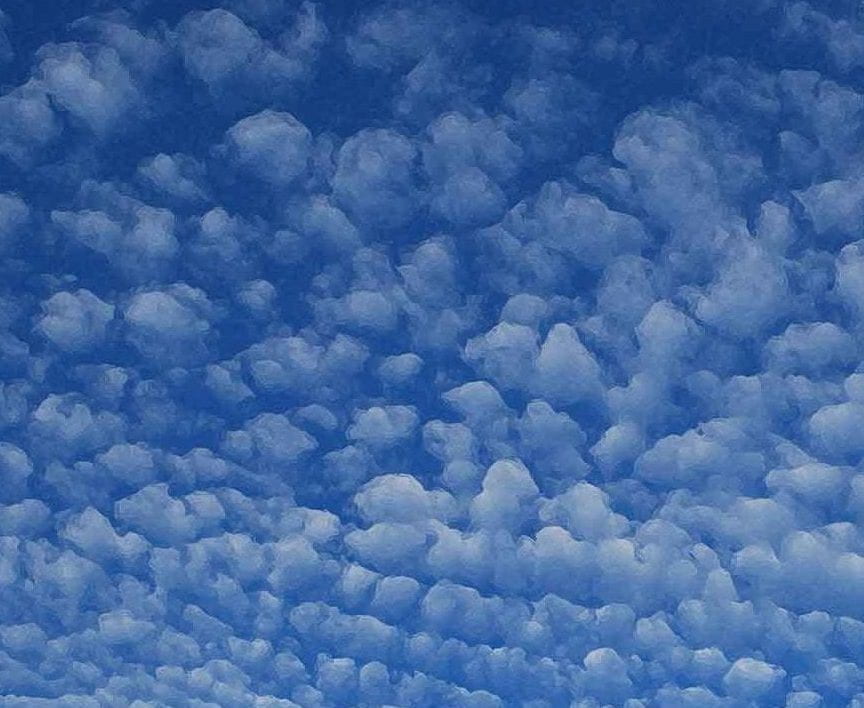
III. Nuages (VAPOR), French for clouds, is one of Debussy’s three beautiful Nocturnes for orchestra, quoted here as a theme for variations. Water vapor is technically invisible. The clouds we see are actually masses of minute liquid droplets and frozen crystals. Thus this movement embodies all three states of water.
IV. Vltava (LIQUID): The great river Vltava flows majestically through Prague. Smetana’s depiction of it in his monumental Ma Vlast is usually translated as The Moldau.
To request performance materials and permission, email the composer, tc24@txstate.edu.







 Thomas Clark - composer / digital artist