2021 . . . chamber orchestra (Flute, Oboe, Clarinet, Bassoon, 2 Horns, C Trumpet, Trombone, Timpani, Percussion, Strings)
Duration: 21 minutes in three movements – I. 8 min.; II. 8 min.; III. 5 min.
Mozart’s Jupiter Symphony is one of his greatest masterpieces. His No. 40 in G Minor and No. 38 “Prague” are also magnificent. It makes one wonder if he had lived longer, what other stunning music would have poured forth. Back to No. 41 Jupiter, the first theme is a curving melody of such rhythmic vitality and fascinating turning shape that I used it as an example of both in my ebook, Mapping the Music Universe. Mozart makes the theme into a fugato, and I have adopted it in my obsessive study of canons. You can see the shape of its first six notes in the violin opening of Jupiter Rising, then elsewhere it permeates the contrapuntal material of the rest of the piece. The middle movement takes a break from it, setting the main themes from the opening of the G Minor No. 40 as a languid tango tune, followed by a trio in slow waltz meter that reverts briefly back to the bright Jupiter tune. The final movement actually extends our signature Jupiter theme into a 12-tone row, generating a more expansive tonality in its animated landscape.
I. Jupiter Rising depicts the mysterious splendor of moonrise, large and deeply-hued in the eastern evening sky. This movement creates a sonic metaphor for that visual phenomenon, but portraying instead the rising of Jupiter, the largest object in the solar system other than the sun itself. It only looks much, much smaller to us than the moon because it is so much farther away. My favorite Mozart symphony is Symphony No. 41 in C Major, K.551. His longest and last symphony, it is nicknamed “Jupiter” — fitting that his lengthiest and greatest symphony is named for the largest planet, a great gas giant. A vivid musical motive begins and generates the majestic final movement. I use it as the musical subject of this movement, relentlessly canonic in deployment. At some moments, as many as 8 contrapuntal soundings overlap each other in a gentle, cloud-like texture.
II. Tango is set in an actual key, appropriate for this venerated dance form though uncharacteristic for my writing. The harmonies flow like dancers, the musicians feeling their way through the tonalities while never seeing an actual key signature.
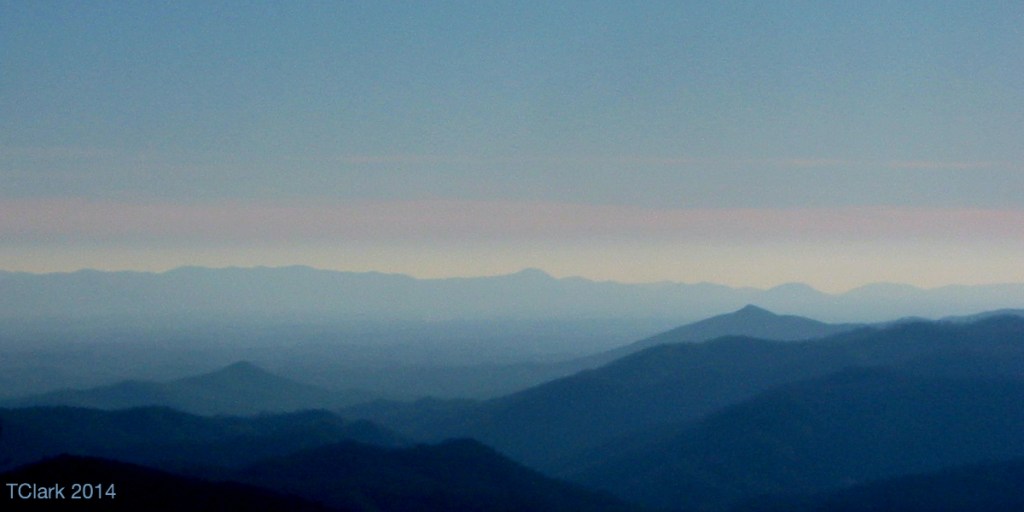
III. Blue Ridge refers to the beautiful hazy curves on the horizon as one gazes out from the top of the Blue Ridge Parkway, an hour west of my former home in the Piedmont in North Carolina. I also remember a similarly mystic vista looking south from Monterrey, Mexico toward the foothills of the Sierra Madre Oriental mountains. The musical fabric is what I have called an “animated landscape,” not a still postcard but a soaring flight over and through the soundscape.
 Thomas Clark - composer / digital artist