Tag: ostinato music

  • EFFULGENCE II

    2023 . . . sound sculpture . . . duration 4:40

    EFFULGENCE (the word means “brilliant, shining radiance”) was a 1984 improvisatory composition in the style of Terry Riley’s In C, overlapping repetitive patterns I call multi-phase ostinato music. It was like the rhythmic dance of a fountain.

    This sequel evokes the speckled field of sunlight reflected on the surface of a body of water. My home state, Michigan, The Great Lakes State surrounded by three of those magnificent fresh-water seas, also contains over 1,000 smaller lakes. My whole life I have gazed at and studied the way sunlight reflects off their wave-articulated surfaces, sparkling in a complex ensemble dance of periodic flashes of light.

    The musical construction is all about prime numbers. The melodic-cell eighth-note theme consists of successive intervals of 1, 3, 5, 7, and 11 semitones. Rhythmic values and motivic repetition cycles are all durations equivalent to 1, 3, 5, 7, 11 or 13 eighth-notes.

  • Sacred Springs

    2020 . . . . trombone or euphonium and piano . . . . duration: 7:50

    Peaceful Spring Lake and the San Marcos River flow from ancient springs emanating up from the Edwards Aquifer in the Texas Hill Country. For centuries, Native American tribes considered these powerful springs a sacred place where they worshiped eternal spirits. In the 20th century, the springs became the centerpiece of a famous recreation resort, Aquarena Springs. Now that the park has been restored to its original natural habitat, it remains a place of beauty and spiritual contemplation.

    The main tune of Sacred Springs is based on a 15th-century English carol, a graceful tune that became the melody for the lyrical modern hymn, “O Love, How Deep.” The melody’s canonic treatment, both in somber chant and spinning ostinato, continues my modern obsession with that ancient musical technique.

    To request performance materials, email the composer, tc24@txstate.edu.

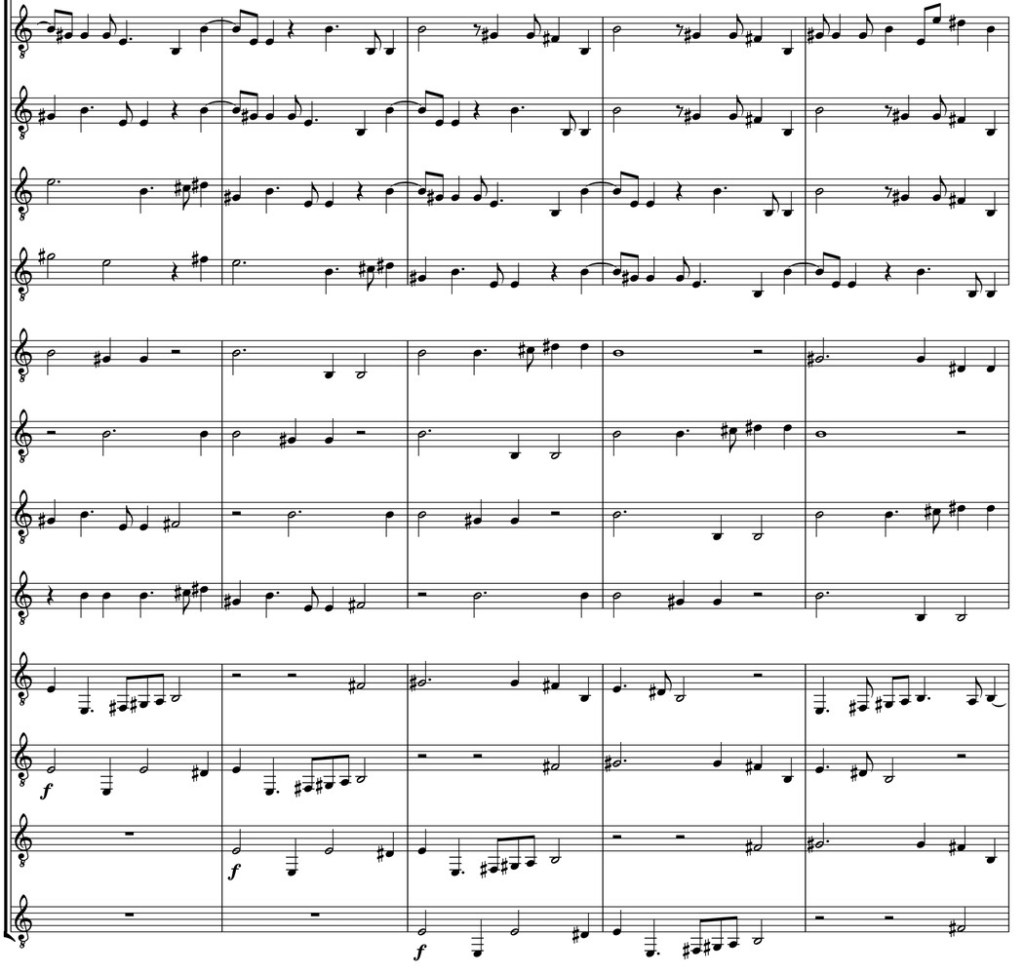
    COMPLETE SCORE

  • Flanders Canon

    2020 . . . . . . . for 8, 12, or 16 guitars. . . . . . . duration: 6:40

    Merging two fascinations, musical canons and the contrapuntal style of 15th-Century Flemish composers, this work sets in modern style a wonderful quadruple canon of the period (composer uncertain). The style difference, though, is subtle: the 2oth-Century explorations of some American composers (Riley, Reich, Adams) involved hypnotic overlapping ostinato repetition of diatonic patterns much like this magical Medieval canon.

    To request performance materials and permission, email the composer, tc24@txstate.edu.

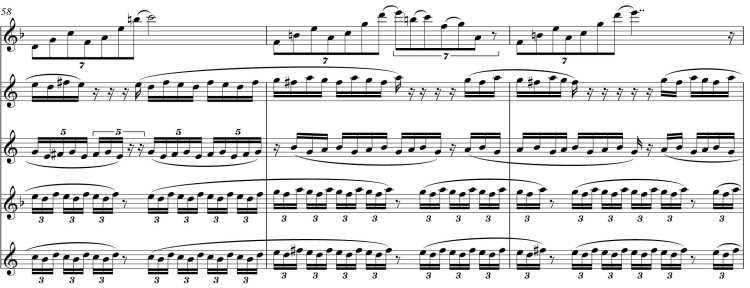
  • String Theory

    2018 . . . solo soprano saxophone and sax quartet (2 alto, ten, bari) . . . Duration 7:30

    String TheoryIn Memoriam Larry Austin is based on the idea current in particle physics that subatomic particles of matter at the deepest fundamental level are all spinning strings of energy. Translated into music by analogy, small three-note segments of a diatonic scale (C Major) become ostinatos spun simultaneously at subtly or wildly different speeds. This is an example of an abstract musical idea like those at the core of much of the experimental music of pioneering composer Larry Austin (1930 – 2018), Clark’s 40-year colleague, collaborator and friend.

    To request performance materials and permission, email BMI-affiliated composer Thomas Clark, tc24@txstate.edu.