Listening to a stunning recording of ancient choral music, I became re-interested in the rhythmic subtleties of voices executing the unspecified time flow of Gregorian chant. Using a variety of similar but slightly different note values, including the ancient semi-minim, minim, dotted-minim, breve, dotted-breve, and lunga), I composed a new plain chant. Beginning with pitches of a dorian mode, my wordless chant takes chromatic turns, providing tonal color without chords above a motionless deep drone. A high, windblown echo of the chant’s shape appears as prelude and coda to its “singing” deepness.
The title (“Earth Song”) is inspired by two great 20th-century works: Mahler’s Das Lied von der Erde (1909) and Stravinsky’s Canticum Sacrum ad honorem Sancti Marci Nominis (1955). In this era facing global crises on our blue planet, Canticum Terra is a musical homage to and prayer for Mother Earth.
The largest of Saturn’s moons is also the second largest moon in the Solar System. Its dense atmosphere obscures a unique feature: it is the only place beyond Earth on which clear evidence has been found of stable bodies of surface liquid.
That may be partly why an experimental extreme-depth earth-ocean submersible vehicle was named for it. The Titan submersible famously imploded in 2023 while headed down to view the shipwreck of the Titanic in the cold North Atlantic.
Our imaginary musical exploration of the moon Titan, its atmosphere and ocean depths, is completely tranquil, experiencing only gentle waves and currents of dark and brighter sonorities.
EFFULGENCE (the word means “brilliant, shining radiance”) was a 1984 improvisatory composition in the style of Terry Riley’s In C, overlapping repetitive patterns I call multi-phase ostinato music. It was like the rhythmic dance of a fountain.
This sequel evokes the speckled field of sunlight reflected on the surface of a body of water. My home state, Michigan, The Great Lakes State surrounded by three of those magnificent fresh-water seas, also contains over 1,000 smaller lakes. My whole life I have gazed at and studied the way sunlight reflects off their wave-articulated surfaces, sparkling in a complex ensemble dance of periodic flashes of light.
The musical construction is all about prime numbers. The melodic-cell eighth-note theme consists of successive intervals of 1, 3, 5, 7, and 11 semitones. Rhythmic values and motivic repetition cycles are all durations equivalent to 1, 3, 5, 7, 11 or 13 eighth-notes.
In 1967 I was already earnestly composing for piano, trombone (my own instrument), even for orchestra. Living beside the Shiawassee River’s glacial-moraine beginnings in rural Livingston County Michigan, my best pastime was hiking along the creek’s forested banks. I was already going to Ann Arbor for trombone lessons and Youth Symphony rehearsals. In fall 1967, after my 18th birthday, I moved to Ann Arbor and enrolled at the University of Michigan. Though not yet a music major, I began playing bass trombone in the university orchestras. For 8 years, Ann Arbor with beautiful Huron River running through it was my forested Michigan home.
“Mystic Breeze” and “Light” were my 12th and 18th completed TC compositions. “Riverbank” is from a 1967 sketch of an “interlude” for trombone and piano. They make a nice set of three, revealing that before formal study my compositional explorations were already discovering more exotic harmonies and rhapsodic forms resembling Debussy’s Impressionism and even the post-tonal possibilities of 12-tone rows.
Looking back 55 years later, it turns out that once I began studying composition at Michigan, my first teacher, American-in-Paris composer Eugene Kurtz, immersed me in studying the music of Ravel and Debussy. The next teacher, George Balch Wilson, plunged me into the newer language of atonality and the radical explorations of the Avant Garde.
Stephen Hawking, the great theoretical physicist and cosmologist, is famous for solving in 1974 the mind-boggling mathematics of black holes and what became known as their Hawking Radiation. He also wrote a fascinating book, A Brief History of Time. Now, after Hawking’s death, his last collaborator, Thomas Hertog, has published On the Origins of Time explaining Hawking’s theory of how Time itself began at the Hot Big Bang birth of the universe. The idea, in grossly simplified geometry, is that Space and Time were united as one primordial sphere that dramatically split apart at the Big Bang’s initial hyperinflation into expanding Space and progressing Time. Before that moment, there was no time, no before.
The musical challenge: how to express utter timelessness before the explosion; and how to build a sound space that sits still then explodes. You’ll hear an initial sound space of just one pitch, G, which at first quivers in color but without perceivable rhythm. While standing still, the sound space expands by octaves and eventually explodes with a fuller spectrum of chromatic pitch color.
Homage to Debussy’s monumental Impressionist work, La Mer, the four scenes of SeaSketches sound-paint waves, deep currents, wind, and sun-sparkling surfaces, employing swelling sound colors and post-modern cyclic techniques in a pan-diatonic tonal setting.
I have long admired and been influenced by the music of early 20th-century Austrian composer Anton Webern. Known historically as a member of the Second Viennese School with Alban Berg and mentor Arnold Schoenberg, the three were pioneers of so-called atonal music and 12-tone-row serial harmonic organization. I find the term “atonal” misleading and negative, as their 12-tone processes achieved new “12-tone tonalities” — not simply a rejection of traditional tonal harmony but also striving to create new and more complex tonalities.
What I admire about Webern’s mostly-quiet instrumental miniatures (his Symphonie Op. 21 has only two sparsely-scored movements) is the delicate, crystalline quality of his pitch constellations; and their gently lyric, precious setting into transparent textures, pearl-strings of delicate sound colors (called Klangfarbenmelodie).
Webern’s mentor, Schoenberg, as a Jew was compelled to emigrate to the U.S. in 1933 before it was too late. Webern, not Jewish, stayed in Vienna and survived World War II, only to be fatally shot by a U.S. Army soldier during the Allied occupation of Austria.
Miniatures I through IV are adapted from Webern Elegyand V through XII from MapLab7 – For Little Arnold. Viennese Sketches does not portray the historical European city but rather explores various musical textures and tonalities using the 12-tone serial techniques of the so-called Second Viennese School of composers associated with Schoenberg. While their music using these techniques was unfortunately dubbed “atonality,” my uses focus on creating constellations and counterpoint that is complex but much less dissonant and more sonorous, my sense of a new tonality.
While the chamber orchestra work is organized in six movements and a coda, each miniature is excerpted below to show changing pace and textures.
In 1973, I composed my second orchestra piece as a graduate student at the University of Michigan. The title was inspired by John Cage’s famous Imaginary Landscapes No. 4, which we performed as I was an ensemble member of Contemporary Directions. The idea of animating an otherwise static sound mass, devoid of progressive harmony, was a quintessential feature of what I came to think of as the Midwestern Style of 1960s and 1970s large ensemble music. Successful models included prize winning pieces such as (my teacher) Leslie Bassett’s Variations for Orchestra (1966), Donald Erb’s The Seventh Trumpet (1969), and Joseph Schwantner’s …and the mountains rising nowhere (1977) and Aftertones of Infinity (1979).
So many great American landscape artists of the 19th century painted fascinating panoramic scenes. One of my favorites, who captured the grandeur of Western, mountainous landscapes, was Albert Bierstadt:
Albert Bierstadt: Passing Storm over the Sierra Nevadas (1870) – San Antonio Museum of Art
You can see stark contrasts in brightness and in sense of motion between the mirror-smooth water and roiling clouds. Even the word “passing” in the title suggests change, a necessary ingredient of an analog musical landscape.
While not trying to actually map the physical composition of any painting, my musical inspiration came from considering this painting’s features of background, foreground, and highlights of strong visual focus. Musical gestures started with distant swelling sonorities, which as they crescendo feel like they are emerging forward toward us. After deciding to name the piece Passing Storm after the Bierstadt, however, I realized I had no storm in the music, just gentle sprinkles. Thus was created a stronger sonic rendering of the sprinkles to provide a more aggressive introduction. The following four minutes overlaps sound masses animated in time, contrasting dark vs. bright sounds, loud vs. soft, and timeless sustained sound vs. busy points of “light.”
2022 . . . four sound sculptures for orchestra (15:30)
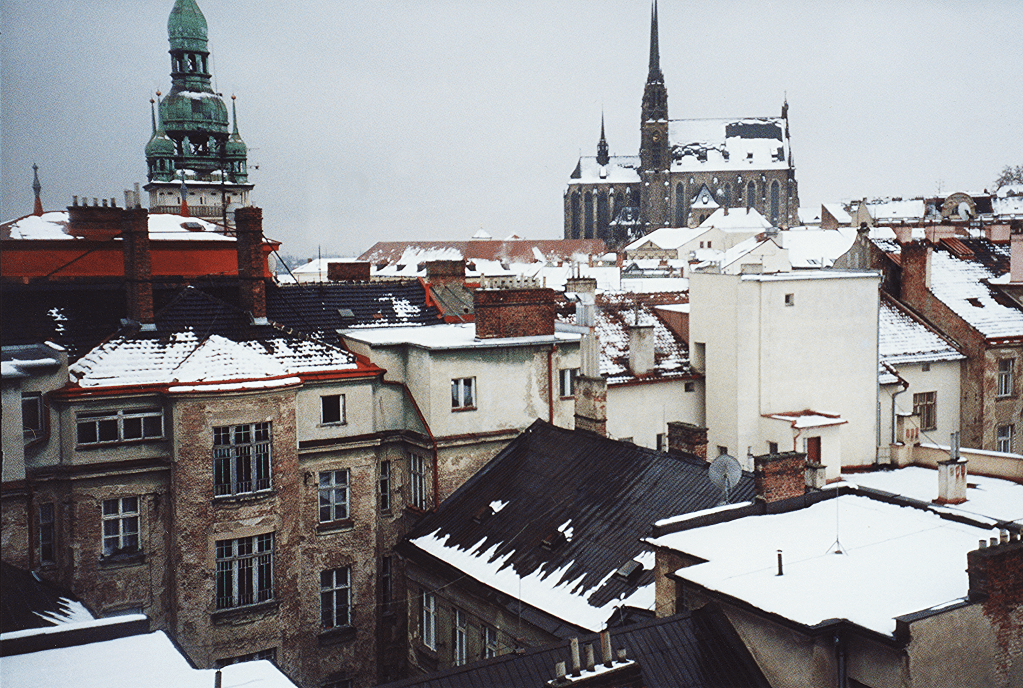
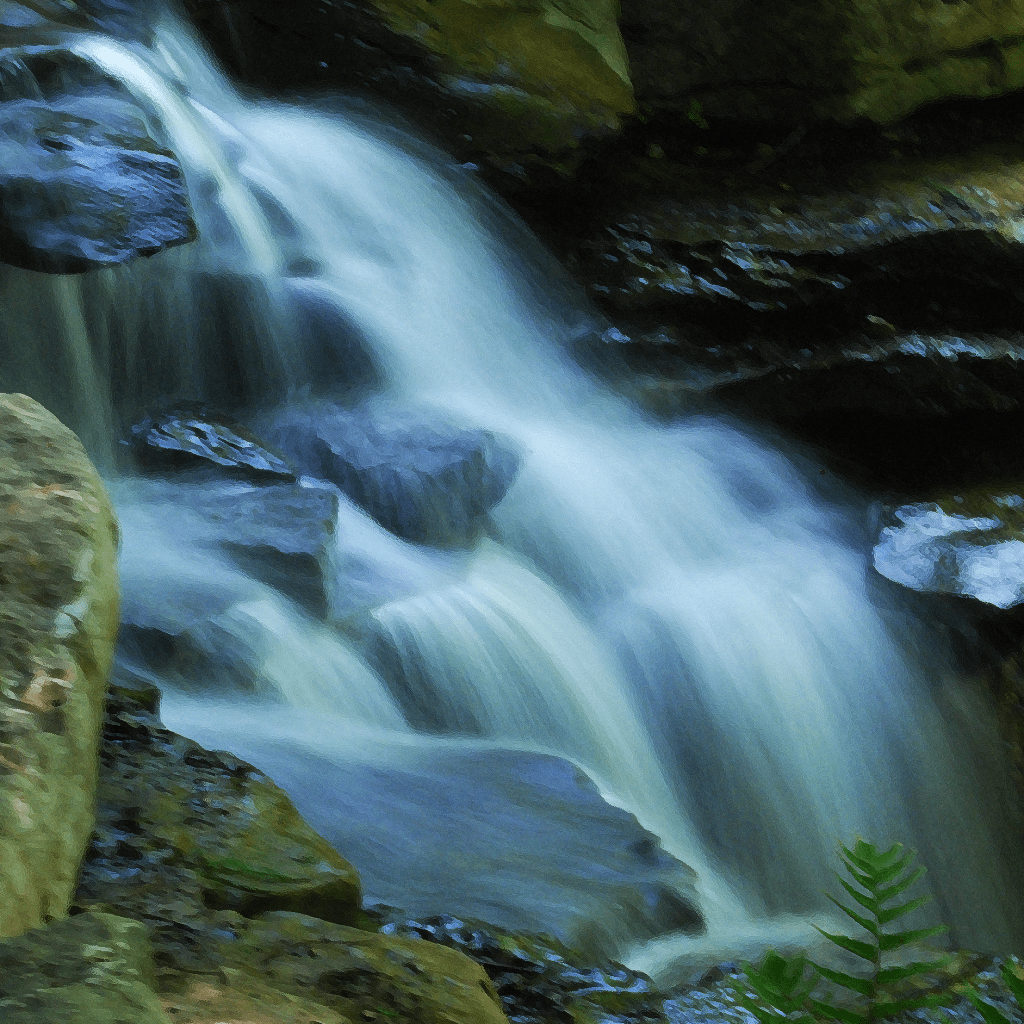
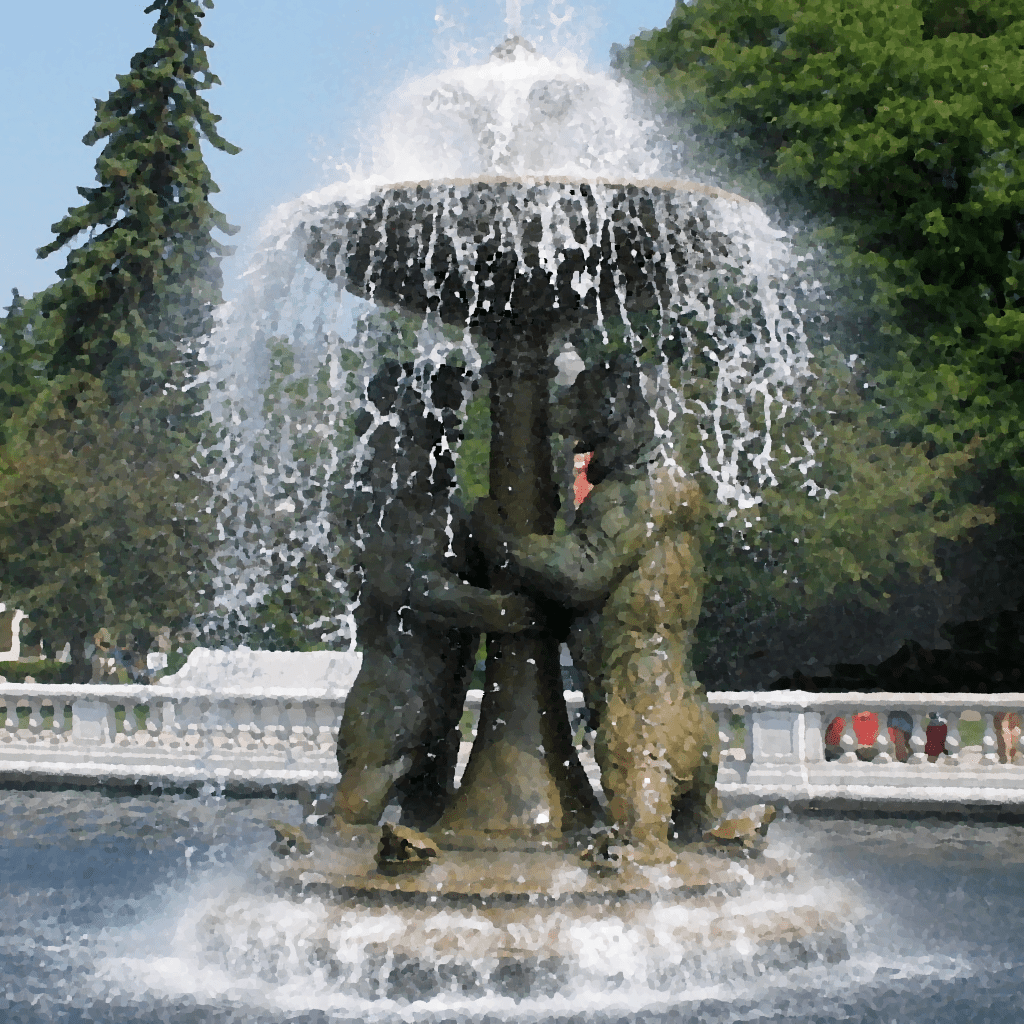
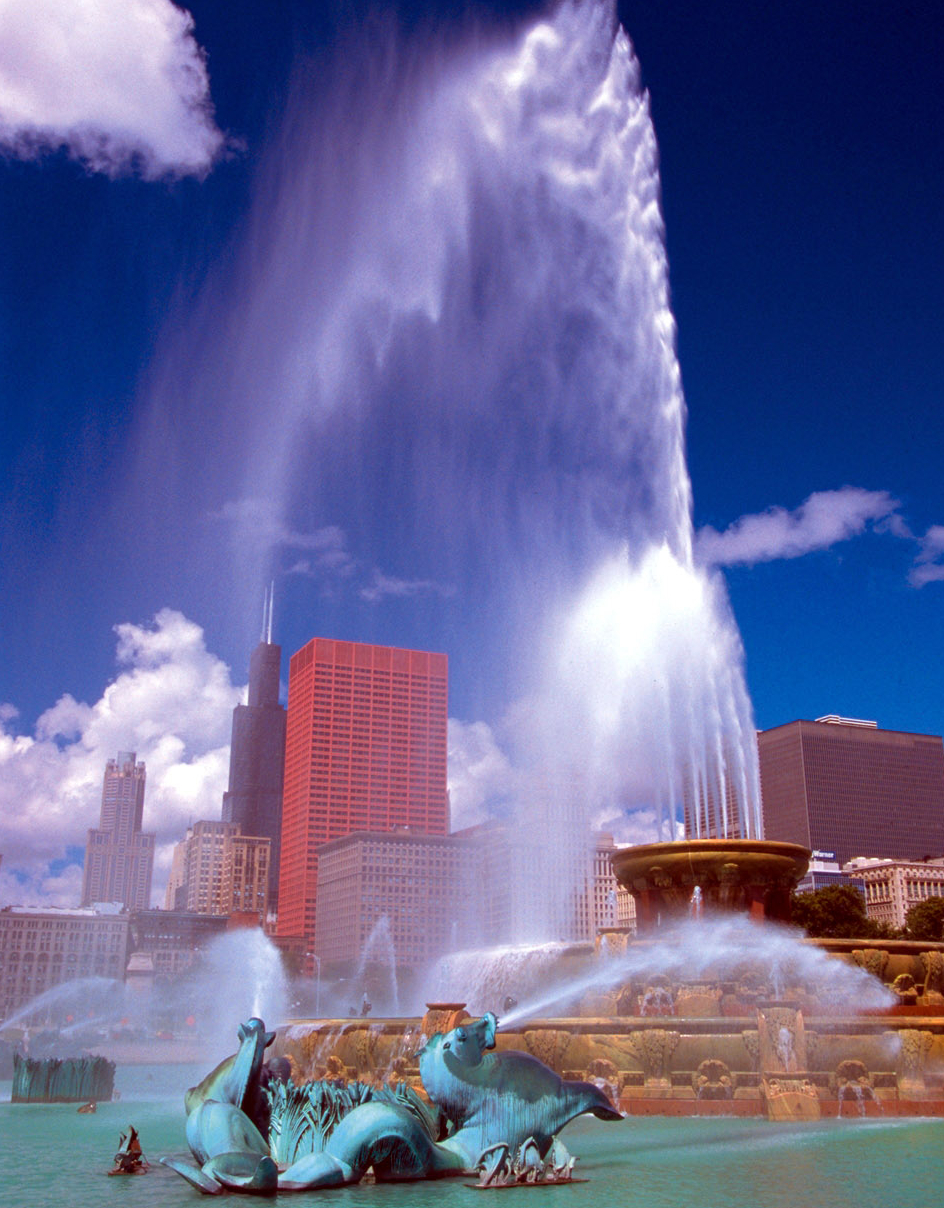
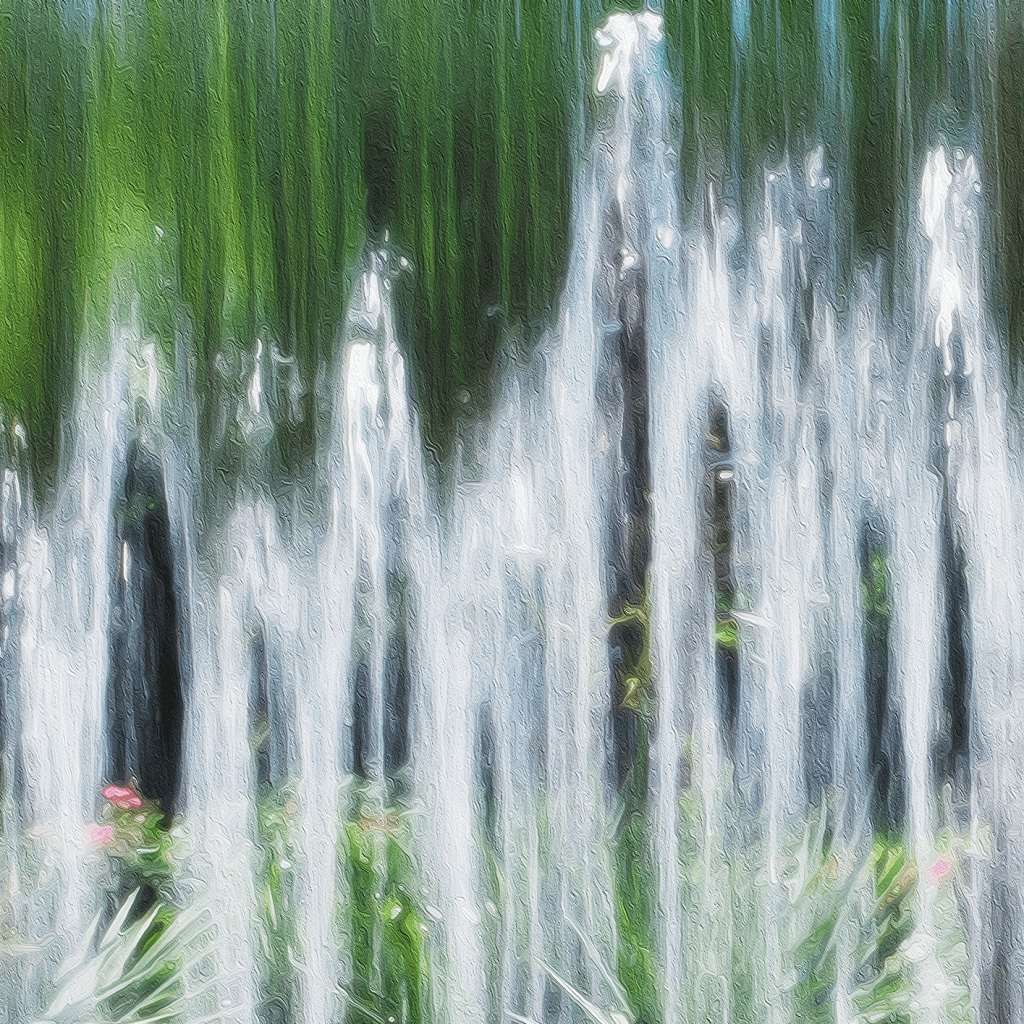
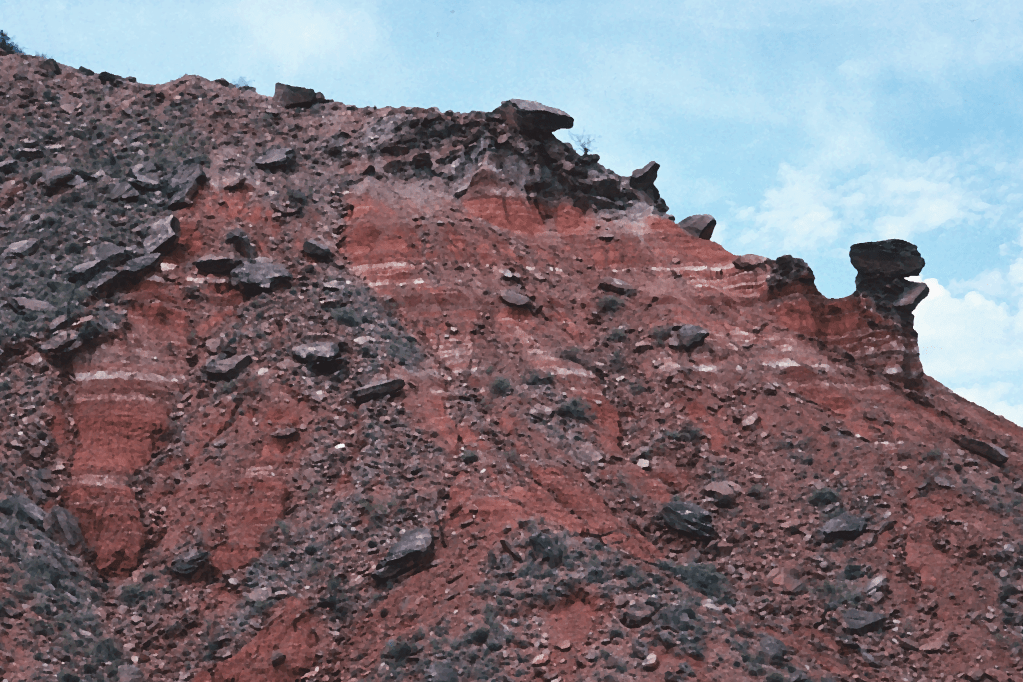
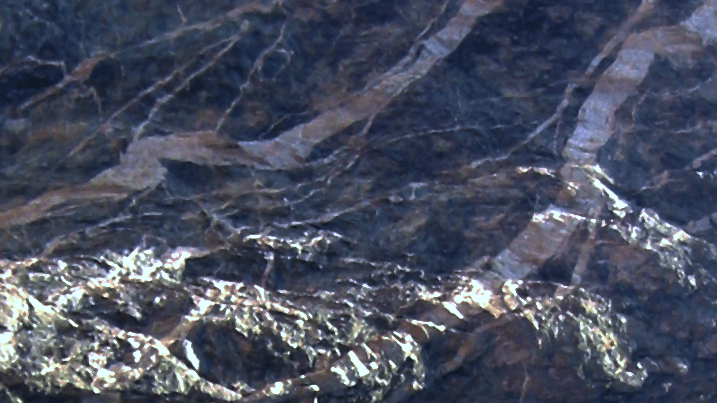
One feature of my modern-music and composition e-book Mapping the Music Universe is a set of composing experiments calledMapLabs. Each provides lab instructions to gather material and make compositional choices, and each provides an example piece built step by step along the path of the lab instructions. The sample pieces for the first four MapLabs fit together here as the metaphorical elements, fire, air, water, and earth, of Aristotle’s concept of the world’s physical matter. My mostly abstract photo images provide a visual background for listening.
Where the amber atoms in the fire gleaming Mingled their sarabande with the gymnopaedia. (Latour)
Fresh wind weds the land and water, Sun warms bright sails and sailor.
Where tiny Otter Creek trickled out onto a more secluded sandy beach Offering northward a spectacular view of Empire Bluff.
The Black Canyon of the Gunnison, named for the ever-present shadows The narrow canyon’s steep, sheer, tall rock walls cast on the river flowing far below.
Aristotle’s Elements
These images are set in motion by the magic of various Ken Burns effects for a video version on the TClark Art Music YouTube channel.
In another arrangement transcribed for wind ensemble in 2023, the order is changed:
A visit to the shores of Michigan’s Leelanau Peninsula inspired me to write a poem:
Peninsula upon peninsula upon grand peninsula, Lee upon Leelanau upon Lower. Cove from bay from great lake, Suttons Bay off Grand Traverse Bay off Lake Michigan.
Land curves in myriad shore shapes, Reaching out to blue water. Fresh wind weds the land and water, Sun warms bright sails and sailor.
Setting it as lyrics for an art song made an example for MapLab 2: Sketch a Song. The lab instructions include a step-by-step explanation of the compositional process. (The synthesized audio rendering below is not capable of pronouncing the words.)