Category: 2020-

  • Mapping the Cosmos – Book II

    2022 . . . collection of more advanced etudes for Piano

    Mapping the Music Universe produced several small etudes to illustrate the compositional potential of musical patterns explained in the ebook. The inspiration to collect them into a series came from many years of fascination with Bartók’s wonderful Mikrokosmos series of 153 piano pieces in modern styles. Book I contains 7 short etudes, each titled with an astronomical entity named for a mythological character and ranging in difficulty for the pianist.

    Book I scores

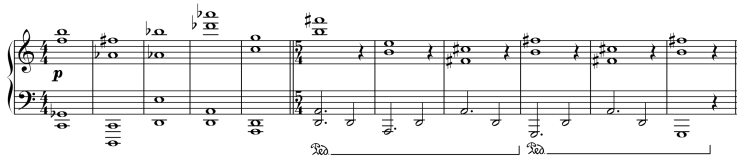
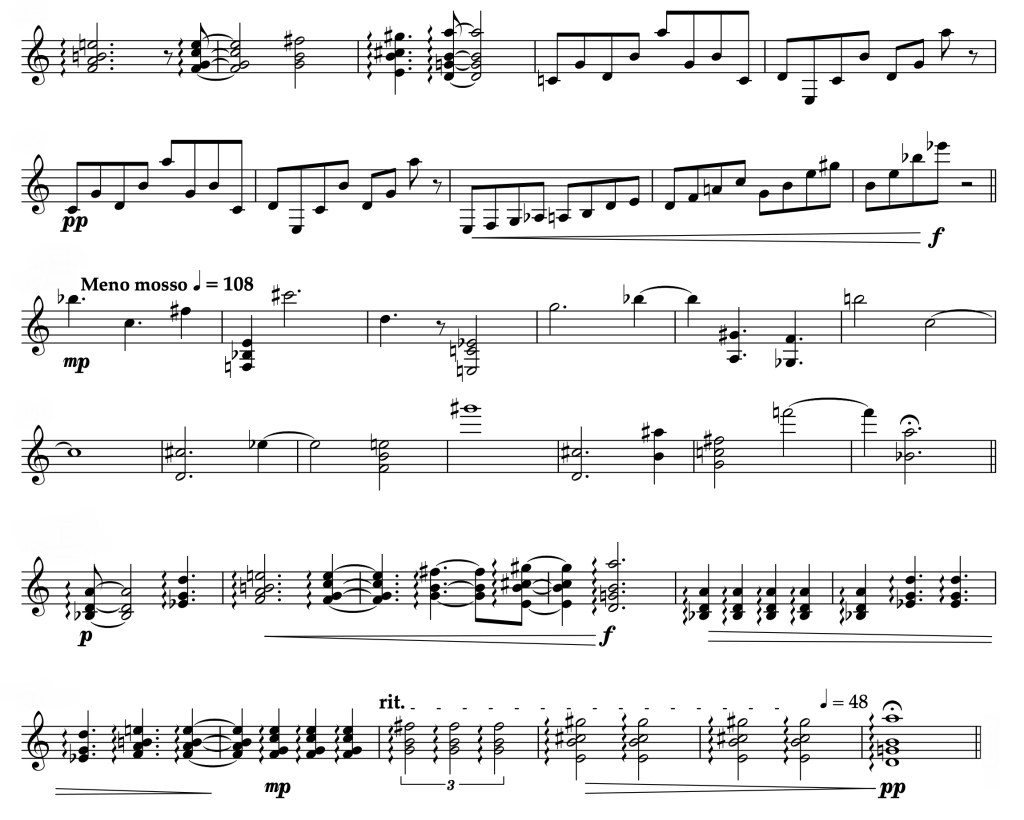
    Book II presents more extended compositional explorations, each suitable as a stand-alone recital piece. Beyond Mikrokosmos, Book II pays homage to Debussy’s revered books of Preludes. The pieces in Book II embrace the Impressionist approach to texture and form, while evolving beyond Debussy’s tonal language.

    Book II scores

    Deep Sky

    sample excerpt

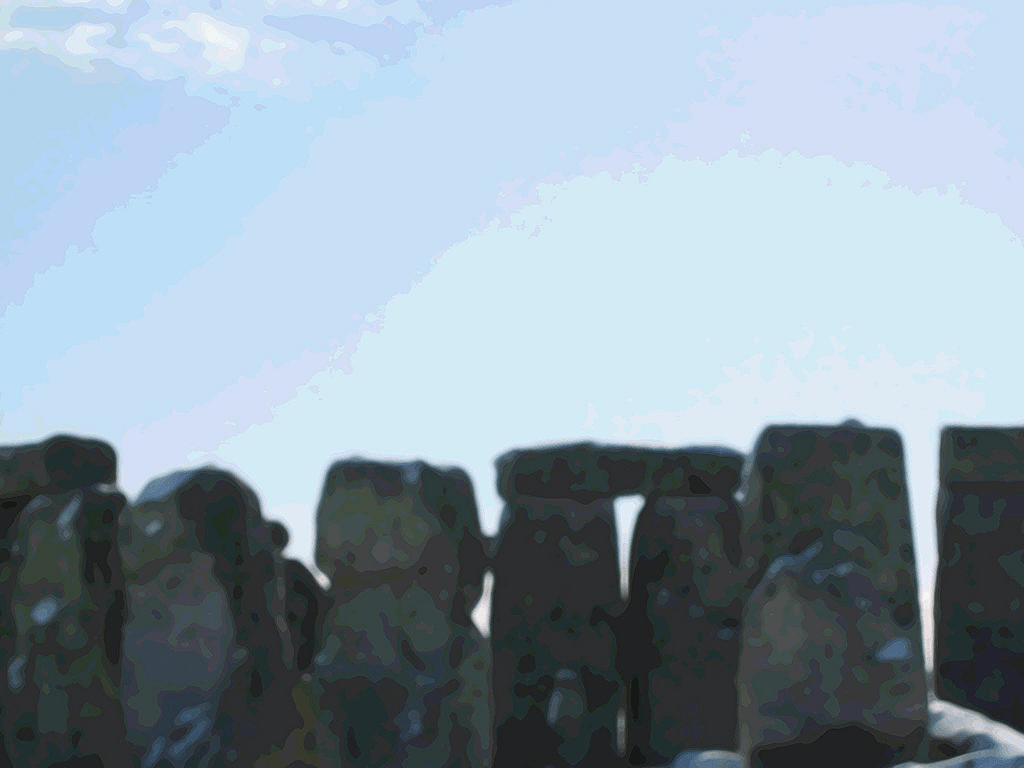
    Stonehenge

    sample excerpt

    Lunar Litany

    sample excerpt

    Star Map (Carte du Ciel)

  • Forest Paths

    from

    Book of Canons

    2022 . . . Sound environment (18 minutes)

    My compositional fascination with musical canons began in the early 1970s with study (at the University of Michigan) of Ockeghem’s 15th-century polyphony, the 10 canons in Bach’s 18th-century The Musical Offering, and Webern’s 20th-century Symphonie Op.21. As a young professor in the 1980s teaching 16th-century counterpoint at what was then North Texas State University (now UNT), I used canon as a challenging contrapuntal writing assignment. In 1985, a wind ensemble piece, Parallel Horizons (Homage to Schoenberg), was my first formal composition constructed by canon. In Dark Matter, other contrapuntal writing surrounds an extended canon. Now canon pervades much of my 21st-century writing, a challenging yet stimulating and gratifying approach to texture and continuity of material.

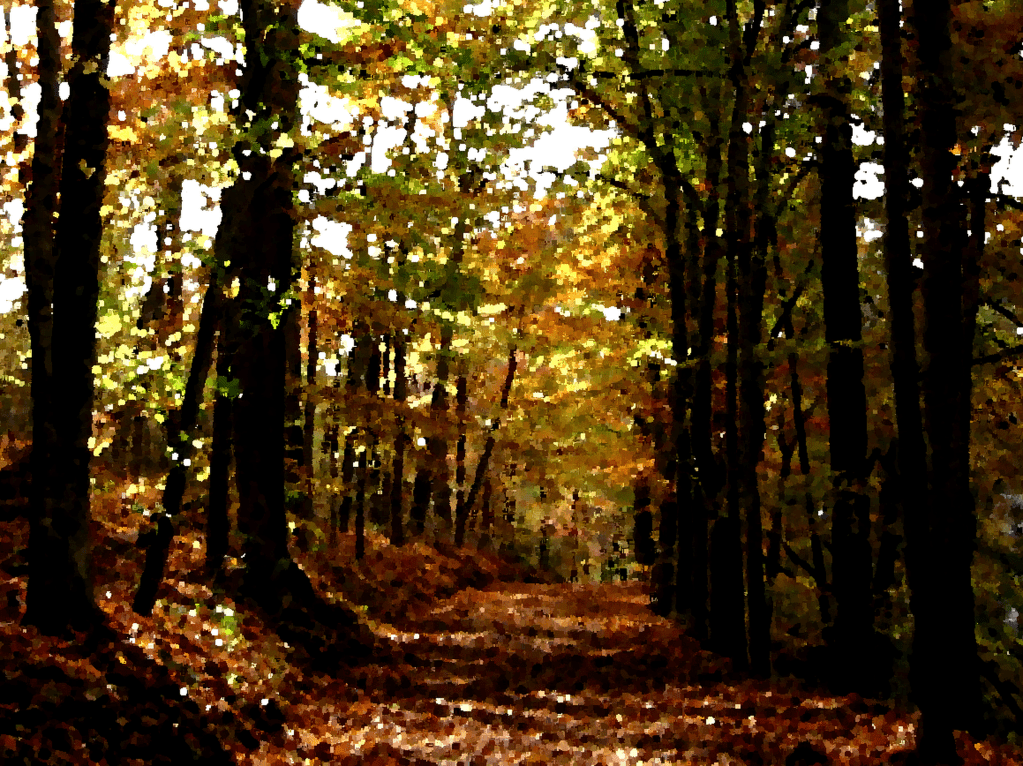
    Book of Canons collects 14 excerpts from these works, showing each canon’s subject, points and pitch levels of answer, and sounding each excerpt scored as a string trio. Forest Paths stitches them together in an ambling journey along a path through a metaphorical sound environment of sunlight, shadows, and leaf-fluttering breezes.

  • Symphony Dances

    2022 . . . string orchestra (19 min.)

    In a lighthearted cabaret style, each dance adopts tunes from the iconic symphonies of master composers Mozart and Beethoven. Each is set in different key signatures from the quoted theme, as appropriate for these venerated dance forms.

    Mazurka . . . Zambra . . . Tango . . . Waltz

    String quartet version
    (alternate transcriptions for sax or clarinet quartet)

    Mazurka

    Mazurka (imagine Warsaw) explores the graceful rising and falling of the melodic theme in the sometimes-neglected beautiful second movement of Beethoven‘s masterpiece, Symphony No. 5 in C Minor, Op. 67.

    Zambra

    An ancestor of Jarabe tapatío, the national dance of Mexico, Zambra is an old Spanish flamenco dance still performed in Andalusia. Beethoven’s Symphony No. 7 is famous partly for its majestic slow second movement, a dark dirge in A Minor that builds relentlessly through a theme and variation process. In Zambra (imagine Granada) the harmony is darkened while the persistent rhythmic repetition is lightened by a fast flamenco tempo.

    Mozart’s Symphony No. 41 “Jupiter” is one of his greatest masterpieces. His No. 40 “Great G Minor” and No. 38 “Prague” are also magnificent. It makes one wonder if he had lived longer, what other stunning music would have poured forth.

    Tango

    Tango (imagine Buenos Aires) is built from the main themes in the opening of the No. 40 in G Minor as a languid blues tune. The keys flow like dancers, the musicians feeling their way through the shadows.

    Waltz

    Waltz (imagine Vienna) draws on the main theme of the No. 41 Jupiter’s finale, a curving melody of rhythmic vitality and fascinating turning shapes.

    Performance materials available for any version:
  • Meteorology

    2022 . . . digital sound sculptures . . . (9:30)

    Nimbus

    Modern physics understands that all matter is built up from just five fundamental “particles”: electrons, up quarks and down quarks with electrical charge; and gluons and photons with no electrical charge. They are not exactly particles, though, but infinitesimal points of spin in space/time. That’s where this sound composition experiment began. Two 4-pitch segments of the octatonic scale appear (“quarks”), then spin at their own speeds, while smaller 3-pitch sets (“electrons”) spin above and below them. At times, the sound mass explodes with a shower of electron sparks, then reforms.

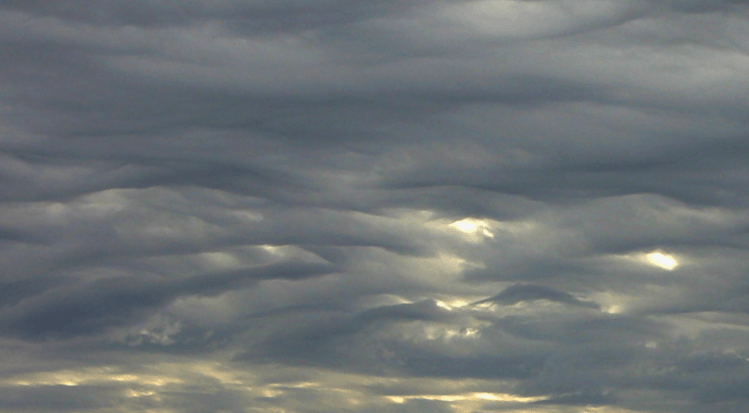
    While quarks are hard to imagine and impossible to visualize, we love to watch puffy white cumulus clouds. Their kinetic energy becomes more visible when they grow into dark, precipitation-bearing cumulonimbus storm clouds, bringing rain and crackling electricity.

    Squall

    A tree limb branching out from a trunk, then smaller limbs branching from it, again and again to smaller and smaller branches — a classic example of a recursive process. Sometimes lightning shows this same recursive branching process. While the tree branches take years to fill out, lightning is a sudden explosion of electricity over a split second. Thunder, as sound travels much slower than light, is heard later than the lightning flash is seen — unless, of course, it is very close by!

  • Tango

    The middle movement, “Tango,” of my 2021 piece for chamber orchestra, Sinfonia, turned out to be easily transcribed for a number of different quartets. Here’s how it sounded in a version for four saxophones premiered April 15, 2022, at Texas State University:

    Corvus Quartet performers Nolan Hopkins (soprano sax), Garrett Iler (alto), Ryan Halbert (tenor), and Jack Woodruff (baritone sax) studied with saxophone professor Dr. Todd Oxford.

    Tango is for me uncharacteristically set in actual keys, appropriate for this venerated dance form. The keys flow like dancers, the musicians feeling their way through them while never seeing an actual key signature.

    Mozart’s “Jupiter” Symphony No. 41 is one of his greatest masterpieces. His No. 40 in G Minor and No. 38 “Prague” are also magnificent. It makes one wonder if he had lived longer, what other stunning music would have poured forth. Back to No. 41 Jupiter, the first theme is a curving melody of such rhythmic vitality and fascinating turning shape that I used it as an example of both in my ebook, Mapping the Music Universe. Mozart makes the theme into a fugato, and I have adopted it in my obsessive study of canons.

    Tango first sets the two main themes from the opening of the G Minor No. 40 as a languid tango tune. Following is a trio in slow waltz meter whose tune is the “Jupiter” motive from Symphony No. 41. A da capo takes us back one more time to the haunting No. 40 G Minor tango tune.

  • Webern Elegy

    Vienna, 15 September 1945

    Oboe, Clarinet, Viola . . . or Clarinet, Piano . . . or Viola, Piano (5 min.) TC-115 (2021)
    COMPLETE TRIO SCORE
    COMPLETE SCORE for CLARINET & PIANO
    COMPLETE SCORE for VIOLA & PIANO

    I have long admired and been influenced by the music of early 20th-century Austrian composer Anton Webern. Known historically as a member of the Second Viennese School with Alban Berg and mentor Arnold Schoenberg, the three were pioneers of so-called atonal music and 12-tone-row serial harmonic organization. I find the term “atonal” misleading and negative, as their 12-tone processes achieved new “12-tone tonalities” — not simply a rejection of traditional tonal harmony but also striving to create new and more complex tonalities.

    What I admire most about Webern’s mostly-quiet instrumental miniatures (his Symphonie has only two sparsely-scored movements) is the delicate, crystalline quality of his pitch constellations; and their gently lyric, precious setting into transparent textures, pearl-strings of delicate sound colors ( called Klangfarbenmelodie). Here is a transcription for chamber orchestra with sound color much like Webern’s Symphonie Op. 21:

    Webern’s mentor, Schoenberg, as a Jew was compelled to emigrate to the U.S. in 1933 before it was too late. Webern, not Jewish, stayed in Vienna and survived World War II, only to be fatally shot by a U.S. Army soldier during the Allied occupation of Austria.

  • Stonehenge

    Guitar . . . 2022 . . . 7 minutes

    “Dawn . . . Gathering . . . Solstice”

    Excerpt:

    COMPLETE SCORE

  • Blue Sphere

    The Magic of Pi

    Sound sculpture . . . 2022 . . . 6:23

    Ever since it was viewed and photographed from space (see below) by Apollo 17 in 1972, Planet Earth has become known as the Blue Planet.

    The Blue Marble photograph of Earth, taken by the Apollo 17 mission. The Arabian peninsula, Africa and Madagascar lie in the upper half of the disc, whereas Antarctica is at the bottom.
    The Blue Marble

    Such a distant perspective reveals the pervasive blue water of oceans, brilliant white of cloud layers, and some brown/green shapes of land masses beneath. It also reveals the spherical shape of our globe. (Euclid said a sphere is a hollow 3-dimensional rotation of a circle, and scientists have measured that Earth is not a perfectly round ball but a solid ellipsoid.) Nonetheless, the eternal, perfect rotating sphere is our iconic notion of Earth’s shape. Spheres and the Euclidean circle that generates them in three dimensions are governed by the mathematical constant π, defined in Euclidean geometry as the ratio of a circle’s circumference to its diameter.

    Pi is magic, an irrational number that cannot be expressed as a common fraction. Its decimal calculation never ends, never settling into a repeating pattern of digits, which appear to be random . . . and infinite. It starts 3.1415926535897932384626433…

    The beginning of its decimal expression was used in composing Blue Sphere as both a rhythmic timing pattern and a corresponding dance of the lowest 9 pitches of a Pythagorean overtone series. This is one way to literally hear π, expressing musically the eternal restlessness of our rotating blue sphere.

  • Mycology

    sound sculptures . . . 2022 . . . duration: 10 minutes

    Pilot Mountain, North Carolina

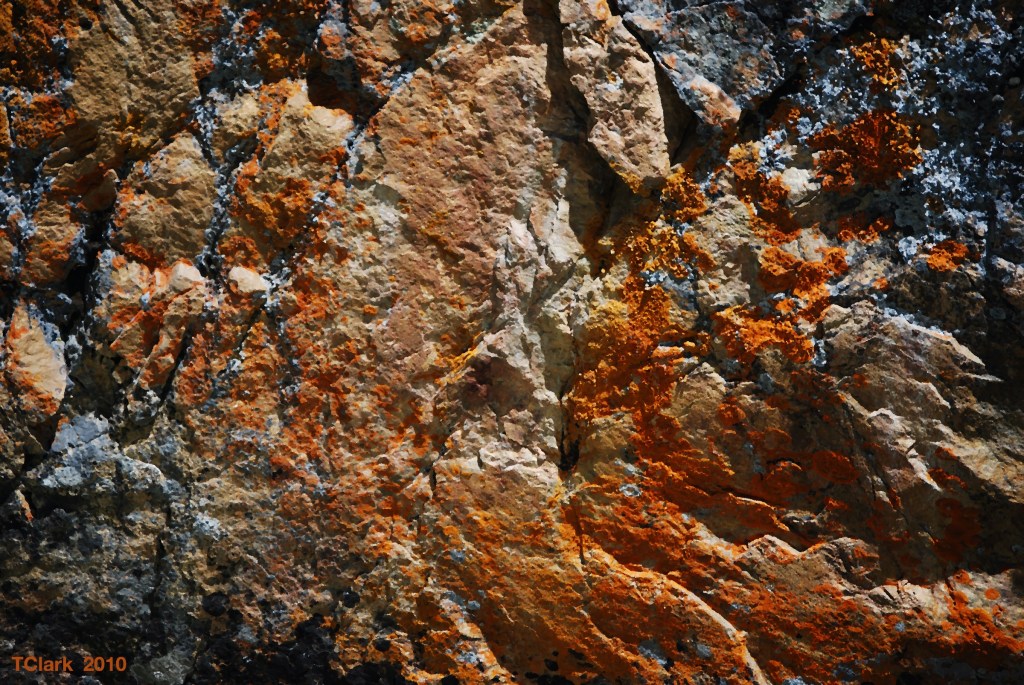
    I read a fascinating book, Entangled Life by Merlin Sheldrake (Random House, 2021) about the bizarre world of fungi. Mycelium is the root-like mass of a fungus branching out in soil, forming a colony too small to see or grown to span thousands of acres as in Armillaria. Lichens are complex fungal communities of different organisms, like the black rocky shoreline stripes of Hydropunctaria.

    Mycelium

    branching, thread-like hyphae

    Branching is a recursive process, with a pitch splitting into two mirroring lines of pitches, then each of those lines mirror splitting again. By powers of 2, the branches eventually build a tone-mass of 8 lines then even massive 16-pitch sonorities.

    Hydropunctaria maura

    “water speckled midnight”

    Pointillistic speckles are set in the dark tonal colors of a Viennese 12-tone pitch series, never random but kaleidoscopically sparkling in a restless texture of overlapping rhythms.

    MYCOLOGY

    arranged for Brass Choir
  • Leelanau Sketches

    Sound sculptures . . . 2022 . . . duration: 30 minutes

    Michigan, The Great Lake State, is two enormous peninsulas surrounded by Lakes Michigan, Superior, and Huron. Actually, there are many smaller peninsulas extending out into the lakes. The Leelanau Peninsula (north of the venerable Interlochen music camp where I spent many summers) extends about 30 miles from the northwestern corner of the mitten-shaped Lower Peninsula into Lake Michigan. Algonquian-speaking tribes occupied this area prior to European colonization. The land is now home to lighthouses, wineries, ski slopes, inland lakes, and coastal dunes and beaches.

    Listen uninterrupted to all four sketches . . .

    Leelanau Sketches

    Or separately to any of the individual sketches . . .

    Shining Water

    The changing patterns of sunlight sparkling on water always fascinates me, particularly on Lake Michigan looking west from the Leelanau Peninsula.

    Ice Caves

    On the Leelanau Peninsula’s western shore, the Lake Michigan surf sometimes whips up and freezes in mid-air, forming weird ice caverns and ice dunes.

    Sleeping Bear Dunes

    Ojibwe legend tells of a fierce forest fire on the western shore of Lake Michigan, forcing a mother bear and her two cubs into the water to swim to the opposite shore. After many miles of swimming, the exhausted cubs drowned. When the mother bear reached the eastern shore, she waited on top of a high bluff in hopes that her cubs would finally appear. Moved by the mother bear’s determination and faith, the Great Spirit created two islands to commemorate the cubs, and the winds buried the sleeping bear under the sands of the dunes, where she still waits.

    The main dune is enormous, a mountain of sand rising dramatically above the shore of Lake Michigan. The bear’s bluff atop this majestic mass of earth is a serene vista of radiant sun, windblown sand and waves.

    See more images at TClark digital art galleries
    Autumn on M22

    A scenic autumn drive around the peninsula on Highway M22 is a glory of light sifting down through a canopy of colored leaves. The 75-mile drive from Empire on M22 winds northeast to Northport then south around the east side of the peninsula along Grand Traverse Bay to Traverse City.